






















TL;DR:
- eSIM technology allows long-term travelers to stay connected abroad by managing multiple carrier profiles digitally without swapping physical SIM cards. It supports dual SIM operation, keeping the home number active while providing local internet and reducing security risks. Choosing the right plan depends on usage, trip length, and destination, with most travelers benefiting from storing multiple profiles and activation before departure.
An eSIM is a built-in digital SIM card that lets long-term travelers stay connected abroad without swapping physical SIM cards or paying daily roaming fees. The industry term is eUICC, which stands for Embedded Universal Integrated Circuit Card. This technology is embedded directly into your device at the factory, and you activate it by downloading a carrier profile digitally. For anyone spending weeks or months abroad, understanding eSIM for long-term travelers explained in practical terms means knowing how to cut costs, manage multiple country plans, and keep your home number active at the same time.
The core advantage is dual functionality. Your home SIM stays active for calls, texts, and two-factor authentication while a travel data profile handles local internet access at local prices. Platforms like Esimglobe make this setup accessible by offering digital eSIM profiles for countries and regions worldwide, with no physical card required.
How does eSIM technology work for long-term travelers?
The eUICC chip inside your phone stores multiple carrier profiles simultaneously. You switch between them through your device settings, with no physical changes required. This is the foundation of everything that makes traveling with eSIM technology practical for extended trips.
Activation works through one of three methods: scanning a QR code, using a carrier app, or entering details manually in your phone’s settings. The process requires a Wi-Fi or existing data connection. Setup typically takes 10–15 minutes, which means you can activate a plan at home before you board your flight and land with data ready.
Dual SIM functionality
Most modern smartphones support dual SIM operation, meaning the eSIM and your physical SIM run at the same time. Your home number stays reachable for calls and SMS. The eSIM handles data. This split matters for long-term travelers because banking apps, work logins, and security alerts all rely on your home number for verification.
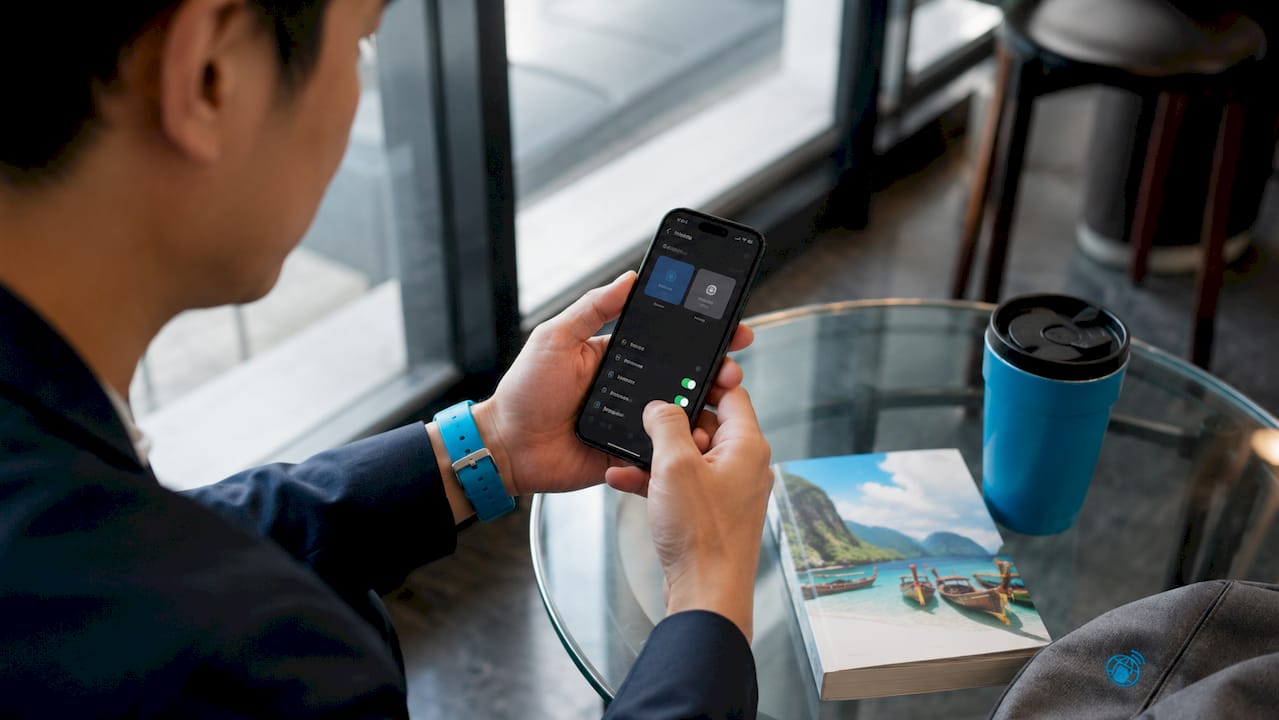
eSIMs cannot be stolen or lost because they are embedded in the device. A physical SIM can fall out, get damaged, or be taken from you. The digital nature of eUICC removes that risk entirely.
Profile storage and switching
Most modern smartphones store 10–20 eSIM profiles simultaneously. That means you can keep a Japan plan, a Thailand plan, and a European regional plan all on one device. When you return to a country, you reactivate the dormant profile instead of buying a new one. This profile library approach is one of the most underused features among long-term travelers.
Pro Tip: Activate your eSIM at home over a stable Wi-Fi connection before departure. Trying to activate it at an airport with weak Wi-Fi is a common source of setup problems.
eSIM vs. physical SIM: which is better for long trips?
The answer depends on your destination, trip length, and data needs. Neither option wins in every situation. The table below compares the key factors directly.
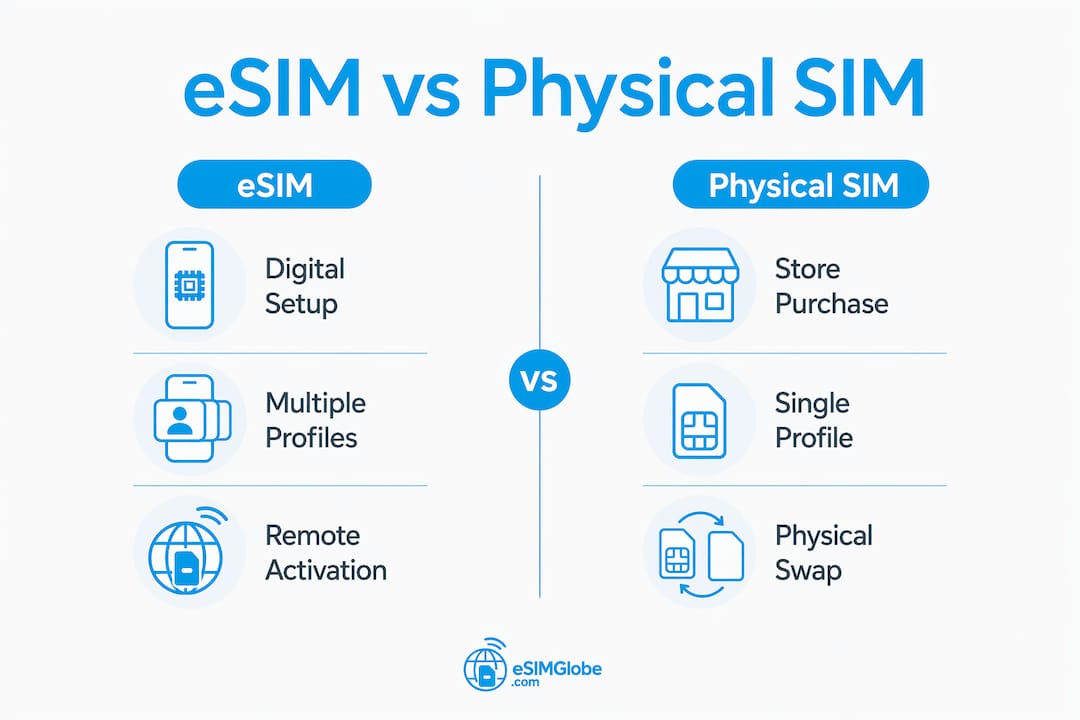
| Factor | eSIM | Physical local SIM |
|---|---|---|
| Setup process | Digital, no store visit needed | Requires in-country store or kiosk |
| Activation time | 10–15 minutes with Wi-Fi | 15–60 minutes including travel |
| Cost for short trips | Competitive, avoids roaming fees | Often cheaper per GB |
| Cost for 30+ day stays | Varies by provider and region | As low as $5–$15/month in markets like Thailand |
| Voice and SMS | Data-only on most plans | Full voice, SMS, and data |
| Security | Cannot be lost or stolen | Can be lost, damaged, or stolen |
| Profile flexibility | Store multiple country plans | One plan per physical card |
The cost comparison is where most travelers get surprised. For a two-week trip across multiple countries, an eSIM regional plan is almost always cheaper and faster than buying a physical SIM in each country. For a three-month stay in a single country like Vietnam or Mexico, a local physical SIM with a monthly plan often costs less per gigabyte.
Pro Tip: For multi-country trips under 30 days, use a regional eSIM plan. For single-country stays over 30 days, compare the local physical SIM monthly rate against the best eSIM option before committing.
The eSIM vs. local SIM decision also depends on whether you need a local phone number. Most travel eSIMs are data-only. If you need to receive local calls, for example for apartment rentals or local deliveries, a physical SIM gives you that option.
How to choose the right eSIM plan for an extended stay
Plan selection is where long-term travelers make the most expensive mistakes. The wrong plan type costs more money and delivers worse performance than the right one chosen carefully.
Unlimited vs. per-GB plans
Unlimited data plans are duration-based and work best for heavy users who stream video, join video calls, or work remotely every day. Per-GB plans cost less overall for travelers who use data lightly, such as checking maps, messaging, and occasional browsing. The key is honest self-assessment of your daily data habits before you buy.
Total data pools vs. daily caps
A total data pool plan suits long-term travelers better than a daily cap plan. Daily caps cut your connection after a set amount each day, which is frustrating on high-use days like remote work days or travel days with long layovers. A pooled plan lets you use 500MB one day and 3GB the next without penalty. For anyone working remotely or with irregular usage patterns, pooled data is the practical choice.
Regional vs. single-country plans
- Single-country plans offer the lowest per-GB cost for travelers staying in one place for an extended period. They connect to local networks directly and often provide the best speeds.
- Regional plans cover multiple countries under one plan, which is ideal for travelers moving between destinations every few weeks. Europe, Southeast Asia, and Latin America each have regional eSIM options available through platforms like Esimglobe.
- Global plans cover the widest range of countries but typically cost more per GB. They make sense for travelers visiting many regions in a single trip or those who need a backup connection in remote areas.
- Top-up options extend your plan when data runs low without requiring a full new purchase. Confirm that your chosen plan supports top-ups before buying, especially for trips longer than 30 days.
- Validity periods vary from 7 days to 365 days depending on the provider. Match the validity to your actual trip length. A 30-day plan that expires before your trip ends leaves you without data at the worst possible time.
Esimglobe lists plan validity and data amounts clearly for each country and region, which makes it straightforward to match a plan to your specific itinerary. Check the eSIM purchasing tips for 2026 before finalizing your selection.
How to activate and use your eSIM abroad
Getting the activation right the first time saves hours of troubleshooting. The steps below apply to the majority of modern smartphones, including iPhone XS and later, and most Android flagship devices from 2020 onward.
- Check device compatibility first. Not all phones support eSIM. Verify your model supports eUICC before purchasing a plan. Also confirm your device is unlocked by your home carrier. A locked device will fail to activate international eSIM profiles regardless of the plan quality.
- Activate before you leave home. Download the eSIM profile over your home Wi-Fi connection. This removes the risk of activation problems at airports or in countries with slow public Wi-Fi.
- Select the correct data profile. After installation, go to your phone’s cellular settings and set the eSIM as the default data line. Many travelers install the profile correctly but forget this step, then wonder why their data isn’t working.
- Enable data roaming on the eSIM line. Some devices require you to turn on roaming specifically for the eSIM profile. This setting is separate from the roaming toggle on your home SIM.
- Check APN settings if data fails. Incorrect APN configurations are the most common cause of eSIM data not working after activation. Your provider should list the correct APN details. Enter them manually in your cellular settings if automatic configuration fails.
- Keep your home SIM active. Do not remove or disable your physical SIM. It handles incoming calls, SMS, and authentication codes from your bank or work accounts. Maintaining home number activity alongside your travel eSIM is the primary advantage of dual SIM operation.
For a full walkthrough with device-specific screenshots, the step-by-step eSIM activation guide from Esimglobe covers the most common phone models in detail.
What are the limitations of eSIMs for long-term travel?
eSIMs solve many problems for long-term travelers, but they do not solve all of them. Knowing the limitations before you commit prevents frustration on the road.
- Most travel eSIMs are data-only. Local voice numbers are not included in the majority of travel eSIM plans. If you need a local number for apartment rentals, job interviews, or local services, you need a physical SIM or a VoIP app like WhatsApp or Google Voice.
- Device compatibility is not universal. Older phones, budget Android models, and some carrier-locked devices do not support eSIM. Always verify compatibility before purchasing a plan.
- Coverage gaps exist in developing markets. eSIM plans connect to partner networks in each country. In rural areas of Southeast Asia, sub-Saharan Africa, or parts of Latin America, network coverage may be slower or less reliable than a local physical SIM on the dominant carrier.
- Initial activation requires internet access. You need Wi-Fi or an existing data connection to download the eSIM profile. If you arrive in a country with no connection and no plan already installed, you face a circular problem. Activating before departure eliminates this entirely.
- Cost trade-offs exist in some markets. In countries with very cheap local SIM options, such as India, Bangladesh, or parts of Africa, a local physical SIM may cost significantly less per GB than any eSIM plan. The convenience of eSIM has a price in these markets.
Long-term travelers planning stays in regions with strong local SIM markets should research local pricing before assuming an eSIM is the cheaper option. The eSIM travel tips guide covers regional pricing considerations in more detail.
Planning accommodation alongside connectivity is worth doing together. Resources like this guide to choosing holiday homes in 2026 include practical notes on connectivity needs for long-term stays, which pairs well with your eSIM planning.
Key Takeaways
eSIMs give long-term travelers the most practical combination of cost control, security, and flexibility when chosen and configured correctly for their specific destination and usage pattern.
| Point | Details |
|---|---|
| Activate before departure | Download your eSIM profile at home over Wi-Fi to avoid connection problems on arrival. |
| Match plan type to usage | Choose pooled data plans for remote work and irregular use; per-GB plans for light travelers. |
| Keep your home SIM active | Dual SIM operation lets your home number handle calls and authentication while the eSIM handles data. |
| Store multiple profiles | Most phones hold 10–20 eSIM profiles, so keep past country plans for easy reactivation on return trips. |
| Know when a physical SIM wins | For single-country stays over 30 days in markets like Thailand, local SIM monthly plans often cost less. |
Why I think most travelers underuse their eSIM
Most travelers treat their eSIM as a one-time purchase for a single trip. They buy a plan, use it, and delete the profile when they get home. That approach wastes the most powerful feature of eUICC technology: the profile library.
I’ve watched travelers go through the same activation process repeatedly for countries they visit every year. Japan, Portugal, Mexico. Same setup, same QR code hunt, same troubleshooting. The better approach is to keep every profile you’ve ever activated stored on your device. When you return to a country, you reactivate in seconds. No repurchase, no setup, no waiting.
The second mistake I see constantly is buying an unlimited plan out of habit. Unlimited sounds like the safe choice, but for travelers who spend most of their day in cafes with Wi-Fi, it’s often the expensive choice. A 10GB pooled plan covers most travelers for two to three weeks of moderate use. Know your actual consumption before you spend more than you need to.
The third thing most guides don’t tell you: eSIM and physical SIM are not competitors. They are partners. Your home SIM handles your identity. Your eSIM handles your data. Running both simultaneously is the correct configuration for any trip longer than a week. The travelers who figure this out early stop worrying about connectivity entirely.
The future of travel internet points clearly toward eSIM as the default. More devices support it every year, more carriers offer it, and prices continue to drop. Getting comfortable with eSIM management now puts you ahead of the curve for every trip going forward.
— daniele
Esimglobe: global eSIM plans for extended travel
Long-term travelers need a provider that covers multiple countries, offers flexible plan lengths, and makes activation straightforward. Esimglobe provides digital eSIM profiles for destinations worldwide, with plans available in USD, EUR, and GBP to match your home currency.
Esimglobe lists data amounts, validity periods, and supported networks clearly for each country and region. There are no physical SIM cards to order or wait for. You purchase, receive your QR code, and activate. For travelers managing multi-country itineraries or extended single-country stays, Esimglobe’s global eSIM options cover the destinations most long-term travelers visit. The platform supports multiple languages and currencies, making it practical for international travelers regardless of where they are based.
FAQ
What is an eSIM and how does it work for travel?
An eSIM is a digital SIM card embedded in your device that stores carrier profiles you activate without a physical card. For travel, you download a local data plan before or after arrival and switch to it through your phone’s settings.
Do I need to remove my home SIM to use a travel eSIM?
No. Most modern smartphones support dual SIM operation, meaning your home SIM and travel eSIM run simultaneously. Your home number stays active for calls and authentication while the eSIM handles data.
Are travel eSIMs data-only?
Most travel eSIM plans are data-only and do not include a local voice number. If you need to receive local calls or SMS, a physical SIM from a local carrier remains the better option for that function.
How many eSIM profiles can my phone store?
Most modern smartphones store between 10 and 20 eSIM profiles at once. You can keep profiles from previous trips dormant and reactivate them on return visits without repurchasing or downloading a new plan.
When is a physical local SIM better than an eSIM?
For stays of 30 days or more in a single country with cheap local SIM options, such as Thailand or India, a physical SIM monthly plan often costs less per gigabyte than an eSIM plan. Compare local pricing before deciding.