






















TL;DR:
- An eSIM is a built-in digital SIM card that allows travelers to activate data plans instantly without a physical SIM. Most modern devices support multiple eSIM profiles, enabling users to switch between home and travel plans easily. It is most beneficial for short trips, multi-country journeys, and digital nomads, while long-term stays are better served by local SIM contracts.
An eSIM is a built-in digital SIM card that lets international travelers activate mobile data plans instantly, without touching a physical SIM card. Unlike a traditional SIM, an eSIM is soldered directly into your device and programmed remotely via a QR code or app. For anyone managing roaming charges, multi-country trips, or last-minute connectivity needs, using an eSIM for traveling is the most practical solution available in 2026. Providers like Airalo, Holafly, and Saily have made travel eSIM plans accessible, affordable, and easy to activate before you even board your flight.
How does eSIM technology work for travelers?
An eSIM works by storing a digital carrier profile on a chip embedded inside your device. You purchase a plan from a provider, receive a QR code or app-based activation link, and scan or tap to install the profile. The entire process takes under five minutes and can be done from home before your trip starts.
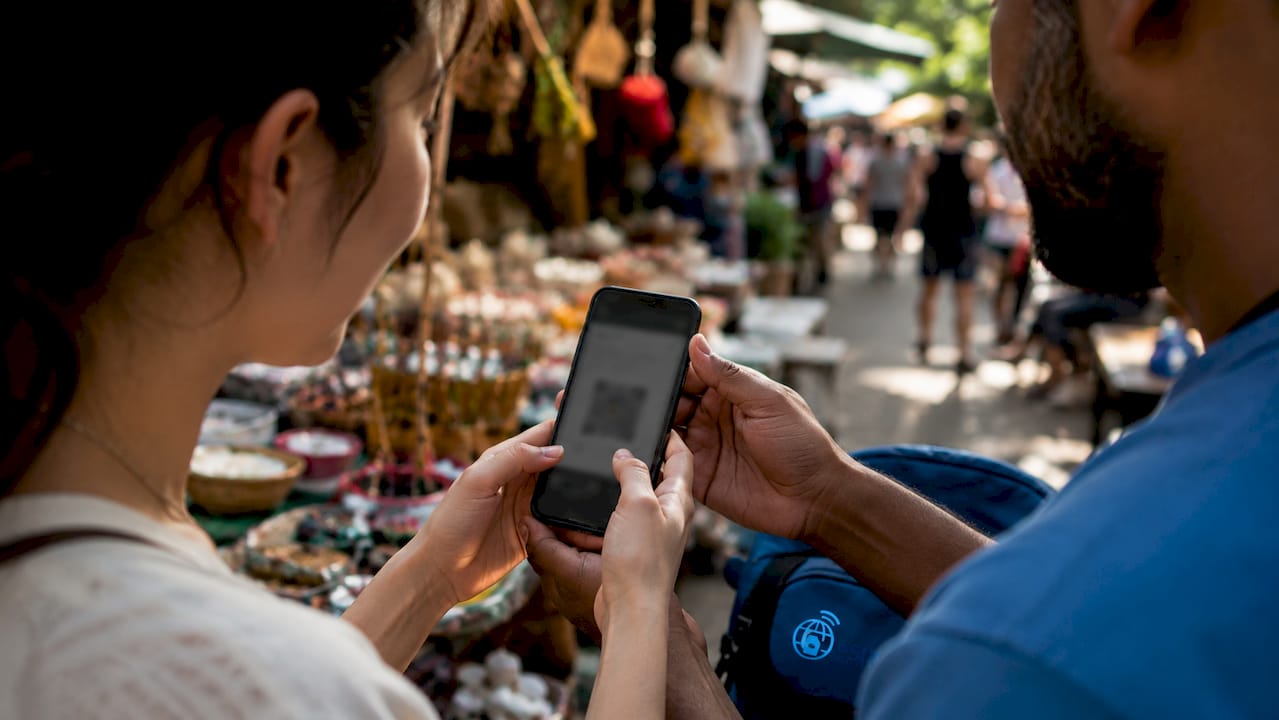
The key difference from a physical SIM is that nothing needs to be inserted or removed. Your device holds the plan digitally, and you switch between your home carrier and your travel plan through the settings menu. Modern smartphones support multiple eSIM profiles simultaneously, with some devices storing up to 8 profiles at once. That means you can keep your home number active for calls while running a separate data plan abroad.
Which devices support eSIM?
eSIM compatibility is now standard across most flagship devices. Apple iPhone XS and later models all support eSIM. Google Pixel 3 and above, Samsung Galaxy S20 and newer, and most recent models from OnePlus and Motorola also support the technology. Tablets like the iPad Pro and Microsoft Surface Pro X are compatible as well.
The single biggest compatibility issue is carrier locking. A locked device cannot activate a third-party eSIM plan, even if the installation appears to succeed. Contact your home carrier before traveling to confirm your device is unlocked. Most carriers unlock devices after the contract term ends, but the process sometimes requires a direct request.
- Apple iPhone XS, XR, and all later models
- Google Pixel 3 and above
- Samsung Galaxy S20 series and newer
- iPad Pro (2018 and later)
- Microsoft Surface Pro X
Pro Tip: Check your device’s eSIM compatibility and carrier-unlock status at least one week before departure. Unlocking requests can take 24–72 hours to process, and some carriers require the account to be in good standing.
What are the best travel eSIM options in 2026?
Pricing and data flexibility matter more than minor network speed differences when choosing a travel eSIM plan. The top providers in 2026 are Airalo, Holafly, Saily, Nomad, and Truely. Each offers a different mix of coverage, pricing, and data structure.
Airalo covers 200+ countries with local, regional, and global plans starting at $4.50 per 1GB. It uses a pay-per-data model, which works well for travelers who monitor usage carefully. Holafly focuses on unlimited data plans, which removes the anxiety of tracking gigabytes but typically costs more per day. Saily, backed by the Nord Security team, offers competitive regional pricing with a clean app interface. Nomad targets budget travelers with short-term plans across Asia and Europe. Truely specializes in global plans covering 190+ countries under a single profile.
Provider comparison table
| Provider | Coverage | Plan type | Starting price | Voice/SMS |
|---|---|---|---|---|
| Airalo | 200+ countries | Local, regional, global | $4.50 / 1GB | Data only |
| Holafly | 160+ countries | Unlimited data | ~$6.90/day | Data only |
| Saily | 150+ countries | Regional bundles | ~$3.99 / 1GB | Data only |
| Nomad | 100+ countries | Short-term data | ~$4.00 / 1GB | Data only |
| Truely | 190+ countries | Global single profile | ~$5.00 / 1GB | Data only |
Most of these providers offer data-only eSIM plans. That means no native voice calls or SMS through the eSIM itself. For standard calls and texts, you either keep your home SIM active alongside the eSIM or use VoIP apps like WhatsApp, FaceTime, or Google Voice over the data connection. Travelers who need native SMS for banking verification or local ride-sharing apps should look specifically for plans that include voice and SMS features, which are less common but available from select providers.
For multi-country trips across Europe or Southeast Asia, regional plans offer the best value. A single regional plan covering 30+ countries costs less than buying individual local plans for each destination. For single-country trips, local plans deliver better data rates and often faster network speeds.
Who should use an eSIM for traveling?
An eSIM delivers the most value for travelers who do not have international roaming benefits included in their home plan. Short-term international trips of 1–30 days, multi-country itineraries, and digital nomads working across borders are the clearest use cases. Business travelers who need reliable data in multiple countries within a single trip also benefit significantly. Esimglobe’s eSIM for business travelers guide covers cost-saving strategies specific to frequent flyers.
When a local SIM or roaming plan makes more sense
Long-term stays over 60–90 days are better served by a local SIM contract. Local prepaid SIMs in most countries offer monthly data packages at a fraction of travel eSIM costs. If you are relocating to a country for three months or more, a local SIM with a recurring plan is the economical choice.
Travelers with locked devices cannot use third-party eSIMs at all. In that case, international roaming through the home carrier or purchasing a physical SIM at the destination are the only options. Some home carriers, including T-Mobile and Google Fi, include international data in their standard plans, making a separate travel eSIM unnecessary for their subscribers.
| Travel scenario | Recommended option |
|---|---|
| 1–30 day trip, multiple countries | Regional travel eSIM |
| 1–30 day trip, single country | Local eSIM or physical SIM |
| 30–60 day trip | Travel eSIM or local SIM |
| 60+ day stay | Local SIM contract |
| Locked device | Physical SIM or home carrier roaming |
| Home plan includes international data | Home carrier plan |
Pro Tip: If your trip spans more than two countries, compare the cost of a regional eSIM against buying individual local plans. Regional plans almost always win on price and convenience once you cross three or more borders.
How to activate and manage your travel eSIM step-by-step
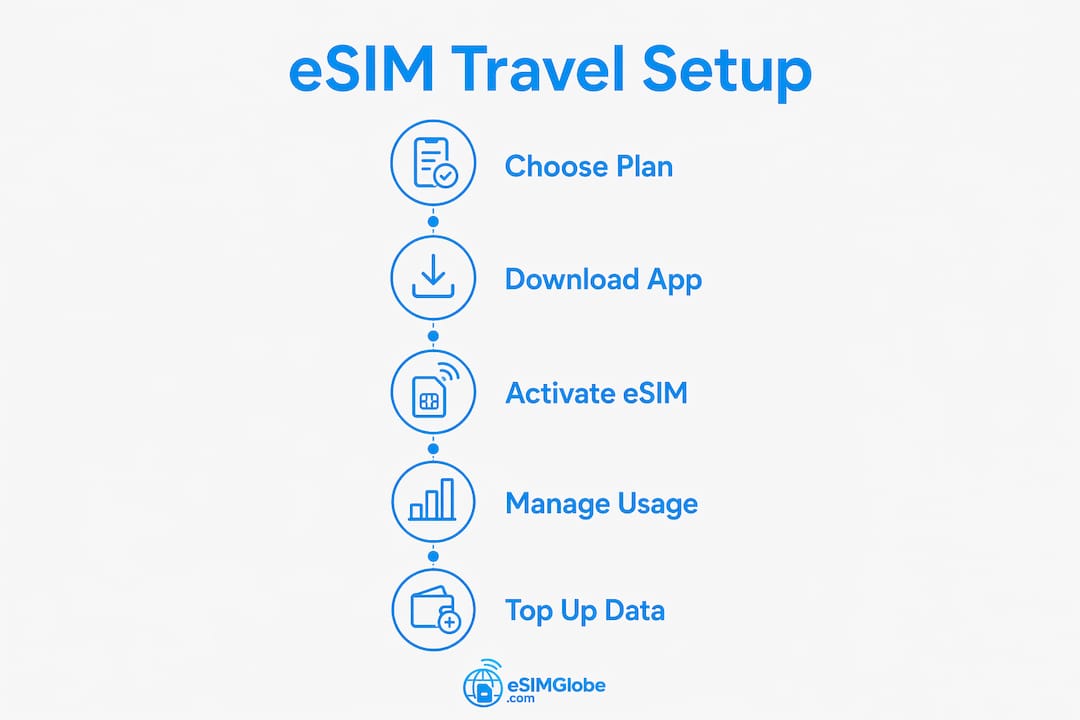
Activation is straightforward when your device is unlocked and compatible. The process differs slightly between providers, but the core steps are consistent across Airalo, Holafly, Saily, and most others.
- Confirm your device is carrier-unlocked before purchasing any plan.
- Purchase your eSIM plan through the provider’s app or website.
- Receive the QR code or activation link via email or in-app.
- Go to Settings > Cellular (or Mobile Data) > Add eSIM on your device.
- Scan the QR code or follow the app-based installation prompt.
- Label the new plan clearly, such as “Europe Trip” or “Japan Data.”
- Set the travel eSIM as your primary data line.
- Disable data roaming on your home SIM to prevent unexpected charges.
Phones can hold up to 8 eSIM profiles, so you do not need to delete old plans between trips. Keeping past profiles stored lets you reactivate a plan quickly if you return to the same destination. Most providers allow top-ups directly through their app if you run low on data mid-trip.
Common pitfalls include activating the eSIM before you need it and burning through the validity window. Many plans start their countdown from activation, not first use. Read the plan terms carefully and activate only when you land or the day before departure. Expired plans cannot be reactivated, so timing matters.
Pro Tip: Download your provider’s app before you leave home while you still have reliable Wi-Fi. The app makes top-ups and plan management much easier than navigating a mobile website on a slow connection abroad.
What are the hidden benefits of using an eSIM abroad?
Security is one of the most underrated advantages of eSIM technology. eSIMs cannot be physically removed if your device is lost or stolen. A thief cannot pull the SIM to disable tracking or transfer your number to another phone. That embedded nature keeps Find My iPhone, Google Find My Device, and similar tracking tools functional even after a theft.
The environmental benefit is also real. Physical SIM cards are small pieces of plastic that most travelers discard after a trip. Switching to digital profiles eliminates that waste entirely. For frequent travelers taking four or more international trips per year, the reduction in single-use plastic adds up.
The hybrid approach is the most cost-effective strategy for most travelers. Keep your home SIM active for calls and SMS, and run a cheap travel eSIM for data. This combination avoids high roaming fees while maintaining your regular phone number for incoming calls and two-factor authentication texts.
- Your home number stays reachable for calls and texts.
- Your travel eSIM handles data at local rates.
- Banking SMS and two-factor authentication codes arrive on your home SIM.
- You avoid roaming data fees without losing your primary number.
“The best setup I’ve seen for frequent travelers is a dual-SIM phone with the home carrier handling voice and the travel eSIM handling data. It covers every use case without paying roaming premiums.” — eSIM travel tips
For data monitoring, most provider apps show real-time usage. Check your balance daily on longer trips to avoid running out unexpectedly. Some providers send automatic alerts at 80% and 100% usage, but not all do. Set a manual reminder if your provider does not offer alerts.
Key takeaways
An eSIM for traveling delivers the best results when paired with a carrier-unlocked device, a well-matched plan type, and the hybrid dual-SIM strategy for calls and data.
| Point | Details |
|---|---|
| Device must be unlocked | A locked device cannot activate any third-party travel eSIM plan. |
| Match plan type to trip length | Use regional eSIMs for multi-country trips and local SIMs for stays over 60 days. |
| Most plans are data only | Keep your home SIM active for native calls, SMS, and banking verification. |
| Activate at the right time | Many plans count validity from activation, not first use, so time it carefully. |
| Hybrid setup saves the most | Pairing a home SIM for voice with a travel eSIM for data cuts roaming costs significantly. |
My honest take on eSIMs after years of international travel
I have used eSIMs from Holafly and Airalo across trips to Japan, Portugal, Colombia, and Thailand. The technology works exactly as advertised when your device is unlocked and you buy the right plan type. The failures I have seen, including my own early mistakes, almost always come down to two things: a locked device or activating the plan too early and burning through the validity window before landing.
The provider comparison rabbit hole is real. Travelers spend hours reading eSIM reviews for travelers and comparing speed tests that, in practice, rarely affect the actual experience. The pricing structure and data flexibility matter far more than whether one provider runs on a slightly faster network in a specific city. Pick a provider with solid coverage in your destination, a plan that matches your data habits, and move on.
The hybrid setup is the approach I recommend without hesitation. I keep my home carrier active on the physical SIM for calls and texts, and I run a travel eSIM for data. That combination has never failed me across 15+ countries. The only time I deviate is on trips longer than two months, where a local SIM contract becomes the cheaper option.
One thing most articles skip: test a short-term plan on a domestic trip or a quick weekend trip before relying on it for a two-week international journey. You learn the app, the activation flow, and your data habits without the pressure of being abroad. That practice run is worth more than any comparison chart.
The eSIM market is growing fast, and plan options are improving every quarter. Prices are dropping, coverage is expanding, and more providers are adding voice and SMS support. The technology is not perfect yet, but it is already the best option for most international travelers in 2026.
— Daniele
Explore travel eSIM plans with Esimglobe
Esimglobe offers a wide range of travel eSIM plans covering destinations across Asia, Europe, the Americas, and beyond. Plans are available for single countries and multi-region trips, with flexible data allowances to match any itinerary.
For travelers heading to the Indian Ocean, the Maldives 1GB 7-day eSIM from Esimglobe provides instant activation and reliable connectivity at a competitive price. Browse the full catalog at Esimglobe to find affordable eSIM for travel that fits your destination, trip length, and data needs. Activation takes minutes, and plans are ready before you board.
FAQ
What is an eSIM and how does it work for travel?
An eSIM is a digital SIM card embedded in your device that stores carrier profiles remotely. You purchase a travel plan, scan a QR code or use an app, and activate mobile data without a physical SIM card.
Do I need to unlock my phone to use a travel eSIM?
Yes. A carrier-unlocked device is required to activate any third-party eSIM plan. A locked device will not run an external eSIM even after a successful installation.
Are travel eSIMs data only, or do they include calls and texts?
Most travel eSIM plans are data only. Voice and SMS require either a plan that explicitly includes those features or VoIP apps like WhatsApp and Google Voice running over the data connection.
How long should I stay abroad before switching to a local SIM?
Stays over 60–90 days are generally better served by a local SIM contract. Local monthly plans cost significantly less than travel eSIM rates for extended stays.
Can I use two eSIMs at the same time on one phone?
Modern smartphones support multiple eSIM profiles simultaneously, with some devices storing up to 8. You can keep your home carrier active for calls while running a travel eSIM for data at the same time.