






















TL;DR:
- eSIM technology allows travelers to activate local data plans without physical SIM cards, simplifying international connectivity. Top providers like Holafly, Sim Local, and Airalo offer plans tailored to different travel needs, with options ranging from unlimited high-speed data to regional fixed data. Proper activation procedures and selecting plans matching your travel style ensure seamless, cost-effective global connectivity.
Roaming fees have a way of turning a great trip into a billing nightmare. Many travelers land in a new country, turn on their phone, and immediately start burning through money at $15 or more per day just to check a map. The best eSIM for travelling solves this problem directly: no physical SIM cards, no hunting for local carriers at the airport, and no surprise charges on your phone bill when you get home. This guide breaks down how eSIM technology works, which providers stand out in 2026, and exactly how to choose a plan that fits how you actually travel.
Table of Contents
- Understanding eSIM technology and why it matters for travelers
- Top eSIM providers for international travel: comparing plans, coverage, and pricing
- Choosing the right eSIM plan for your travel style and destinations
- Common eSIM activation and usage pitfalls and how to avoid them
- How to apply eSIM solutions based on traveler profiles and trip types
- A fresh perspective on choosing eSIMs: why simplicity beats hype
- Connect seamlessly worldwide with EsimGlobe’s trusted eSIM service
- Frequently asked questions
Key Takeaways
| Point | Details |
|---|---|
| eSIM basics | eSIM technology enables easy multi-country mobile data without physical SIM swapping. |
| Plan types | Choose between unlimited plans for ease or fixed-data plans for cost savings based on your usage. |
| Top providers | Holafly excels at unlimited data, Sim Local for calls plus data, and Airalo for wide coverage. |
| Avoid activation errors | Keep QR code backups, enable data roaming on eSIMs, and set the eSIM as the default data line. |
| Travel profile fit | Match your eSIM plan to your travel style for the best balance of cost and connectivity. |
Understanding eSIM technology and why it matters for travelers
An eSIM (embedded SIM) is a digital SIM card built directly into your phone’s hardware. Instead of physically inserting a plastic card, you download a carrier profile onto your device using a QR code or a provider’s app. That profile activates your data plan, and you are connected. No tools required. No fumbling with a SIM ejector pin in a foreign airport bathroom.
The practical difference from a physical SIM is significant for travelers. With a traditional SIM, switching carriers means swapping cards, which means carrying spares, risking losing them, and dealing with the possibility of your local number going offline. With an eSIM, your phone can hold multiple profiles simultaneously. You keep your home number active on your physical SIM while your travel eSIM handles all your data.
Key advantages of eSIMs for international travel include:
- Instant activation: Purchase and install a plan from your couch before you even pack your bags.
- Multiple profiles: Switch between country or regional plans without touching a SIM tray.
- No roaming charges: You are on a local or regional network, not paying your home carrier’s international rates.
- No physical loss risk: You cannot drop an eSIM down an airport drain.
Before purchasing, verify your device supports eSIM. Most flagship smartphones released after 2019 do, including iPhone XS and newer, Samsung Galaxy S20 and newer, and Google Pixel 3 and newer. Some budget Android models and carrier-locked phones still lack support. Check your phone’s cellular settings or your manufacturer’s spec page first. It takes two minutes and prevents a frustrating failed activation.
For a deeper look at essential eSIM facts before your first trip, and practical eSIM travel tips that cover everything from QR code management to network settings, those resources are worth reviewing before you buy anything.
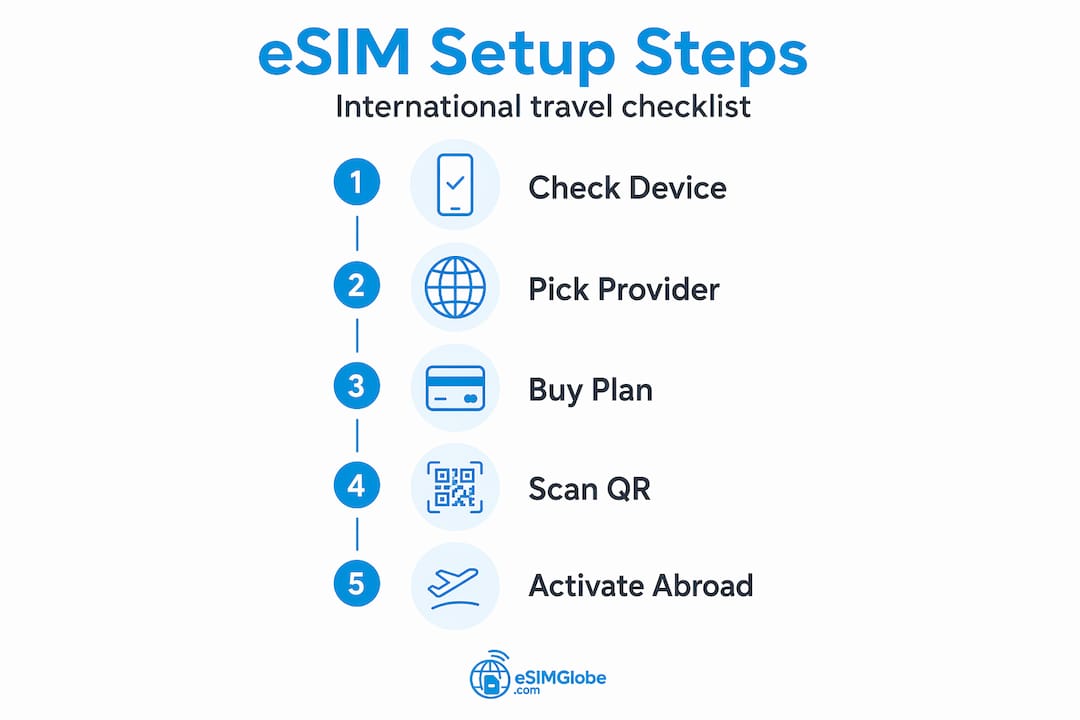
eSIM adoption has grown fast because the travel problem it solves is universal. Whether you are crossing two borders in a week or spending three months on one continent, eSIM technology removes the friction of mobile connectivity from the trip entirely.
Now that you understand the challenges eSIMs solve, let’s explore the top providers catering to different traveler needs.
Top eSIM providers for international travel: comparing plans, coverage, and pricing
Not all eSIM providers are equal. The right one depends on your data appetite, how many countries you are visiting, and whether you need voice calls. Here is how the major players stack up in 2026.

Holafly positions itself squarely at the heavy-data end of the market. Unlimited global data from Holafly runs $64.90 per month covering 160+ countries, and the pricing simplicity is a genuine selling point for travelers who do not want to monitor gigabytes. There are no top-up alerts, no “you have 500MB remaining” panic moments mid-navigation. The trade-off is that Holafly does not include voice or SMS, so it is a data-only solution.
Sim Local targets travelers who want both data and the option to make calls and send texts. Unlimited regional plans with 10GB of high-speed data per day are available across 200+ destinations, making it a strong pick for European or Southeast Asian regional trips where you cross multiple borders within a week.
Airalo is the go-to for budget-conscious or lighter data users. Global plans at $19.50 per 10GB across 200+ destinations make it one of the most affordable fixed-data options available. The Airalo marketplace model also lets you buy regional or country-specific plans, so you are not paying for global coverage when you only need one region.
Here is a direct comparison of the three providers:
| Provider | Plan type | Coverage | Price point | Best for |
|---|---|---|---|---|
| Holafly | Unlimited data | 160+ countries | $64.90/month | Heavy users, country-hoppers |
| Sim Local | Unlimited + calls/texts | 200+ destinations | Varies by region | Multi-country, voice needs |
| Airalo | Fixed data (GB-based) | 200+ destinations | From $19.50/10GB | Light users, short trips |
Additional factors that affect your decision:
- Throttling policies: “Unlimited” does not always mean full-speed. Many providers cap high-speed data at 500MB to 1GB per day before dropping to 3G speeds.
- Validity windows: Some plans start counting days from purchase, not activation. Buying too early wastes days.
- Network partners: Check which local carrier the eSIM connects to in each country. Premium local carriers mean better coverage in rural areas.
- Data rollover: Most plans do not roll over unused data, so sizing your plan accurately matters.
For a broader look at international eSIM types and a dedicated breakdown of best eSIM for global travel, both resources provide additional depth on plan structures. The best eSIMs for travel guide from a full-time traveler’s perspective also offers firsthand experience across multiple providers worth reading before committing.
Pro Tip: “Unlimited” often means throttling after daily data limits. Always read the fair-use policy before purchasing any unlimited eSIM plan. Look specifically for the high-speed data cap per 24-hour period.
With the main providers and plans mapped out, let’s dive into the nuances to help you pick what fits your travel style best.
Choosing the right eSIM plan for your travel style and destinations
The single biggest mistake travelers make is buying the cheapest plan without checking whether it actually matches how they use data. Here is a structured way to choose correctly.
Step 1: Estimate your daily data use. Streaming video consumes roughly 1GB per hour. Navigation via Google Maps uses around 5MB per 30 minutes. Casual browsing and messaging stays well under 500MB per day. If you are a heavy user, video-calling family or uploading content, budget for 2GB to 3GB daily minimum.
Step 2: Count your countries and days. If you are visiting more than two countries in a single trip, a regional or global plan almost always beats buying individual country plans. The math shifts around the three-country mark where bundled regional pricing undercuts per-country purchases.
Step 3: Decide between unlimited and fixed data. Holafly suits travelers who dislike tracking data consumption and want to use their phone without anxiety. Fixed GB plans work for travelers who mostly use data for maps and messaging, where 3GB to 5GB is genuinely enough for a one-week trip.
Step 4: Check regional plan limitations. Regional plans like Airalo’s allow multi-country travel on a single eSIM but typically apply daily high-speed data caps per country. For a backpacker moving through five Southeast Asian countries, this is far more practical than five separate eSIM purchases.
Step 5: Time your purchase correctly. Most validity periods begin on first use, not purchase date. Buy your eSIM 24 to 48 hours before departure, install the profile on your phone, but do not activate data roaming until you land. This preserves your full plan duration.
Cost-saving tactics worth building into your routine:
- Buy single-country plans for long stays (two-plus weeks in one place) rather than global plans.
- Monitor data with your phone’s built-in usage tracker, not just the provider’s app.
- Turn off background app refresh for data-heavy apps like cloud photo backup and streaming when you are on a fixed plan.
- Look for plans that start counting validity from first data use, not installation.
The travel eSIM guide covers additional cost reduction strategies for travelers managing longer itineraries.
Pro Tip: Install your eSIM profile before you leave home but enable data roaming only after you land. This keeps your plan’s validity intact and gives you a stress-free activation the moment you clear customs.
Understanding your optimal plan sets the stage for activating and managing your eSIM effectively while traveling.
Common eSIM activation and usage pitfalls and how to avoid them
Activation errors are responsible for most of the bad reviews you see on eSIM platforms. The technology is reliable; human error during setup is the actual problem. Knowing the common mistakes in advance makes the difference between arriving connected and spending your first hour abroad troubleshooting.
Deleting the QR code after installation is one of the most damaging errors a traveler can make. Most providers cannot reissue QR codes once scanned. If you reset your phone, switch devices, or accidentally delete the eSIM profile and no longer have the QR code saved, your plan is effectively gone. Screenshot it. Email it to yourself. Save it in cloud storage. Treat it like a boarding pass.
Failing to enable data roaming on the eSIM line specifically is the most common reason travelers land and have no data connection. Installing an eSIM is not enough. You must go into your phone’s cellular settings, select the eSIM line, and toggle data roaming on. On iPhones, this is under Settings > Cellular > [eSIM plan name] > Data Roaming. On Android, the path varies by manufacturer but is typically under Network > SIM Management.
Common pitfalls to avoid:
- Buying before checking compatibility: Confirm your phone supports eSIM and is not carrier-locked before purchasing any plan.
- Using automatic eSIM activation on a locked device: Some carrier-locked phones reject third-party eSIM profiles entirely.
- Setting the wrong default data line: After installing your eSIM, set it as the primary data line in your cellular settings. If your physical SIM remains the data default, your eSIM plan sits idle while your home carrier racks up roaming charges.
- Relying on manual network selection: Unless you are troubleshooting a specific connectivity issue, keep your phone on automatic network selection. Manual selection can lock you to a weak signal when a better network is available.
- Buying plans that have already expired or are region-restricted: Check expiration dates and country coverage carefully before checkout.
The best eSIM travel practices resource covers these scenarios in detail, including how to handle mid-trip device issues. The comprehensive eSIM activation mistakes guide is worth reading end-to-end before your first eSIM trip.
Pro Tip: Set your eSIM as the default data line immediately after installation, then go to your physical SIM settings and disable data roaming on that line specifically. This prevents any accidental charges from your home carrier if your phone switches lines automatically.
Armed with proper activation knowledge, let’s explore how to apply all this to various traveler profiles in practice.
How to apply eSIM solutions based on traveler profiles and trip types
eSIM decisions are not one-size-fits-all. A business traveler doing day trips to three European capitals has completely different needs from a backpacker spending three months across Southeast Asia. Matching your plan to your actual travel profile saves money and prevents frustration.
Occasional holidaymakers taking one or two international trips per year benefit most from fixed-data country or regional plans. A 5GB to 10GB plan for a one-week beach trip costs a fraction of daily roaming rates and requires no ongoing management.
Frequent flyers and business travelers who move between countries weekly need the reliability and coverage breadth of a global unlimited plan. The per-day cost becomes irrelevant compared to the value of never losing connectivity during a client call or a tight connection at an unfamiliar airport.
Digital nomads working remotely across multiple countries over months need to balance cost with reliability. Holafly suits heavy users and content creators, while fixed-data providers offer better value per GB for nomads with predictable, moderate data consumption. Airalo’s regional plans work well for nomads who stay in one region for extended periods.
Backpackers on tight budgets moving through multiple countries benefit most from regional plans with fixed data allocations. The eSIM guide for digital nomads also applies here, since both profiles share the multi-country itinerary challenge.
Content creators uploading video, running live streams, or managing large file transfers need unlimited plans without strict daily caps. Speed throttling is the enemy of a content workflow, so verifying the fair-use policy is non-negotiable before purchasing.
Regarding voice and SMS: Sim Local is the preferred choice when calls and texts are required alongside data, particularly on regional trips. Most other providers are data-only, meaning calls go through WhatsApp, FaceTime, or similar apps rather than cellular networks.
Here is a reference table matching traveler profiles to provider recommendations:
| Traveler type | Recommended plan | Suggested provider | Key priority |
|---|---|---|---|
| Occasional holidaymaker | Fixed 5GB to 10GB regional | Airalo | Low cost, simple setup |
| Business traveler | Unlimited global | Holafly | Reliability, coverage |
| Digital nomad | Regional fixed or unlimited | Airalo / Holafly | Cost vs data balance |
| Backpacker | Regional fixed data | Airalo | Budget, multi-country |
| Content creator | Unlimited, high daily cap | Holafly / Sim Local | Speed, no throttling |
| Voice and SMS needed | Unlimited + calls/texts | Sim Local | Full connectivity |
For travelers comparing eSIM with traditional local SIM purchasing, the eSIM vs local SIM guide gives a clear breakdown of when each option actually makes more financial sense.
A fresh perspective on choosing eSIMs: why simplicity beats hype
The eSIM market has produced a cottage industry of comparison articles obsessing over cents-per-gigabyte differences between providers. That framing leads travelers to make worse decisions.
Here is what actually happens when you optimize purely for the lowest price per GB: you buy a fixed-data plan that runs out on day four of a seven-day trip. You spend 20 minutes buying a top-up on slow airport Wi-Fi. You discover the top-up has different network partners in your current country. You end up paying more than a single unlimited plan would have cost, plus the mental overhead of managing it all.
Holafly is consistently praised for delivering exactly this kind of simplified reliability for country-hoppers, specifically because the unlimited structure removes the decision loop that per-GB plans create. That is worth a cost premium for most travelers.
The practical wisdom that actually improves eSIM experiences:
- Save your QR code in three places. Email, cloud storage, and a screenshot in your camera roll. This is the single habit that prevents the most common catastrophic eSIM failure.
- Install early, activate late. Set up the eSIM profile at home where you have stable Wi-Fi. Turn on data roaming only when you touch down at your destination.
- Network partners matter more than price. A $5 cheaper plan that connects to a second-tier carrier in your destination country may deliver slower speeds and worse rural coverage than the option that costs slightly more.
- Test before you commit long-term. Buy a short-duration plan for your next destination before locking into a month-long commitment. Providers that perform well on your first trip earn your repeat business.
The travelers who report the worst eSIM experiences are almost always those who tried to micromanage multiple providers simultaneously, chasing marginal savings. One reliable eSIM with good travel coverage consistently outperforms a patchwork of cheaper options that require constant attention.
Pro Tip: Test a short-term plan with any new provider before committing to a longer or more expensive plan. One successful short trip gives you reliable data on real-world performance in your actual destinations.
Connect seamlessly worldwide with EsimGlobe’s trusted eSIM service
Finding the right plan from a provider you can trust is the final piece of the puzzle. EsimGlobe offers a wide selection of travel eSIM plans covering countries and regions worldwide, with competitive pricing and clear installation guides built for travelers who want to get set up without reading a manual three times.
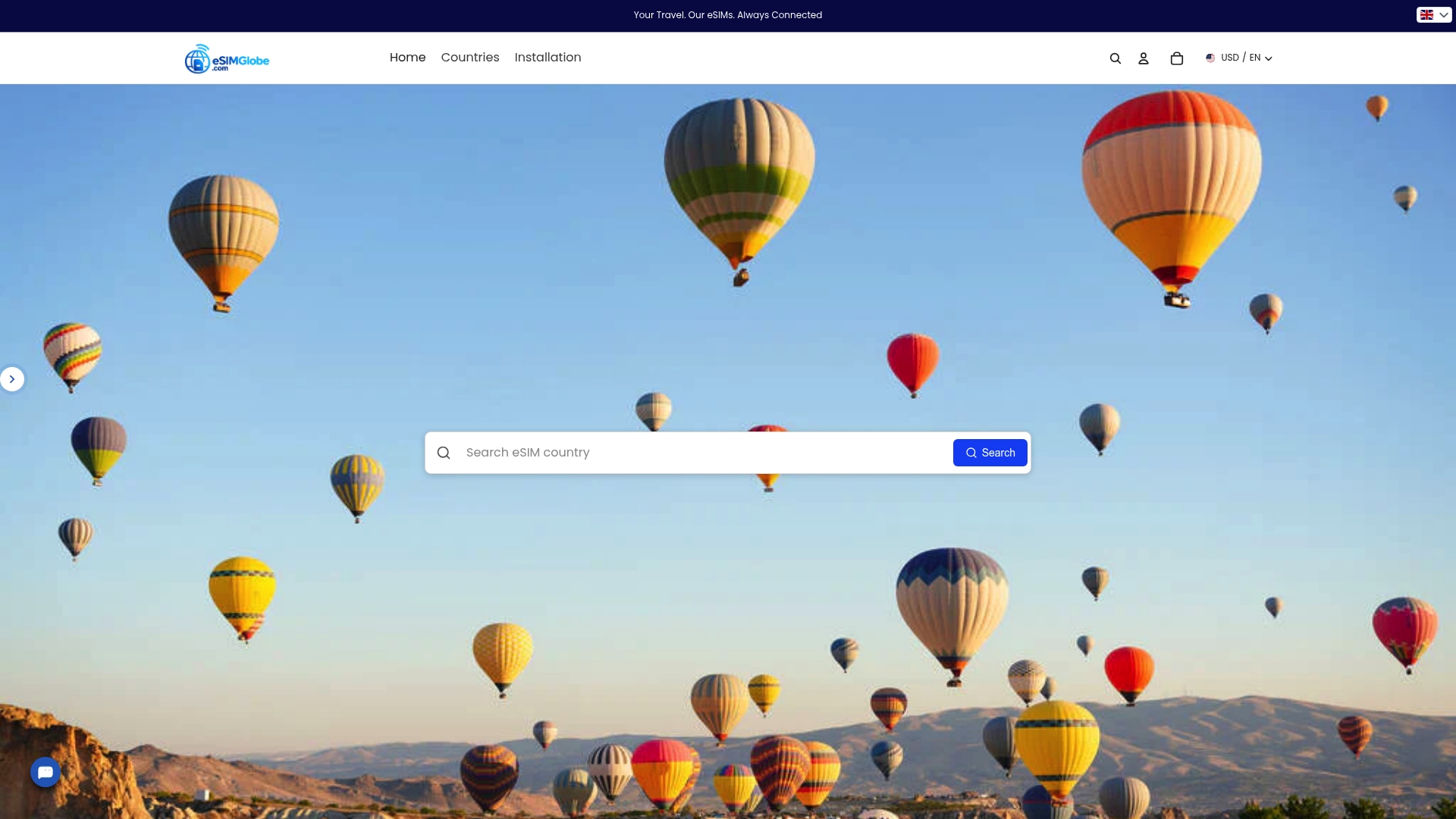
EsimGlobe’s platform supports multiple currencies including USD, EUR, and GBP, and offers multilingual interfaces so travelers from any background can navigate and purchase with confidence. Plans are available for individual countries, regional bundles, and global coverage, covering occasional trips and long-term travel alike. Customer support is available to guide you through activation if anything goes wrong. Visit EsimGlobe to browse current plans, compare coverage by destination, and activate your eSIM before your next departure.
Frequently asked questions
What is the best eSIM for multi-country travel?
Holafly is a strong option for unlimited global data covering 160+ countries, while Airalo offers wide fixed-data coverage across multiple destinations without requiring separate SIM purchases for each country.
How do I avoid connectivity issues when activating my eSIM?
Check device compatibility before purchasing, install the eSIM profile on stable Wi-Fi before departure, enable data roaming on the eSIM line after arrival, and never delete your original QR code since it cannot be reissued after deletion or a device reset.
Are unlimited eSIM plans truly unlimited?
Most unlimited plans throttle speeds after a daily high-speed data quota, typically between 500MB and 1GB per 24 hours. Check each provider’s fair-use policy before purchasing since throttling after quotas is standard practice across most “unlimited” travel eSIM plans.
Can I use one eSIM for long-term travel?
Yes. Providers offering annual or long-validity plans let you install once and top up as needed, which makes them practical for digital nomads and extended travelers who want consistent mobile data while traveling without repurchasing plans every week.
Do eSIMs work on all smartphones?
No. eSIM support is not universal, and purchasing without confirming compatibility is one of the most common activation failures travelers face. Check your phone’s cellular settings or manufacturer specs page before buying any eSIM plan.