






















For most Android travelers, An unlimited multi-area plan is a strong choice because it pairs one activation with coverage across multiple countries and no data-counting anxiety. Short city breaks fit best with a country plan like eSIM Italy or eSIM Rome, while remote workers spending a month abroad should look at eSIM USA Unlimited plan or eSIM Europe (30+ areas) Unlimited. Every one of these installs the same way on Android: scan a QR code, confirm the profile, and go.
TL;DR:
- Unlimited multi-area plans are ideal for long-term digital nomads or extensive border-crossing trips, offering coverage across over 120 countries with a single activation.
- Short city or country trips benefit from specific plans like eSIM Italy or Rome, which start as low as $2.00 and are tailored for brief stays, with straightforward QR activation.
- Activation on Android is quick and similar across plans, but global plans may take slightly longer to register on the first network, especially in rural or weak-signal areas.
- When choosing, consider data allowance versus unlimited options, validity periods, hotspot restrictions, network coverage, and activation ease to avoid unexpected expenses or connection issues.
- Purchase and install the eSIM before departure, test connectivity upon landing, and save activation details offline to prevent issues during the trip.
Table of Contents
- Shortlist: The Best Android eSIM Plans Worth Buying
- How Do You Choose the Right eSIM for Android?
- Country, Regional, Global, or Unlimited: Which Plan Type Fits?
- Is Your Android Phone eSIM Compatible? Setup Steps
- Your eSIM Data Won’t Connect on Android: Fast Fixes
- Why Trust These Android eSIM Picks?
- Browsing the eSIMGlobe Catalog by Destination
- What Does an eSIM Actually Cost After Fees?
- How Long Does eSIM Activation Actually Take?
- Which eSIM Providers Actually Answer Support Requests?
- Is eSIM Safe? Security and Privacy on Android
- A Traveler’s Note on Android eSIMs
- Ready to Get Connected? Here’s What to Buy
- Selected Sources and Further Reading
- FAQ
Shortlist: The Best Android eSIM Plans Worth Buying
Picking the right plan depends less on brand loyalty and more on matching the plan type to the trip. Here is how the recommended eSIMGlobe lineup breaks down for Android travelers, based on the way top-ranking travel guides evaluate coverage, validity, and activation ease rather than headline price alone.
- eSIM Italy — Best for short trips to a single country. A pay-as-you-go plan built for a long weekend or week in Milan, Florence, or the coast, priced from $2.00 with straightforward QR activation on any eSIM-capable Android phone.
- eSIM Italy Unlimited — Best for travelers who stream, video call, or work while in Italy. Removes the data-counting stress of a fixed allowance; check the throttling policy after the plan’s soft cap before assuming unlimited means unrestricted.
- eSIM USA — Best for visitors flying into the United States for a business trip or family visit. A country-specific plan that avoids the premium pricing of global bundles when you only need coverage in one place.
- eSIM Rome — Best for travelers whose entire itinerary sits in and around the capital. City-focused plans like this one make sense when you know you will not cross into neighboring regions.
- eSIM USA Unlimited plan — Best for digital nomads based in the US for weeks at a time. Handles heavy hotspot use for a laptop tethered to a phone, which matters more than raw price per gigabyte once you are working daily.
- eSIM Miami Unlimited — Best for travelers whose trip is anchored entirely in South Florida. A tighter geographic scope than the national unlimited plan, useful when your whole visit is one metro area.
- eSIM Global (120+ areas) Unlimited — Best for multi-country itineraries and long-haul digital nomads. One profile, one activation, and coverage that follows you across borders without needing to reinstall.
- eSIM Global (130+ areas) — Best for travelers who want broad coverage but prefer a fixed allowance over an unlimited plan, often the cheaper option for shorter multi-country hops.
Activation complexity is close to identical across this list on Android. The only variable is how many networks the plan needs to negotiate roaming with, and global plans occasionally take a few extra seconds to register on the first network after landing.
How Do You Choose the Right eSIM for Android?
Coverage, price, validity, hotspot allowance, and activation friction are the five variables that actually separate a good plan from a bad one, and travel guides that rank eSIM providers consistently weigh these ahead of the sticker price. A $4.99 headline offer means nothing without knowing how many days it lasts or what happens when you run out.
- Best-for fit. Match the plan to the trip type first: single country, regional hop, or open-ended global travel.
- Data allowance versus unlimited. Fixed allowances suit short trips with light use; unlimited plans suit remote work, navigation-heavy road trips, or anyone who will not track usage.
- Validity period. Confirm whether the clock starts at purchase or at first connection. A 7-day plan bought a week before departure can expire before you land.
- Real cost per GB. Divide the plan’s price by its data allowance, not the headline number. A 5GB plan at $12 works out to $2.40 per GB, while a 1GB plan at $5 costs $5.00 per GB despite looking cheaper on the label.
- Hotspot allowance. Some plans throttle or block tethering entirely. If you plan to share your connection with a laptop, verify this before buying.
- Activation friction. Instant QR-code installs beat plans that require manual APN entry or a support ticket to get running.
- Coverage and network partner. Check which local carrier the eSIM actually rides on. Resold slices on a minor MVNO can leave you with weak signal outside major cities, even when the plan claims nationwide coverage.
Unlimited plans pay off once your daily use crosses roughly 2 to 3GB, which is common for anyone navigating with maps, video calling home, or working from a phone hotspot. Below that threshold, a fixed regional or country allowance is usually the cheaper route.
Pro Tip: Before you leave home, disable auto-play video and cloud photo backup on cellular data. Those two settings alone can burn through a 3GB allowance in a single afternoon of sightseeing.
Pro Tip: Install the eSIM profile while still on Wi-Fi and in airplane mode, then toggle airplane mode off once you land. This avoids the profile trying to register on a home network before it even reaches the destination country.
Country, Regional, Global, or Unlimited: Which Plan Type Fits?
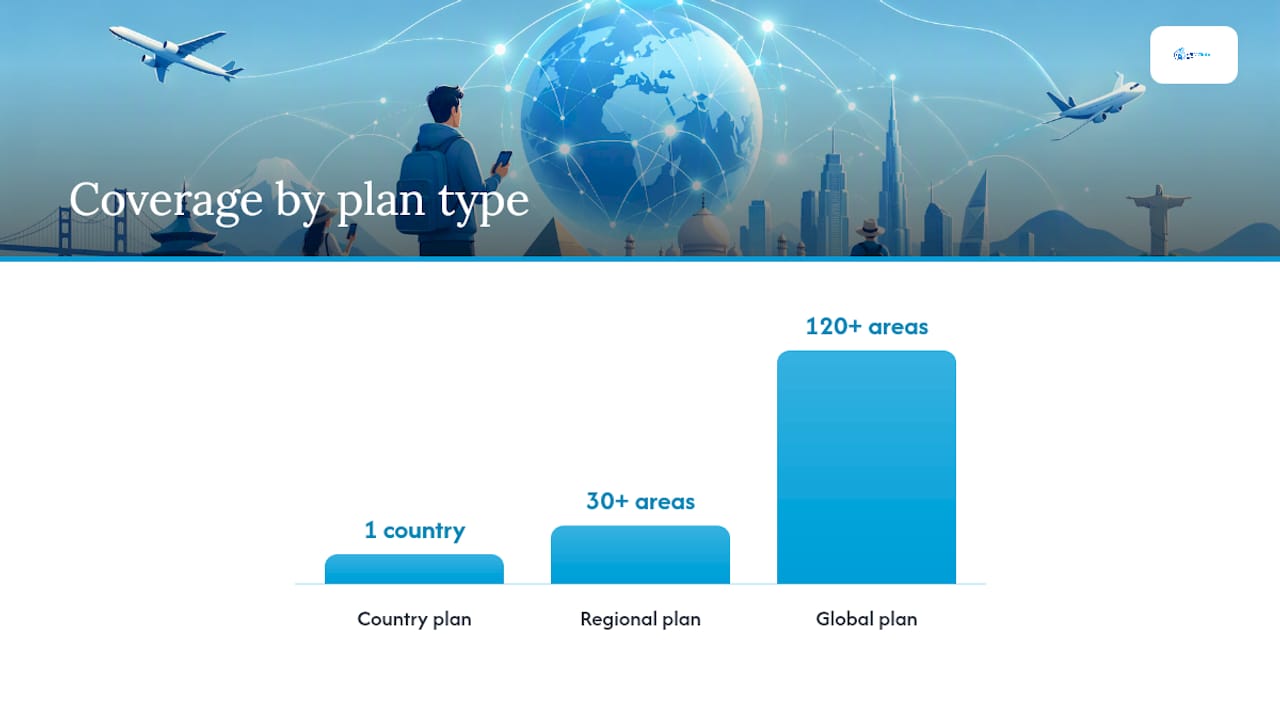
Country plans cover one destination and suit travelers with a fixed itinerary, like a week in Spain or a business trip to the United States. Regional plans, such as eSIM Europe (30+ areas), cover a cluster of nearby countries and fit anyone crossing two or three borders on the same trip. Global plans extend that same logic across continents, ideal for a round-the-world route or a digital nomad with no fixed base. Unlimited plans strip out the allowance question entirely and charge for time and coverage instead of gigabytes.
The three pricing traps that catch travelers most often:
- Short validity windows. A plan that looks cheap per gigabyte often expires in 3 to 7 days, forcing a second purchase mid-trip.
- Silent throttling. Some “unlimited” plans slow speeds dramatically after a soft cap, which is fine for messaging but painful for video calls.
- Top-up friction. Running out of data mid-trip should not require re-scanning a whole new QR code; check whether the plan supports a simple top-up first.
Three common traveler profiles map cleanly onto the eSIMGlobe lineup:
- A weekend trip to Rome fits eSIM Rome or eSIM Italy, since a fixed allowance covers a few days of maps and messaging without paying for unused capacity.
- A two-week vacation across the US fits eSIM USA or eSIM USA Unlimited plan, depending on whether you expect to stream or hotspot heavily.
- A month of remote work anywhere fits eSIM Global (120+ areas) Unlimited, since the flat unlimited structure removes the need to track daily usage across time zones.
Is Your Android Phone eSIM Compatible? Setup Steps
Most Android phones released since 2019 support eSIM, but support varies by manufacturer, carrier lock status, and region. Google Pixel models from the Pixel 3 onward and most Samsung Galaxy S and Z series phones from the S20 era forward support eSIM, though carrier-locked units purchased on installment plans sometimes have eSIM disabled at the firmware level regardless of the hardware.
Check compatibility in three steps:
- Open Settings, then search “eSIM” or navigate to Network & Internet > SIMs. If you see an option to “Add eSIM” or “Download a SIM instead,” your phone supports it.
- Confirm the phone is not carrier-locked by checking with your original carrier, since a locked device can block eSIM installation even when the hardware supports it.
- Cross-check your exact model against a device compatibility list if the settings menu is ambiguous. Pixel and Samsung users can find model-specific notes in the Pixel eSIM setup guide and Samsung eSIM setup guide.
Activation flow, start to finish:
- Purchase the plan and receive the QR code and activation details by email, typically within seconds of checkout.
- Go to Settings > Network & Internet > SIMs > Add eSIM, then choose “Scan QR code” and point the camera at the image from the email.
- Confirm the profile installation when prompted, then label it something recognizable like “Travel Data.”
- Under SIMs, set the new eSIM as the active data SIM and confirm mobile data and data roaming are both turned on for that profile.
- Test the connection before leaving Wi-Fi range by toggling airplane mode on and off, letting the phone register on the network.
Pixel 9 owners should note a slightly different menu path in the newest Android build; the Pixel 9 travel setup guide walks through the exact screens. Android phones can also store multiple eSIM profiles at once, but only one can be active for data at a time, which is worth remembering if you install a new travel plan without removing an old one first. Device manufacturer and carrier policies ultimately decide how many profiles a given phone can hold, so a phone that behaves oddly after several trips may simply be full.
Your eSIM Data Won’t Connect on Android: Fast Fixes
Run through these checks in order before contacting support. Most connection failures on Android resolve in under five minutes.
- Toggle airplane mode on for 10 seconds, then off, to force the phone to re-register with the network.
- Confirm the travel eSIM is set as the active SIM for mobile data under Settings, not just installed.
- Check that data roaming is enabled specifically for that eSIM profile, since Android treats this as a separate switch from mobile data.
- Restart the phone completely rather than just toggling settings, which clears a stuck network registration.
- Verify the APN settings match what the plan provider specifies; most eSIMs auto-configure this, but a manual entry occasionally reverts after a software update.
- Confirm you have actually landed in a covered country or region for that specific plan.
If none of that works, verify the network operator your eSIM is supposed to connect to and check whether that carrier has coverage in your exact location, since resold data slices on a secondary network can leave rural areas with weak or no signal. Before reaching out to support, gather a screenshot of the SIM settings screen, your phone’s IMEI number, and the profile name shown in your account. Escalate immediately if the profile shows as installed but never registers with any network after a restart.
Pro Tip: If you need to remove a malfunctioning eSIM profile, delete it fully from Settings before reinstalling rather than just disabling it. Android phones can retain leftover profile data in storage even after an eSIM looks “removed,” which sometimes causes the same connection error to repeat on reinstall.
Why Trust These Android eSIM Picks?
These picks rest on the same evaluation approach that leading tech reviewers use when testing eSIMs for hands-on device compatibility: activation ease, network reliability, and how a plan behaves once actually installed on a phone, not just how it looks on a pricing page. The provider backs that up with plan coverage across many countries, instant delivery of the activation QR code by email, and step-by-step Android installation guides.
One detail worth repeating from independent eSIM coverage analysis: always check which local network operator a plan actually rides on. A reseller can advertise “nationwide coverage” while running on a limited MVNO slice that lacks the tower density of the country’s major carriers, and that gap shows up fastest in rural areas or smaller cities.
The plan catalog is paired with 24/7 human support, which matters more than it sounds on a first read. Activation problems tend to happen at the worst moment, right after landing with no other connectivity option, and a support team that responds quickly can make the difference between a five-minute fix and a wasted afternoon.
Browsing the eSIMGlobe Catalog by Destination
The catalog is organized around how people actually travel rather than a flat alphabetical list. Single-country plans like eSIM Italy, eSIM USA, and eSIM Rome sit alongside regional bundles such as eSIM Europe (30+ areas) and eSIM Asia (7 areas), which cover multi-country itineraries without forcing a separate purchase at every border.
For travelers who do not want to think about data caps at all, the unlimited-plans collection groups eSIM USA Unlimited plan, eSIM Miami Unlimited, eSIM Global (120+ areas) Unlimited, and their regional counterparts in one place. Broader fixed-allowance options like eSIM Global (130+ areas) sit nearby for travelers who want wide coverage without paying for an unlimited tier they will not fully use.
Every listing shows the plan’s validity window and starting price on the same page, which matters given how often headline pricing hides the real cost until checkout. eSIM Italy starts from $2.00, eSIM USA from $2.50, and eSIM Italy Unlimited from $8.20, all one-off purchases with no recurring subscription. Browsing by destination first and plan type second is generally the fastest way to land on the right option without cross-referencing five different pages.
What Does an eSIM Actually Cost After Fees?
The advertised price on most eSIM plans is close to the real cost, since these are prepaid, one-off purchases rather than subscriptions with hidden monthly charges. eSIMGlobe’s country plans start as low as $2.00 for eSIM Italy or $2.50 for both eSIM Thailand and eSIM USA, with no activation fee layered on top and no recurring billing after the trip ends.
Where costs actually creep up is in three places worth checking before you buy. First, validity windows: a plan that expires in 5 days is not directly comparable to one lasting 15 days even at a similar price, so the effective daily cost can differ sharply. Second, top-up pricing: running low on data mid-trip and needing a second plan costs more in total than buying a slightly larger allowance upfront. Third, hotspot restrictions: a plan that blocks or throttles tethering can push a remote worker toward buying a second, larger plan just to keep a laptop connected.
Unlimited plans remove most of this guesswork by charging a flat one-off price for the validity period regardless of daily use. eSIM Global (120+ areas) Unlimited and eSIM North America Unlimited both work this way, trading a slightly higher upfront price for the certainty of no overage surprises. The only real “hidden charge” to watch for across the industry is a plan that quietly throttles speed after a soft data threshold inside an unlimited tier, so checking that policy before purchase is worth the extra minute.
How Long Does eSIM Activation Actually Take?
Delivery is near instant. eSIMGlobe sends the QR code and activation details by email typically within seconds of checkout, and the installation itself on Android takes two to five minutes from opening Settings to seeing a signal bar.
The variable that actually affects timing is when you choose to activate, not how long installation takes. A plan set to start counting validity from first network connection can sit installed and dormant for days without wasting data, which makes it worth installing before departure rather than scrambling at the airport. A plan that starts its validity clock at the moment of purchase behaves differently, and buying it too early can burn a day or two of coverage before the trip even begins.
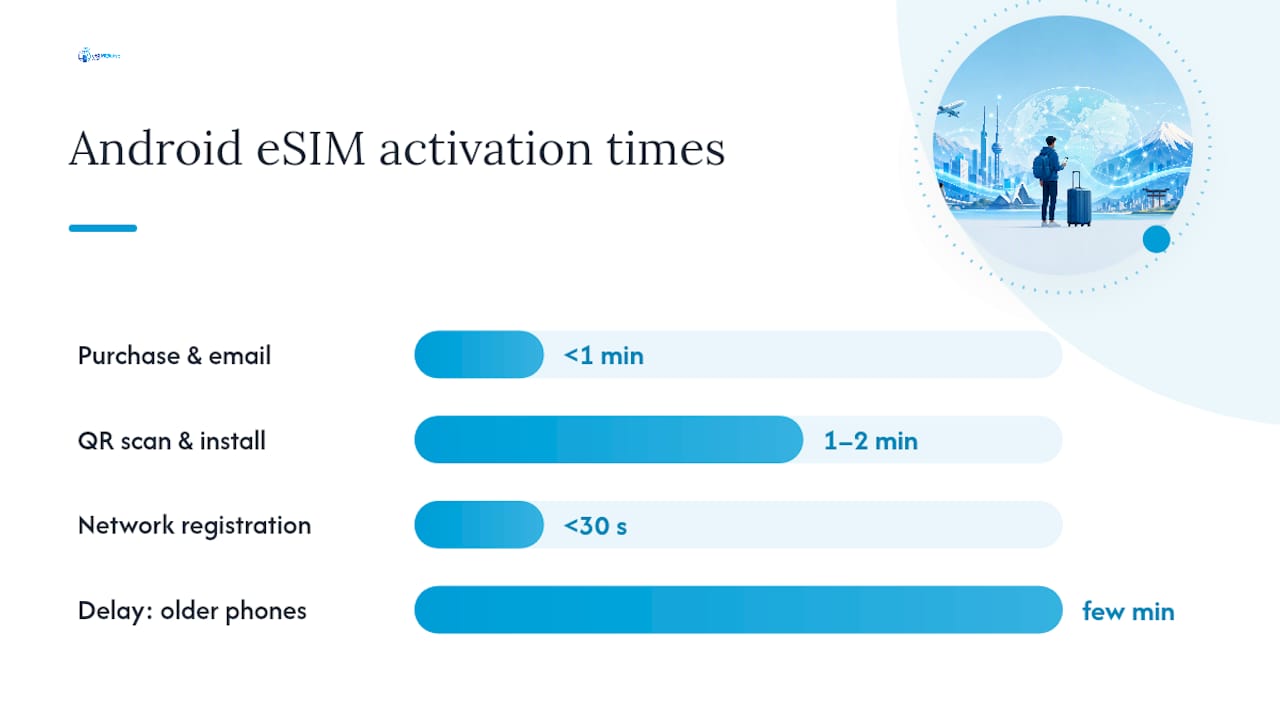
Realistic timeline for a typical traveler: purchase and email delivery, under a minute; QR scan and profile install, one to two minutes; network registration after landing, usually under 30 seconds once airplane mode toggles off. The only step that varies meaningfully by phone is the very first registration handshake with the new network, which can occasionally take a couple of minutes longer on older Android models or in areas with weaker signal.
Which eSIM Providers Actually Answer Support Requests?
Support quality is where eSIM providers separate the most, and it rarely shows up until something goes wrong. A cheap plan with no live support can leave a traveler stranded without data for hours if a QR code fails to scan or a profile won’t register.
eSIMGlobe runs 24/7 human support rather than a chatbot-only help desk, which matters specifically because eSIM problems tend to happen the moment you land in a new country, often outside normal business hours in whatever time zone the provider is based in. A support ticket that takes a day to get a reply is close to useless when you need connectivity in the next hour to find your hotel.
Smaller resellers and budget providers frequently cut costs on support first, relying on email-only contact forms with multi-day response windows. That gap is worth weighing against a plan’s sticker price, since a $2 savings on a country plan means little if a failed activation costs you an entire day of navigation and messaging on a trip. When comparing providers, check for a visible live-chat option and an actual published response time rather than a vague “we’re here to help” claim.
Is eSIM Safe? Security and Privacy on Android
eSIM technology is generally more secure than a physical SIM card because there is no removable chip to steal, clone, or swap without unlocking the phone itself. The profile lives embedded in the device’s hardware, and Android encrypts the eSIM data alongside other secure storage on the phone.
The privacy consideration that matters most for travelers is data-only plans versus voice plans. Most eSIMGlobe travel plans are data-only, which means there is no phone number tied to the profile and no call or SMS metadata to intercept, a meaningfully smaller privacy footprint than a full voice and data SIM. Reputable providers pair this with telecom-grade encryption during activation and payment, protecting the QR code and activation link from being intercepted between purchase and install.
The one Android-specific quirk worth knowing is that eSIM profiles can remain in phone storage even after a “removal” through Settings, since some devices only mark a profile inactive rather than fully deleting its data. If you are handing off or selling a phone that has carried a travel eSIM, a full factory reset is the safer route rather than relying on a single profile deletion. Keep activation emails and QR code screenshots in a secure note or password manager rather than a general photo gallery, since QR codes technically function as reusable activation credentials for that plan.
A Traveler’s Note on Android eSIMs
Buy the eSIM before you leave, not at the airport gate. That single habit avoids the two most common failure points: rushing an install with spotty terminal Wi-Fi, and discovering a validity window already ticking down before the trip even starts.
Test the profile on hotel or airport Wi-Fi the moment it installs, even while still in airplane mode, so any activation issue surfaces while you still have a backup connection to fix it. Screenshot the QR code and save the activation email somewhere you can find it without data, because the one time you need to reinstall a profile is usually the one time you have no signal to search your inbox.
The checklist earlier in this guide, network partner, validity window, hotspot allowance, isn’t academic. It’s the difference between a plan that quietly works for two weeks and one that requires three separate fixes before it does.
— Daniel
Ready to Get Connected? Here’s What to Buy
Using an online eSIM provider is a direct alternative to hunting for a local SIM card at the airport or paying expensive roaming fees from your home carrier. Instead of standing in line or paying per-day roaming rates, you can activate a plan from your phone before you board, typically at lower cost.
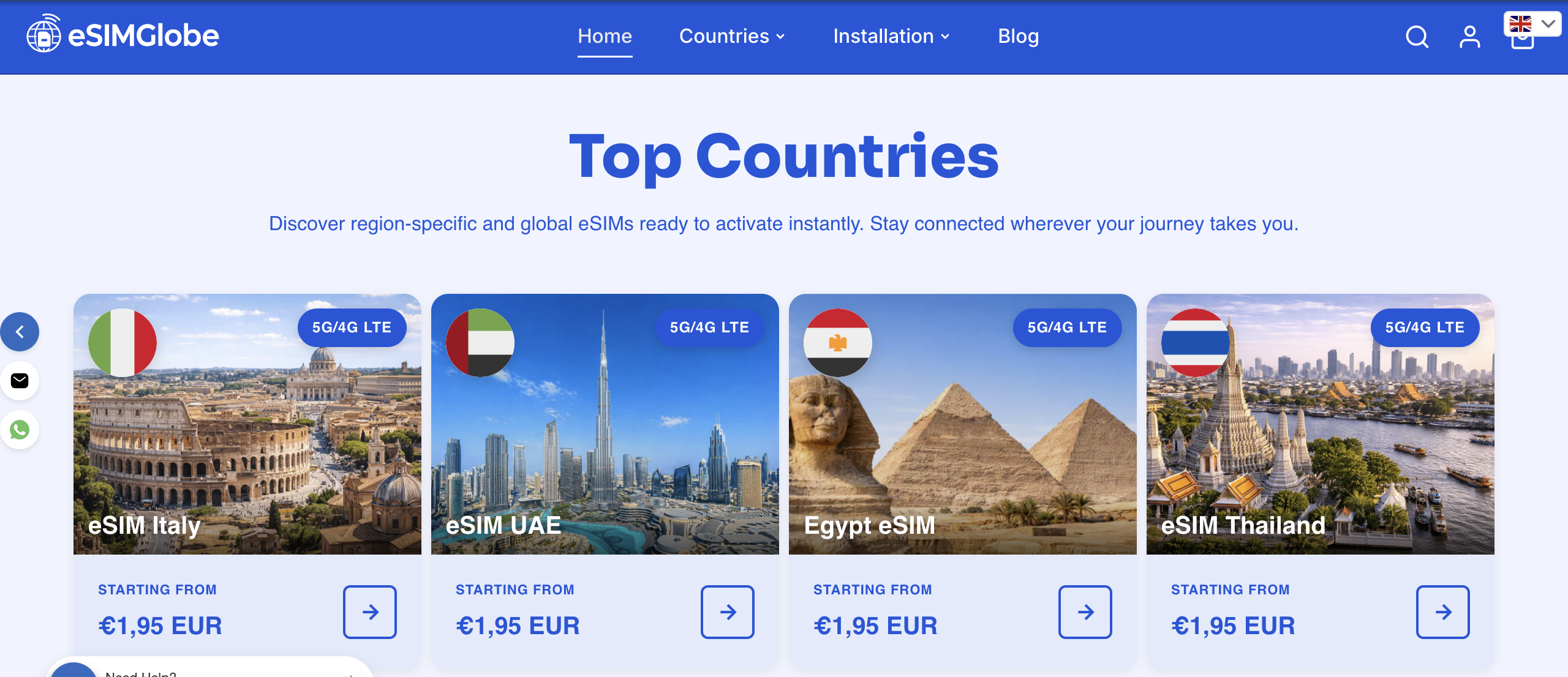
Match the trip to the plan using everything covered above. A weekend in Rome fits eSIM Rome or eSIM Italy, starting from $2.00. A US trip fits eSIM USA for a short visit or the eSIM USA Unlimited plan for heavier data use. Multi-country or long-term remote work fits eSIM Global (120+ areas) Unlimited.
After purchase, the process is the same every time: install the QR code from your confirmation email, set the new profile as your active data SIM, and test the connection on Wi-Fi before you fly. If anything doesn’t register once you land, eSIMGlobe’s 24/7 support team is a message away rather than a multi-day email thread. Pick your destination plan now and have it installed before you reach the gate.
Selected Sources and Further Reading
- eSIM Supported Devices Explained: iPhone, Pixel, Samsung — device compatibility and profile storage limits
- eSIM Google Pixel: International Travel Guide — Pixel-specific setup steps
- eSIM Samsung: the 2026 Travel Setup Guide — Samsung-specific compatibility notes
- Best eSIM for Traveling: the International Traveler’s Guide — extended background reading
FAQ
Is There a Better eSIM Option Than Generic Global Apps for Android?
The best choice depends on your trip, not a single universal winner. For Android travelers specifically, a provider with instant QR delivery, clear network-partner details, and Android-tested installation guides, like the country and unlimited plans in the eSIMGlobe catalog, tends to outperform generic global apps that skip coverage details.
What Is the Highest Rated eSIM for Android Users?
Ratings vary by review site, but the plans that consistently score well share three traits: instant activation, transparent network partner information, and real 24/7 support. Unlimited regional plans, such as eSIM Europe (30+ areas) Unlimited, tend to rate highest among travelers who value predictable pricing over micromanaging a data allowance.
Is eSIM Available for Android?
Yes, most Android phones released since around 2019, including Pixel models from the Pixel 3 onward and most Samsung Galaxy S and Z series phones from the S20 era forward, support eSIM. Carrier-locked or installment-financed devices can have eSIM disabled at the firmware level even when the hardware supports it, so checking Settings under Network & Internet is the fastest way to confirm.
What Is the Disadvantage of Using an eSIM?
The main drawback is that an eSIM profile is tied to the device itself, so switching phones means reinstalling or requesting a new profile rather than physically moving a card. Some Android phones also retain leftover profile data after a “removal” through Settings, which can occasionally cause reconnection issues if you reinstall the same plan without a full reset.
How Much Does an eSIM Cost for Android Travelers?
Prices vary by destination and plan type. eSIMGlobe country plans start from $2.00 for eSIM Italy and $2.50 for eSIM USA, while unlimited plans like eSIM Italy Unlimited start from $8.20, all as one-off purchases with no recurring subscription.