






















TL;DR:
- Regions with strong local carrier partnerships, competitive prices, and multi-country plans—such as Southeast Asia and Europe—offer the best eSIM experiences for travelers. Southeast Asia leads due to its extensive regional coverage, reliable networks, and fast border reconnection, making it ideal for multi-country trips. Ensuring device compatibility and activating eSIMs before travel are essential for smooth connectivity across all regions.
The top regions for eSIM use are defined by three factors: affordable data pricing, reliable 4G/5G network coverage, and multi-country plan support that removes the need to swap physical SIMs at every border. Southeast Asia, Brazil, China, and Europe consistently rank as the best countries for eSIM adoption based on tested network performance, competitive pricing, and the quality of local carrier partnerships. Providers like Nomad, Saily, and Airalo serve as practical benchmarks, but where you travel determines which plan actually delivers. This guide breaks down each major region so you can choose with confidence before you land.
1. Why Southeast Asia leads the top regions for eSIM use
Southeast Asia is the strongest region for multi-country eSIM travel, and the gap between it and other regions is significant. A single regional eSIM covers Thailand, Vietnam, Malaysia, Singapore, Indonesia, Cambodia, and the Philippines without requiring separate installs at each border. Nomad is the most reliable all-round Southeast Asia eSIM, tested across long routes, island ferries, and city centers. That matters because most travelers in this region move fast, crossing three or four countries in a two-week trip.

Network quality in Southeast Asia is higher than most travelers expect. Urban centers like Bangkok, Ho Chi Minh City, Kuala Lumpur, and Singapore run strong 4G LTE with expanding 5G infrastructure. Partner carriers including AIS in Thailand, MobiFone in Vietnam, and Telkomsel in Indonesia provide the backbone for most regional eSIM plans. Fast reconnection after coverage drops is a key differentiator for eSIM providers on island and ferry routes, which is exactly where Southeast Asia tests a provider’s real capability.
Budget options are genuinely competitive here. Airalo offers long-validity plans for individual countries at prices that undercut traditional roaming by a wide margin. For travelers who want country-specific depth, Esimglobe’s Asia traveler guide covers network performance across the region in detail.
- Regional eSIMs cover 7 or more countries under one plan
- AIS, MobiFone, and Telkomsel are the primary partner networks
- Island and ferry routes reconnect faster with quality eSIM providers
- Budget plans from Airalo start at low price points with multi-week validity
- Urban 5G coverage is available in Bangkok, Singapore, and Kuala Lumpur
Pro Tip: Activate your Southeast Asia eSIM before boarding your first flight. Airport Wi-Fi is unreliable, and having data live on arrival prevents the scramble for a local SIM counter.
2. Brazil: 5G coverage, pricing, and provider comparison
Brazil is one of the top eSIM destinations in Latin America, with a competitive provider market and strong urban infrastructure. Brazil eSIM options start as low as $3.99, with Saily and Ubigi showing approximately 80% 5G usage in tested urban regions including Rio de Janeiro and São Paulo. Holafly offers unlimited data plans for travelers who need consistent heavy usage. The range of options means travelers at every budget level can find a plan that fits.
The three major Brazilian carriers, Vivo, TIM, and Claro, support the eSIM partner networks that power most international plans. Coverage in São Paulo and Rio is genuinely strong, with 5G speeds comparable to major European cities. Outside urban centers, coverage becomes more variable, which is a pattern common across large geographic markets. Real user testing confirms high-speed stable connections in the cities where most travelers spend their time.
| Provider | Starting Price | Data Type | Tethering | Best For |
|---|---|---|---|---|
| Saily | ~$3.99 | Capped + Unlimited | Yes (some plans) | Overall value |
| Ubigi | Varies | Capped | Yes | Coverage reliability |
| Holafly | Higher | Unlimited | Limited | Heavy data users |
Key considerations for Brazil eSIM selection:
- Saily rated best overall for price-to-performance ratio
- Ubigi delivers strong coverage consistency across tested urban zones
- Holafly suits travelers who stream video or work remotely without data anxiety
- Tethering availability varies by plan and provider, so check before purchase
- Call features are not standard on data-only eSIM plans
For travelers combining Brazil with other South American countries, a regional Latin America plan may offer better value than a Brazil-only option.
3. China: eSIM use despite connectivity challenges
China is one of the most complex top eSIM destinations for international travelers, but it is also one of the most important to get right. The Great Firewall blocks apps including Google, WhatsApp, Instagram, and most Western social platforms by default. Saily eSIM in China keeps blocked apps working without extra VPN setup, which is a practical advantage that most other providers cannot match. Fourteen-day tests confirm seamless activation and reliable speeds in Beijing, Shenzhen, and Shanghai.
China’s domestic carriers, China Unicom and China Mobile, serve as the partner networks for most international eSIM plans. Performance in major cities is strong, with 5G widely deployed across Beijing, Shanghai, and Shenzhen. The challenge is that not all eSIM providers route traffic in a way that bypasses firewall restrictions. Travelers who rely on Saily avoid the separate VPN subscription cost and the technical friction of configuring one on arrival.
Activation ease matters more in China than in most other regions. Arriving without a working data connection and needing to configure a VPN on restricted networks creates a real problem. The practical sequence is to activate the eSIM before landing, confirm app access works, and only then proceed through customs. Ubigi and Airalo also operate in China but do not offer the same firewall bypass capability that Saily provides. For digital nomads who need consistent access to work tools, that distinction is the deciding factor.
- Saily provides firewall bypass without a separate VPN
- China Unicom and China Mobile are the primary partner networks
- 5G coverage is strong in Beijing, Shanghai, and Shenzhen
- Activate before landing to avoid setup issues on restricted networks
- Unlimited data options are available at reasonable price points
4. Europe: regional plans and multi-country coverage
Europe is one of the most popular regions for eSIM use among digital nomads, largely because a single regional plan can cover 35 or more countries without reinstallation. Regional eSIM plans reduce installation hassle at borders and are the preferred choice over global plans when traveling within one geographic zone. Nomad’s Europe plan covers 35 to 36 countries, with a separate Balkans region option for travelers moving through less-covered southeastern Europe. The convenience factor alone justifies the regional plan format for anyone spending more than two weeks in Europe.
Coverage quality across Europe varies more than the marketing suggests. Western European countries including Germany, France, Spain, and the Netherlands deliver consistent 4G and 5G performance. Eastern European countries and rural zones in any country show more variability depending on which local carrier the eSIM partners with. Coverage is carrier-dependent, and real performance can differ from marketing, especially outside major tourist areas.
| Plan Type | Countries Covered | Best For | Cost Efficiency |
|---|---|---|---|
| Europe Regional | 35 to 36 | Multi-country EU trips | High |
| Balkans Regional | 6 to 8 | Southeastern Europe focus | High |
| Global Standard | ~123 | Intercontinental travel | Moderate |
| Global-EX (Nomad) | 54 to 82 | Long-term nomads | High for duration |
Nomad offers the longest validity multi-region plans, up to 365 days covering 54 or 82 countries, which suits digital nomads traveling over extended periods. Global plans covering 123 countries exist but carry a higher cost per gigabyte. The tradeoff is straightforward: regional plans win on price and simplicity for zone-specific travel, while global plans win on convenience for intercontinental itineraries.
Pro Tip: For a trip combining Western and Eastern Europe, check whether your regional plan explicitly lists each country you plan to visit. Balkans countries like Albania, Kosovo, and North Macedonia are not always included in standard Europe plans.
For travelers focused on specific countries, Esimglobe’s international traveler guide covers plan selection across regions in practical detail.
5. Middle East and Africa: emerging eSIM friendly countries
The Middle East and Africa represent a growing segment of eSIM friendly countries, though coverage consistency varies more than in Southeast Asia or Europe. The UAE, particularly Dubai and Abu Dhabi, delivers strong 5G performance through Etisalat (now e&) and du as partner carriers. Saudi Arabia, Qatar, and Israel also support reliable eSIM connectivity in urban areas. For travelers attending business events or conferences in Gulf cities, eSIM activation is straightforward and speeds are competitive.
Africa presents a more fragmented picture. South Africa, Kenya, Nigeria, and Egypt are the most reliable markets for eSIM use, with urban 4G coverage through carriers like MTN, Safaricom, and Vodacom. Rural coverage across sub-Saharan Africa remains limited, and not all eSIM providers list African countries in their regional plans. Travelers moving through multiple African countries typically need country-specific plans rather than a single regional option. Reliability depends more on local carrier quality than on eSIM technology itself, and this principle applies most visibly in Africa.
The practical approach for this region is to research carrier coverage maps for each specific country before purchasing. A plan that works well in Nairobi may perform poorly in rural Tanzania. Esimglobe’s platform lists country-specific options that make it easier to identify which plans cover your exact destinations.
6. North America: eSIM adoption by region
North America ranks high for eSIM adoption by region, with the United States and Canada operating mature eSIM ecosystems. AT&T, T-Mobile, and Verizon in the US all support eSIM provisioning, and most flagship phones sold in North America since 2020 are eSIM-compatible. Canada’s major carriers, Bell, Rogers, and Telus, offer similar support. For international travelers visiting the US or Canada, purchasing a travel eSIM before arrival is straightforward and avoids airport SIM counter queues.
Mexico adds complexity to North American eSIM planning. Telcel provides the strongest coverage network in Mexico, and most international eSIM plans partner with Telcel for Mexican coverage. Urban areas including Mexico City, Guadalajara, and Cancun deliver reliable 4G. Remote areas and smaller towns show the same carrier-dependent variability seen in other large geographic markets.
For digital nomads structuring remote work travel across North America, a US-specific eSIM with a separate Mexico plan often outperforms a combined regional option on both price and speed. The US market is competitive enough that pricing for high-data plans is reasonable, and activation is among the fastest of any region globally.
7. Japan and South Korea: best networks for eSIM use
Japan and South Korea offer some of the fastest mobile networks available to eSIM users anywhere in the world. South Korea’s SK Telecom, KT, and LG Uplus operate 5G networks that consistently rank among the top globally for speed and reliability. Japan’s NTT Docomo, SoftBank, and au (KDDI) provide dense urban coverage with strong 4G performance and expanding 5G. For travelers who need fast, stable connections for video calls or large file transfers, these two countries deliver.
Japan was historically slow to adopt eSIM for international travelers, but the situation has improved significantly. Most international eSIM providers now list Japan as a supported destination, with IIJmio and local MVNO partnerships enabling competitive pricing. South Korea’s eSIM market is more open, with multiple providers offering short-term tourist plans at reasonable rates.
The one practical note for both countries is that rural and mountain areas can show coverage gaps even on premium networks. Japan’s train network is extensive, and coverage along Shinkansen routes is generally strong. South Korea’s urban density means that most traveler itineraries stay within well-covered zones. For travelers combining Japan and South Korea in one trip, a regional Asia plan from Esimglobe covers both countries without requiring separate purchases.
8. Checking device compatibility before any region
Device compatibility varies by model and carrier, and some phones or regional variants restrict eSIM provisioning entirely. This is the single most common reason eSIM purchases fail, and it applies regardless of which region you are traveling to. iPhones from the iPhone XS onward support eSIM, but US-market iPhones sold before 2023 may have carrier locks that complicate international eSIM use. Android compatibility varies more widely, with Samsung Galaxy, Google Pixel, and OnePlus devices generally supporting eSIM while some budget Android models do not.
The verification process takes less than five minutes. Check your phone’s settings for a “Mobile Plans” or “Add eSIM” option, confirm your device is unlocked, and verify that your current carrier does not restrict eSIM provisioning. Doing this at home before travel eliminates the risk of discovering a compatibility issue at the airport. Esimglobe’s digital nomad eSIM guide includes a device compatibility checklist that covers the most common phone models.
Key takeaways
The best regions for eSIM use combine strong local carrier partnerships, competitive pricing, and multi-country plan support, with Southeast Asia and Europe offering the most consistent value for international travelers.
| Point | Details |
|---|---|
| Southeast Asia leads | Regional plans cover 7+ countries with reliable 4G/5G and fast border reconnection. |
| Brazil offers strong value | Plans start at $3.99 with 5G coverage in São Paulo and Rio via Vivo, TIM, and Claro. |
| China requires the right provider | Saily bypasses firewall restrictions without a VPN, a critical advantage in China. |
| Europe suits multi-country nomads | Regional plans covering 35+ countries reduce reinstallation and cost per GB. |
| Device check is non-negotiable | Verify eSIM compatibility and carrier unlock status before purchasing any plan. |
What I have learned from testing eSIMs across regions
After working through eSIM options across Southeast Asia, Europe, and Latin America, the pattern that stands out most is this: the advertised coverage map and the actual experience on the ground are two different things. A plan that lists 35 countries does not mean 35 countries with equal performance. Partner network quality determines real-world speed, and that information rarely appears in the marketing.
The unlimited plan category deserves specific skepticism. Unlimited data plans often have daily high-speed caps and throttling that kicks in after a set threshold. A plan marketed as unlimited may drop to 128 kbps after 1 GB of daily use, which makes video calls and map navigation unreliable. Always read the plan details, not just the headline.
My practical recommendation is to test your eSIM domestically before travel. Install it, activate it, and confirm it works on your device before you are standing in a foreign airport. The five minutes this takes at home eliminates a category of problems entirely. For digital nomads who need consistent connectivity for work, this step is not optional.
Esimglobe stands out because its platform makes plan selection straightforward without hiding the details that matter. Coverage specifics, data caps, and tethering rules are visible before purchase, which is not always the case with other providers. That transparency is worth more than a slightly lower headline price from a service that obscures the fine print.
— daniele
Find your eSIM plan on Esimglobe
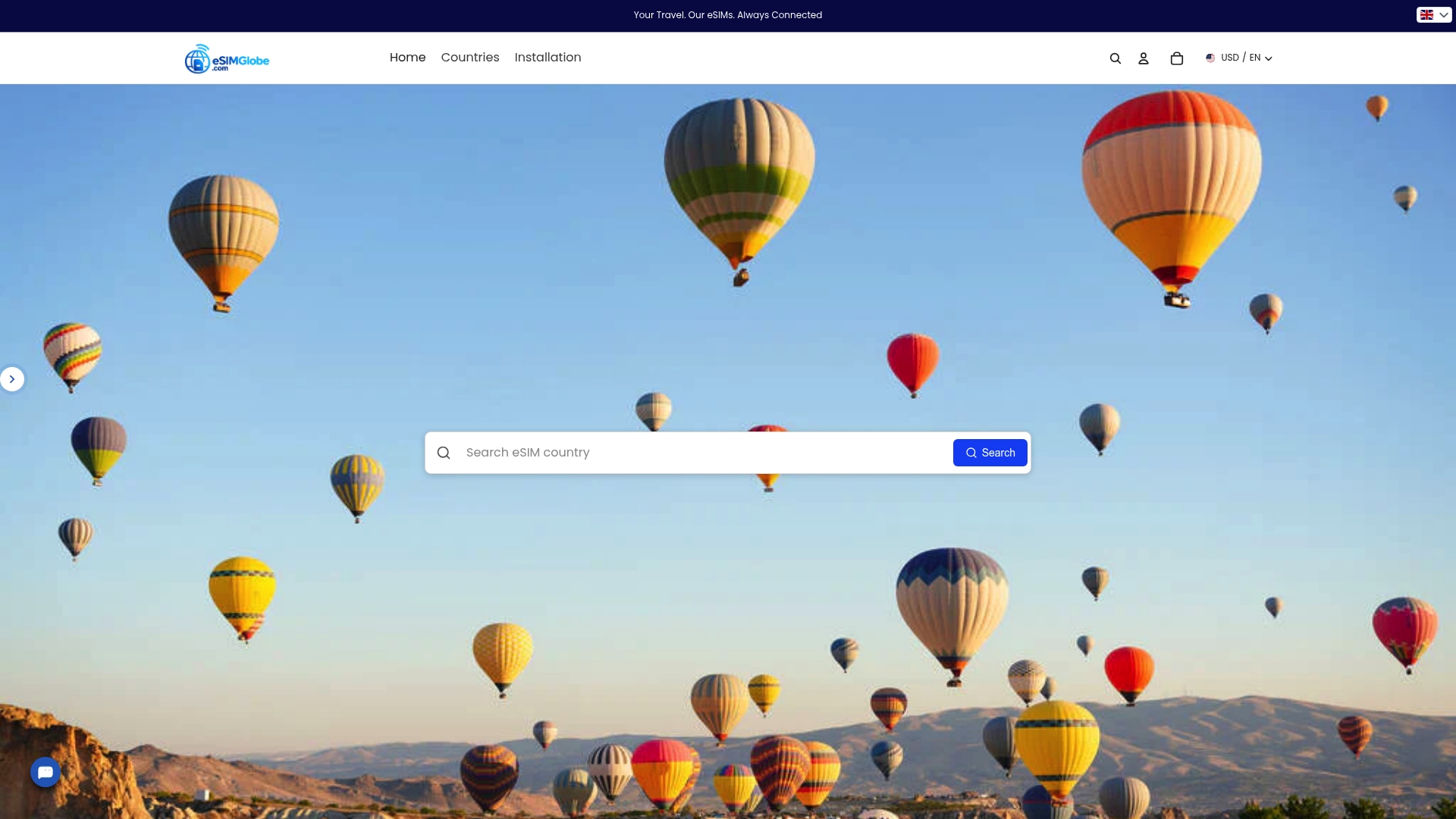
Esimglobe provides regional and country-specific eSIM plans for every destination covered in this guide, from Southeast Asia multi-country plans to Brazil, China, Europe, and beyond. The platform supports USD, EUR, and GBP pricing, multiple language interfaces, and instant digital activation. Plans are listed with full coverage details, data caps, and tethering rules so you know exactly what you are purchasing. Whether you need a 7-day plan for a single country or a 365-day global option for extended travel, Esimglobe’s eSIM solutions cover the full range. Check your device compatibility and browse plans by region before your next trip.
FAQ
What are the best countries for eSIM use in 2026?
Southeast Asia, the UAE, South Korea, Japan, the US, and Brazil rank among the best countries for eSIM use based on 5G coverage, plan affordability, and provider availability. Europe as a region also offers strong multi-country eSIM support through providers like Nomad.
Do all phones support eSIM for international travel?
Not all phones support eSIM. Device compatibility varies by model, and some regional phone variants restrict eSIM provisioning. Check your phone’s settings for an “Add eSIM” option and confirm your device is carrier-unlocked before purchasing a plan.
Are regional eSIM plans better than global plans?
Regional plans are preferred over global for price and convenience when traveling within one geographic zone. Global plans covering 100-plus countries cost more per gigabyte and suit intercontinental travelers who need a single plan across multiple zones.
Can I use an eSIM in China without a VPN?
Yes, if you use the right provider. Saily’s China eSIM keeps blocked apps working without a separate VPN, tested across Beijing, Shanghai, and Shenzhen. Most other providers do not offer this capability, requiring travelers to configure their own VPN solution.
How do I avoid throttling on unlimited eSIM plans?
Read the plan details before purchase. Unlimited data plans often include daily speed caps that throttle speeds after a set daily threshold. Check the specific cap amount and tethering rules for any plan before committing, especially for work-heavy usage.