




















TL;DR:
- An eSIM for the Philippines is a digital profile embedded in your phone that connects to local networks immediately upon arrival. Most providers offer plans from $0.60 to $75, with convenience advantages over local carrier SIMs requiring passport registration. The best option depends on your trip length, itinerary, and need for fast, reliable coverage across urban areas and islands.
An eSIM for the Philippines is a digital SIM profile embedded in your phone that connects you to local mobile networks the moment you land, with no physical card to swap. International travelers and expats heading to the Philippines can choose from plans starting at $0.60 for minimal data up to $75 for 30-day unlimited packages. Providers like Holafly, Airalo, Saily, Nomad, and Ubigi all offer Philippines coverage, each with different network partnerships, pricing tiers, and activation requirements. The right plan depends on your itinerary, whether you are spending a week in Manila or island-hopping across Palawan and Boracay.
What is an eSIM for the Philippines and how does it work?
An eSIM, short for embedded SIM, is a reprogrammable chip built into modern smartphones that stores digital carrier profiles. You purchase a plan online, receive a QR code by email, scan it with your phone’s camera, and the profile installs over Wi-Fi in under two minutes. No store visit, no plastic card, no waiting in line at the airport.
The process works the same way for the Philippines as it does for any other country. You download the eSIM profile before you travel, then activate it when you arrive. Purchasing before you travel means you connect the moment your plane lands, skipping the queues at airport SIM kiosks entirely.
Most international eSIM providers deliver the QR code instantly after payment. You can install the profile days in advance and simply toggle it on when you need it. Your home SIM stays in the phone and remains active for calls, so you never lose your primary number.
Which devices support an eSIM in the Philippines?
Compatible devices include the iPhone XS and all later models, Samsung Galaxy S20 and newer, and Google Pixel 3 and newer. The phone must be carrier-unlocked. If you bought your phone directly from a carrier on a contract, check with that carrier before traveling to confirm it is unlocked for international use.
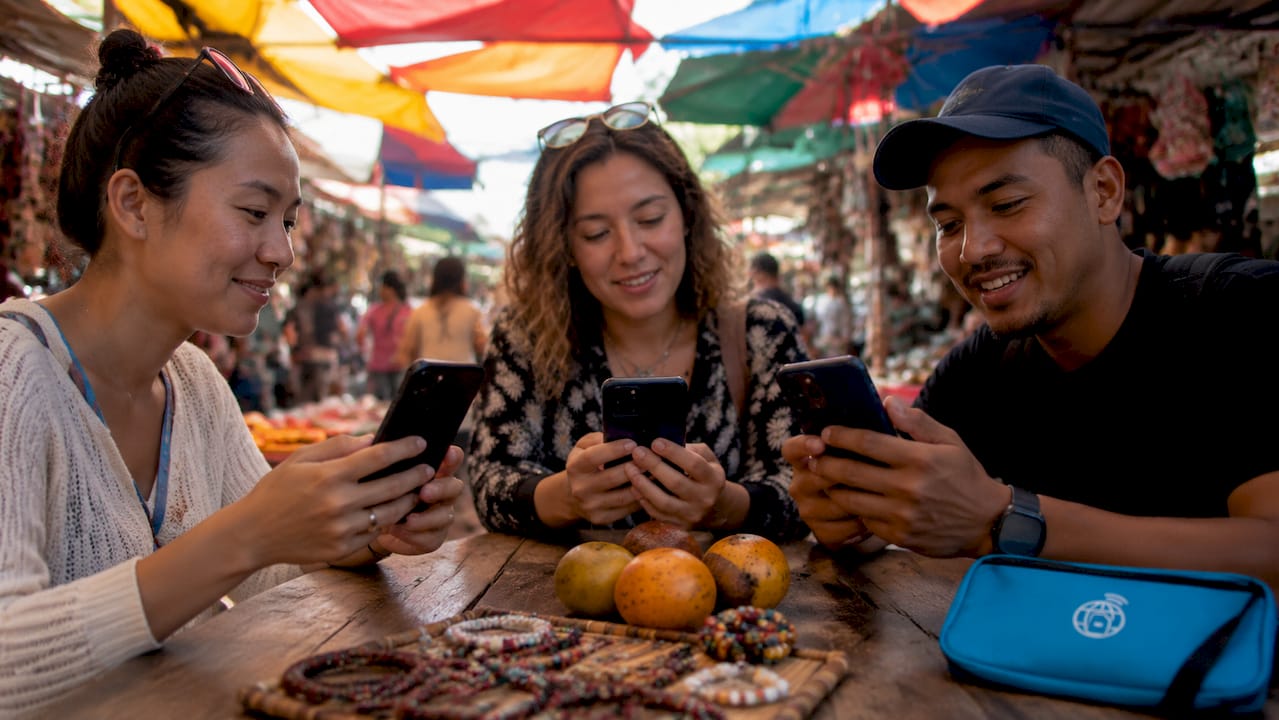
Dual-SIM devices handle this best. You keep your home number on the physical SIM and run your Philippines data plan on the eSIM simultaneously. This setup covers both calls and data without any compromise.
Pro Tip: Install your Philippines eSIM profile at home before you leave. Use the airport Wi-Fi on arrival only if you forgot. Installing over a stable home connection is faster and avoids any airport network restrictions.
Comparing the best eSIM providers and plans for the Philippines
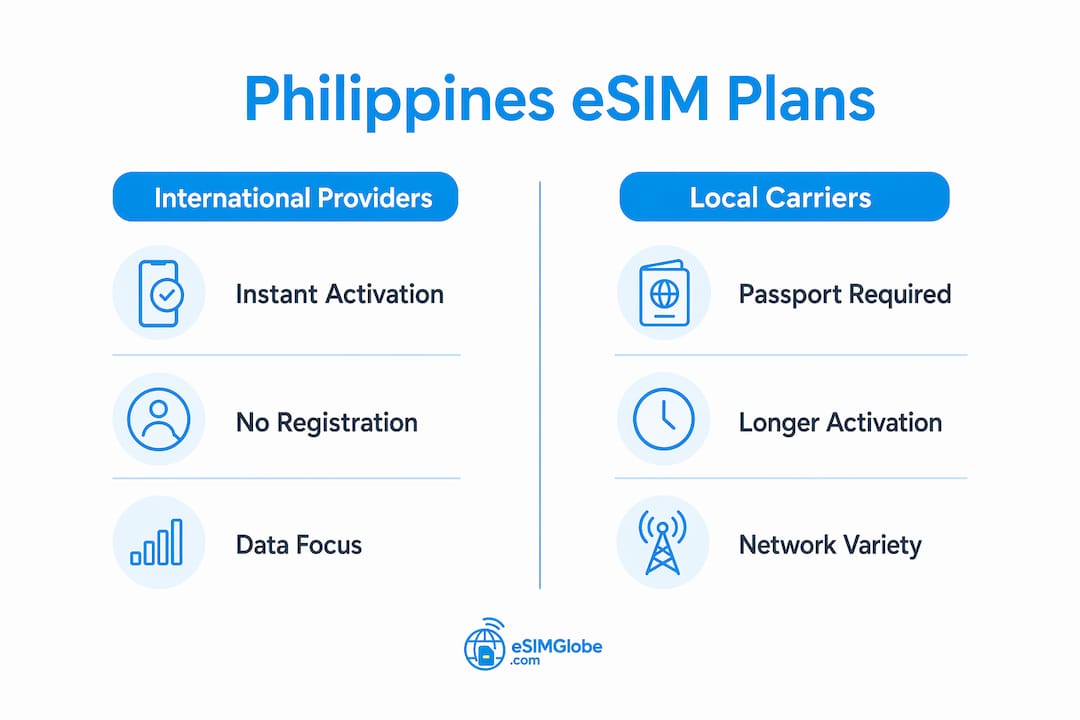
The Philippines eSIM market splits into two clear categories: international providers that activate instantly with no registration, and local carrier eSIMs that require passport submission. For most tourists and short-stay expats, international providers win on convenience.
Local carriers like Smart require mandatory passport registration for SIM activation. This process can delay activation by hours or longer, which is a real problem when you land and need data immediately. International providers like Holafly, Airalo, and Saily skip this step entirely.
Holafly offers unlimited data covering Manila, Palawan, Boracay, and other major islands at approximately $3.90 per day. That pricing works out to roughly $27 for a week or $48 for two weeks. The plan suits travelers who use navigation, streaming, and video calls constantly and do not want to monitor their data balance.
Airalo and Saily target budget travelers. Saily in particular suits short city trips where you primarily need maps, messaging, and occasional browsing. Nomad and Ubigi sit in the mid-range, offering fixed data packages that work well for trips of 7 to 14 days with moderate usage.
| Provider | Plan type | Price range | Network | Registration |
|---|---|---|---|---|
| Holafly | Unlimited | $27–$75 / 30 days | Smart / Globe | None |
| Airalo | Fixed data | $4.50–$18 | Smart | None |
| Saily | Fixed data | $0.60–$12 | Smart / Globe | None |
| Nomad | Fixed data | $8–$25 | Globe | None |
| Ubigi | Fixed data | $10–$30 | Smart | None |
Pro Tip: Match your plan to your itinerary. If you are staying in Cebu City or Manila for under five days, a 3GB fixed plan from Saily or Airalo covers typical usage. If you are moving between islands every two or three days, unlimited plans from Holafly remove the stress of running out mid-trip.
The top eSIM plans for the Philippines in 2026 also vary by network partner. Providers that run on Smart deliver faster speeds in urban centers. Providers on Globe give more consistent coverage across smaller islands. Knowing which network your plan uses before you buy is the single most useful piece of research you can do.
How does mobile coverage vary across the Philippines for eSIM users?
Coverage in the Philippines is strong in major cities and popular tourist destinations but drops noticeably on smaller or more remote islands. This geographic reality affects every eSIM user, regardless of which provider they choose.
Smart delivers superior 5G speeds in urban centers like Manila, Makati, and Cebu City. Globe provides more consistent coverage across the archipelago’s outer islands, making it the better choice for extended island-hopping itineraries. The two networks complement each other, which is why some providers partner with both.
Average speeds in Manila range from 20 to 45 Mbps. On smaller islands, speeds often drop to 8 to 20 Mbps. That lower range still supports video calls and navigation but may struggle with large file downloads or high-definition streaming.
Key coverage realities for Philippines eSIM users:
- Manila, Cebu, Davao, and Boracay have strong 4G and 5G coverage from both Smart and Globe.
- Palawan’s main towns, including Puerto Princesa and El Nido, have reliable 4G but signal weakens outside town centers.
- Remote islands in the Visayas and Mindanao regions can have patchy or no signal, particularly in mountainous terrain.
- Ferry routes between islands often have no coverage at all, so download offline maps before boarding.
- DITO Telecommunity is a third carrier expanding coverage in underserved areas, though international eSIM providers rarely partner with DITO yet.
Mobile data is mission-critical in the Philippines for practical daily tasks. Grab handles ride-hailing across most cities. GCash processes payments at markets, restaurants, and even some beaches. Hotel Wi-Fi is often unreliable, so your eSIM data plan carries the full load for navigation, payments, and communication. A plan that supports tethering and hotspot use is not optional. It is necessary.
Practical tips for buying and using a Philippines eSIM
Buying your eSIM before you travel is the single most effective way to avoid connectivity problems on arrival. The process takes five minutes online and delivers the QR code to your email. You install it at home, and you are connected the moment you clear customs.
Follow these steps for a smooth setup:
- Confirm your phone is unlocked and supports eSIM. Check Settings on iPhone under “Cellular” or “Mobile Data” for an “Add eSIM” option.
- Choose a provider based on your trip length and itinerary. Short city trips suit fixed data plans. Multi-island trips suit unlimited plans.
- Purchase online and save the QR code email. Screenshot it as a backup in case you lose internet access.
- Install the eSIM profile at home over a stable Wi-Fi connection. Do not activate it yet.
- On arrival in the Philippines, toggle the eSIM on in your phone settings. It connects automatically to the partner network.
- Set your Philippines eSIM as the default for mobile data. Keep your home SIM active for calls only.
Local carrier eSIMs require official passport registration and identity verification through apps or websites. This step can delay activation significantly. For a two-week vacation, that friction is rarely worth the marginal cost savings over an international provider.
Managing data on fixed plans requires some attention. Turn off automatic app updates and background refresh for apps you do not use daily. Use offline maps through Google Maps or Maps.me for areas with weak signal. Download Grab and GCash before you leave home so they are ready to use on arrival.
Pro Tip: If your Southeast Asia trip covers multiple countries beyond the Philippines, look for regional eSIM plans that cover Southeast Asia as a whole. Providers like Airalo and Nomad offer regional packages covering Thailand, Vietnam, Indonesia, and the Philippines under one plan, which is far cheaper than buying separate country plans.
For a full breakdown of data-only eSIM options that work across the region, the differences in plan structure matter more than most travelers realize.
Expats staying longer than 30 days should reassess after the first month. Some providers allow plan renewals digitally. Others require purchasing a new eSIM profile. Knowing this before your first plan expires saves you from a connectivity gap.
Key Takeaways
Choosing the right eSIM for the Philippines requires matching your plan type, network partner, and data allowance to your specific itinerary and usage habits.
| Point | Details |
|---|---|
| Buy before you travel | Purchase and install your eSIM at home to connect instantly on arrival without queues. |
| Match plan to itinerary | Fixed data suits short city stays; unlimited plans suit multi-island trips lasting over a week. |
| Network matters by region | Smart leads on urban 5G speed; Globe provides more consistent coverage across outer islands. |
| Skip local registration | International providers like Holafly and Airalo require no passport registration, saving hours on arrival. |
| Tethering is non-negotiable | Choose a plan that supports hotspot use, since Grab and GCash depend on stable mobile data. |
My honest take on picking a Philippines eSIM
I have watched travelers make the same mistake repeatedly. They buy the cheapest fixed data plan, burn through it on day three because they forgot that Grab, Google Maps, and Instagram all run in the background, and then spend an afternoon hunting for a top-up option with spotty Wi-Fi.
The best choice depends on your itinerary. A 3GB plan is genuinely enough for five days in Manila if you are disciplined about background data. The moment you add island-hopping to the mix, that math falls apart. Ferries have no signal, so you use a burst of data the moment you dock. Repeat that four or five times across a two-week trip and a fixed plan runs dry fast.
Unlimited plans from Holafly cost more upfront, but they remove a specific kind of travel anxiety that is hard to quantify. You stop checking your data balance before every map search. That mental freedom is worth real money on a vacation.
My other strong opinion: do not bother with local carrier eSIMs unless you are staying for several months. The passport registration requirement is a genuine obstacle for short-stay visitors. International providers have closed the price and coverage gap enough that the registration friction is simply not worth it for trips under 30 days.
One more thing most guides skip: tethering support. If you are working remotely from a beach bungalow in Siargao, your laptop depends on your phone’s hotspot. Confirm your plan explicitly allows tethering before you buy. Some budget plans block it.
— daniele
Get connected in the Philippines with Esimglobe
Esimglobe delivers Philippines eSIM plans with instant digital activation, no physical SIM required, and no passport registration. Plans are available for short stays and longer trips, with options running on Smart and Globe networks to cover both urban centers and island destinations.
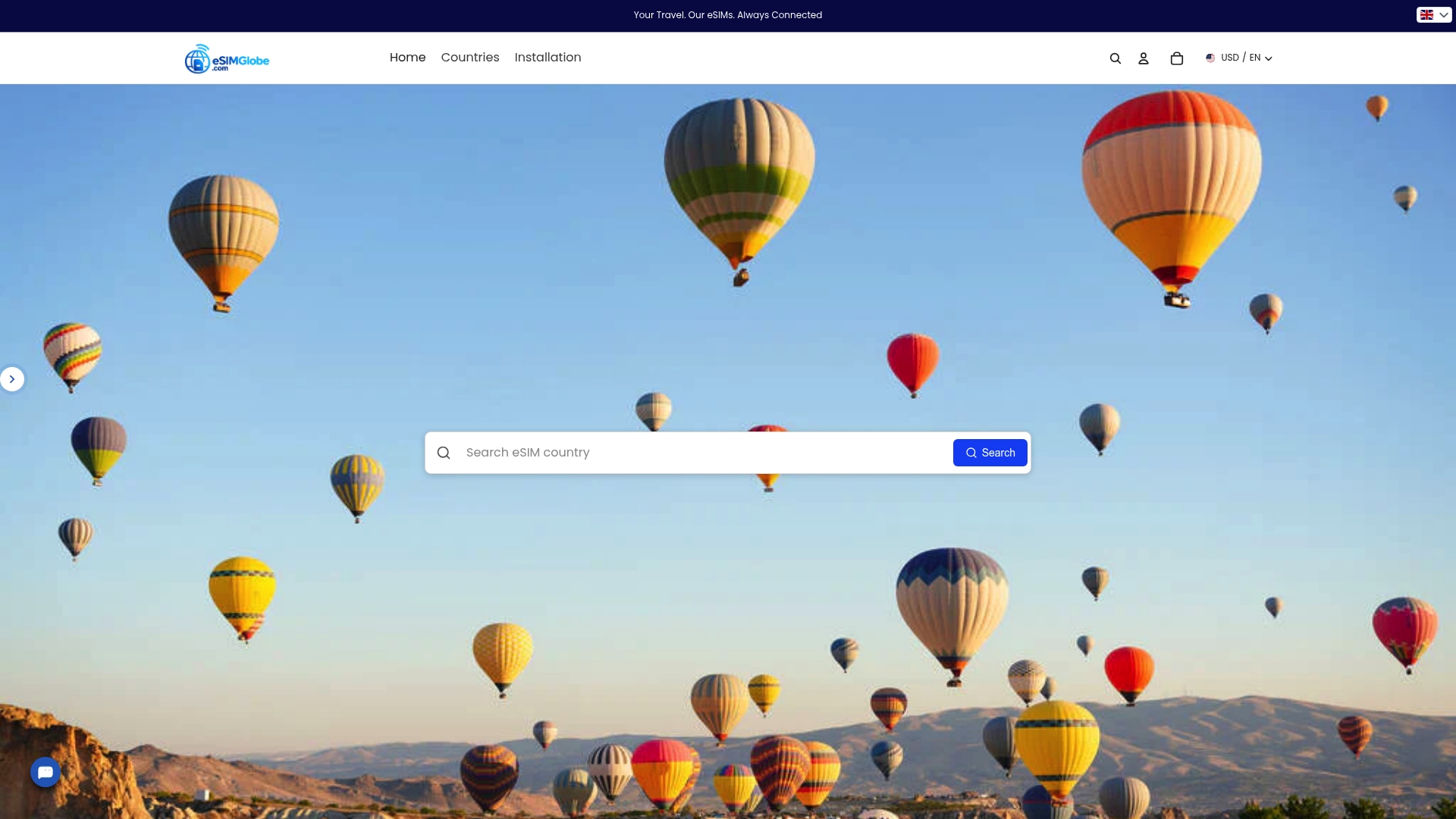
You can browse and purchase a Philippines eSIM plan directly through Esimglobe, with the QR code delivered to your email immediately after checkout. The platform supports multiple currencies and languages, making it straightforward for international travelers from any region. Before purchasing, review Esimglobe’s terms and conditions for full details on plan validity, data limits, and refund policies.
FAQ
What devices work with a Philippines eSIM?
Compatible devices include iPhone XS and later, Samsung Galaxy S20 and newer, and Google Pixel 3 and newer. The phone must be carrier-unlocked to install a third-party eSIM profile.
Do I need to register my passport to use an eSIM in the Philippines?
International eSIM providers like Holafly and Airalo do not require passport registration. Local Philippine carriers do require identity verification, which can delay activation for tourists.
How much does a Philippines eSIM cost?
Plans start at $0.60 for minimal data and reach $75 for 30-day unlimited packages. Most travelers pay between $10 and $30 for a standard trip of 7 to 14 days.
Which network is better in the Philippines, Smart or Globe?
Smart offers faster 5G speeds in Manila and other major cities. Globe provides more consistent coverage across smaller and more remote islands, making it the better choice for island-hopping itineraries.
Can I use my Philippines eSIM as a hotspot?
Most international eSIM providers allow tethering and hotspot use, but confirm this before purchasing. Hotspot support is critical for travelers who rely on Grab, GCash, or remote work during their stay.