





















For most travelers heading to Kenya, EsimGlobe’s Kenya eSIM is the simplest path to reliable data from the moment you land, since it delivers instantly by email and connects to local networks without a shop visit. It fits short safari trips, city stays in Nairobi or Mombasa, and remote workers who need connectivity without hunting for a physical SIM. Check the Kenya product page before you fly and activate it while you still have Wi-Fi.
TL;DR:
- A Kenya-specific eSIM is ideal for short trips, offering easy activation, local network coverage, and no need for physical shop visits or IDs.
- Match your data plan to your trip length: 1-3 days usually need 1 to 3 GB, while a two-week or remote work trip may require unlimited or high-cap plans.
- Buying and testing your eSIM before departure ensures smooth connectivity upon land, avoiding delays and first-day Wi-Fi hunts.
- Regional or global eSIMs are better for multi-country itineraries to prevent needing multiple profiles or risking coverage gaps in neighboring countries.
- Support from providers like EsimGlobe is available 24/7, with detailed guides, while local Kenyan carriers primarily offer support in person or via phone in Swahili and English.
Table of Contents
- Why Choose EsimGlobe’s eSIM for Kenya
- How to Choose the Right eSIM Plan for Your Kenya Trip
- EsimGlobe Plans That Serve Kenya: What Each Product Offers
- How to Buy, Install, and Activate an EsimGlobe eSIM for Kenya
- Coverage Expectations in Kenya: Cities, Safari Circuits, and Remote Gaps
- Troubleshooting, Support, and Refunds: What to Expect
- Limitations or Restrictions of eSIM Usage in Kenya
- Roaming Charges and Policies When Using Kenyan eSIMs Abroad
- Customer Support Quality and Languages Offered by eSIM Providers in Kenya
- Author Perspective: Why We Recommend Preparing Your eSIM Before Departure
- Get Your Kenya eSIM Set Up Before You Fly
- Sources and Quick Links for This Guide
- FAQ
Why Choose EsimGlobe’s eSIM for Kenya
The platform offers prepaid, data-only eSIM plans that are delivered by email shortly after purchase, eliminating the need to wait for physical delivery or visit a local shop. Payment can be made in various currencies, and customer support is available around the clock for assistance with setup or activation.
The available plans work with the primary mobile networks in the country to provide coverage during your stay.
Advantages over a physical local SIM:
- No shop visit or passport/ID check required for activation, unlike buying a Safaricom SIM in person.
- You can install the profile and confirm it works before you leave home.
- Your home number stays active for calls and texts on your primary SIM slot.
- No risk of losing or damaging a tiny physical chip mid-safari.
A local SIM still has its place. If you’re staying for months, making frequent local voice calls, or need a Kenyan phone number for banking or mobile money like M-Pesa, a physical SIM from a Safaricom shop makes more sense than a short-term data eSIM.
Pro Tip: Buy your eSIM at least a day before departure and activate it on airport Wi-Fi as soon as you land, rather than waiting until you’re off the grid to test it.
How to Choose the Right eSIM Plan for Your Kenya Trip
Matching your plan to your trip type keeps you from overpaying or running dry on data halfway through a safari.
- Weekend or short city trip (1–3 days). A 1 GB to 3 GB bucket usually covers maps, messaging apps, and light social media browsing without streaming video.
- Standard safari or two-week vacation (5–10 days). Plan for 5 GB to 10 GB if you’re posting photos, using navigation across multiple parks, and video-calling home occasionally.
- Long-stay or remote work trip (two weeks or more). Unlimited or high-cap plans make more sense here, especially if you’re on video calls or uploading large files daily.
If your itinerary crosses into Tanzania or another neighboring country, a single-country Kenya SKU won’t carry over. A regional or global multi-country eSIM avoids buying a second profile mid-trip, which is worth checking if your route resembles the kind of hopping covered in guides on Zanzibar eSIM options.
Watch for three things before you buy any plan, from any provider: fair-use caps on hotspot tethering, throttling after you hit your data limit, and validity windows that start counting down from activation, not purchase. A 5 GB plan with a 15-day expiry is a different value proposition than the same 5 GB with a 30-day window.
On pricing, short-term 1 GB passes for a few days generally cost a few dollars, while larger 5 GB to 10 GB plans or unlimited short passes cost more. Treat rock-bottom prices with suspicion. If a plan runs far below the market band, it’s often padded with aggressive throttling or a short validity window that erases the savings.
EsimGlobe Plans That Serve Kenya: What Each Product Offers
EsimGlobe’s catalog gives Kenya-bound travelers more than one entry point, depending on how much of your trip stays inside Kenya’s borders.
- eSIM Kenya (Kenya 100MB 7Days). A single-country plan sized for short trips and light users who mainly need maps and messaging over a week.
- eSIM Global (130+ areas). A broad multi-region SKU that covers Kenya alongside 130-plus other destinations, suited to travelers stacking Kenya onto a longer multi-country itinerary.
- eSIM Global (120+ areas). A similar wide-coverage option for travelers whose route touches several regions beyond East Africa.
- eSIM Global (120+ areas) Unlimited. Built for heavy users, digital nomads, or anyone running video calls and large uploads daily across a multi-country trip.
Statistic Callout: Roundup comparisons of Kenya eSIM options commonly show plan sizes clustering around 1 GB, 3 GB, 5 GB, and unlimited tiers, which mirrors exactly how EsimGlobe segments its own Kenya-relevant catalog.
For a short safari or a single-city visit, the Kenya-specific SKU is the leaner, more direct choice. For a trip that threads Kenya into a wider East or Central Africa loop, a global SKU avoids buying and juggling multiple eSIM profiles on one device. Budget travelers doing a short hop should lean toward the smaller data buckets; remote workers and content creators should size up to unlimited rather than risk throttling mid-project. Validity windows and exact data allowances are listed on each product page at checkout, and currency options let you pay in your home currency rather than guessing at a conversion.
How to Buy, Install, and Activate an EsimGlobe eSIM for Kenya
- Confirm your phone supports eSIM. Most iPhones from the XS onward and many Android flagships from Google, Samsung, and others support eSIM. Check under your device’s cellular or mobile network settings for an “Add eSIM” or “Add Cellular Plan” option, or look up your device’s EID status in settings.
- Choose your SKU and check out. Pick the Kenya eSIM for a single-country trip or a global plan if you’re covering multiple countries, then complete checkout in your preferred currency.
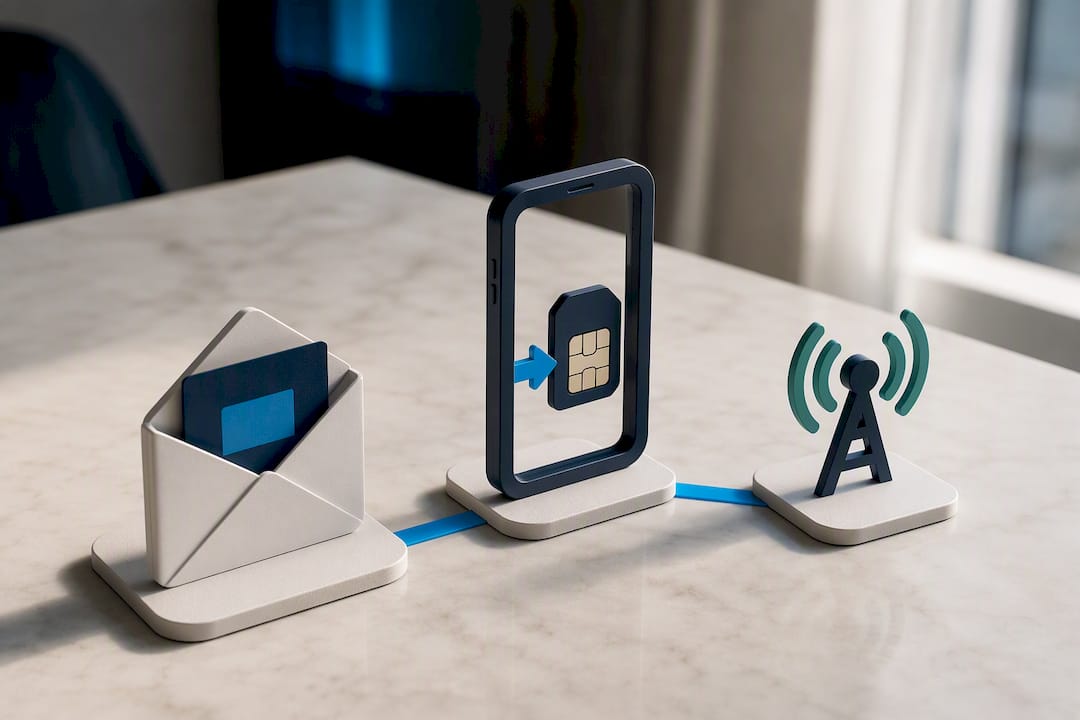
- Receive your QR code by email. Delivery is instant, so you can install before you even pack.
- Scan and install. Go to your phone’s eSIM settings, choose “Add eSIM,” and scan the QR code, or tap the in-app installation link if you received one.
- Set the new profile as your data line. Keep your home SIM active for calls and texts, and set the new eSIM as the active data line, or enable data roaming specifically on that profile.
- Activate on arrival. Some plans activate automatically on first network connection in Kenya; others need a manual toggle. Either way, test it on airport Wi-Fi first to confirm the install worked.
Pro Tip: If installation fails, the most common cause is a weak Wi-Fi connection during setup, not a bad eSIM. Move closer to your router or restart the download before assuming the profile is defective.
If activation still fails after a fresh attempt, check that your device isn’t carrier-locked. A step-by-step walkthrough with screenshots is also available in EsimGlobe’s activation guide for travelers.
Coverage Expectations in Kenya: Cities, Safari Circuits, and Remote Gaps
Kenya’s mobile data runs on three carriers: Safaricom, Airtel, and Telkom. Safaricom generally has the widest geographic reach of the three, covering cities, towns, and the majority of established safari circuits.
Nairobi, Mombasa, Kisumu, and other urban centers get consistently strong signal across all three networks. The major safari parks, including the Maasai Mara and Amboseli, sit within reasonable coverage range, though signal strength can dip inside the parks themselves depending on your exact location relative to the nearest tower.
Statistic Callout: Global signal coverage maps and speed-test tools show a consistent pattern worldwide: strong coverage clusters around population centers and major routes, with signal thinning out in low-density conservancies and far-north border zones. Kenya follows that same pattern.
Remote conservancies, far-northern counties, and deep bush lodges are where signal gets genuinely patchy, regardless of which eSIM or network you’re on.
- Download offline maps for your route before you leave a coverage zone.
- Save digital copies of hotel and park reservations so you’re not depending on live email access.
- Tell someone your rough itinerary in case you’re unreachable for a day on a remote circuit.
- On game drives, hold your phone up rather than in a pocket. A few extra inches of clearance from your body and the vehicle frame can noticeably improve signal lock.
Troubleshooting, Support, and Refunds: What to Expect
Customer support is available 24/7 to assist with setup and activation issues, including before departure if you wish to test installation.
Refunds or replacements typically apply when a plan genuinely fails to activate or a profile arrives corrupted, not when a device turns out to be incompatible after purchase. Keep a screenshot of any error message and note your exact device model before reaching out, since that speeds up the fix.
- If your device won’t accept the QR code at all, it’s likely a compatibility issue, not a plan issue. Check eSIM support before buying.
- If the eSIM installs but shows no signal, try toggling airplane mode on and off, or manually selecting a network in settings.
- If you’re stuck without any connectivity at the airport, most terminals offer free Wi-Fi, which is enough to retry activation or contact support.
- As a last resort, a local SIM purchased in-country or a short-term roaming plan from your home carrier can bridge the gap while you sort out the eSIM.
A quick way to tell plan versus device: if the eSIM works fine on a friend’s compatible phone but not yours, the problem is the hardware, not EsimGlobe’s profile.
Limitations or Restrictions of eSIM Usage in Kenya
Data-only eSIMs don’t include a Kenyan phone number, so you can’t send or receive local SMS or make Kenyan voice calls through the eSIM itself. Services that rely on SMS verification tied to a Kenyan number, or mobile money platforms like M-Pesa that require local carrier registration, generally won’t work through a travel eSIM.
Hotspot and tethering allowances often carry separate fair-use limits from the core data allowance, even on plans advertised as unlimited. Heavy tethering to a laptop for remote work can trigger throttling faster than the same data used directly on your phone.
Older or budget Android devices, along with some carrier-locked phones bought on installment plans, may not support eSIM at all, even if the phone model generally does elsewhere. It’s worth checking your specific device’s eSIM status in settings before you buy, not after you land.
Coverage also depends on your device correctly picking a partner network. Occasionally a phone locks onto a weaker signal from one carrier when a stronger one from another is available nearby, and manually selecting a network in your settings can fix that without needing a new profile.
Roaming Charges and Policies When Using Kenyan eSIMs Abroad
A Kenya-specific eSIM is scoped to Kenya. Cross the border into Tanzania, Uganda, or elsewhere, and a single-country Kenya plan generally stops working or triggers standard international roaming charges through the underlying carrier agreement, which can be expensive and unpredictable.
If your trip includes stops beyond Kenya, a regional or global eSIM sidesteps this entirely, since those plans are pre-scoped to work across all the listed countries without a roaming markup. That’s the practical reason travelers doing a Kenya plus Tanzania safari loop, or a wider East Africa circuit, often choose a multi-country SKU over stacking single-country plans.
Data-only eSIMs don’t carry your home country’s roaming plan with them either. If your home carrier already includes Kenya in an international roaming package, using a separate travel eSIM alongside it just means you have two active data paths. Turn off cellular data on your home SIM while abroad to avoid accidental roaming charges stacking on top of what you already paid for the eSIM.
Customer Support Quality and Languages Offered by eSIM Providers in Kenya
Support quality varies more than plan pricing does across the eSIM market. EsimGlobe runs 24/7 support, which matters most in the first hour after you install a profile, when installation problems are most likely to surface and you’re least able to wait for a next-business-day reply.
Local Kenyan carriers like Safaricom offer strong in-country support through retail shops and customer care lines, but that support is generally in-person or phone-based, and primarily in English and Swahili. That works well if you’re buying a physical SIM locally, but it’s less useful if you’re troubleshooting an eSIM installation issue from your home country before departure.
Travel eSIM providers, EsimGlobe included, tend to support customers through email and chat channels that don’t require you to be in the country or on a local number to reach them. For a first-time visitor unfamiliar with local carrier processes, that remote-first support model, reachable in English before you’ve even left home, tends to resolve setup questions faster than an in-person carrier queue would.
Author Perspective: Why We Recommend Preparing Your eSIM Before Departure
The gap between travelers who land connected and those who spend their first hour hunting for Wi-Fi at arrivals almost always comes down to one decision made days earlier, not anything that happens at the airport. Buying and testing your eSIM before you fly turns activation into a non-event instead of a stressful first-day scramble, and it means you can reach your driver, confirm your lodge booking, or pull up an offline map the second you land. The travelers who skip this step aren’t lazy, they just don’t realize how much smoother arrival day gets when connectivity isn’t a variable.
— Daniel
Get Your Kenya eSIM Set Up Before You Fly
EsimGlobe is the alternative to standing in a Nairobi phone shop with your passport out. For Kenya, that means instant email delivery, no ID check, and a data profile you can test from your couch before you ever board a flight. The Kenya eSIM product page lists current data sizes and validity windows so you can match a plan to your exact trip length.
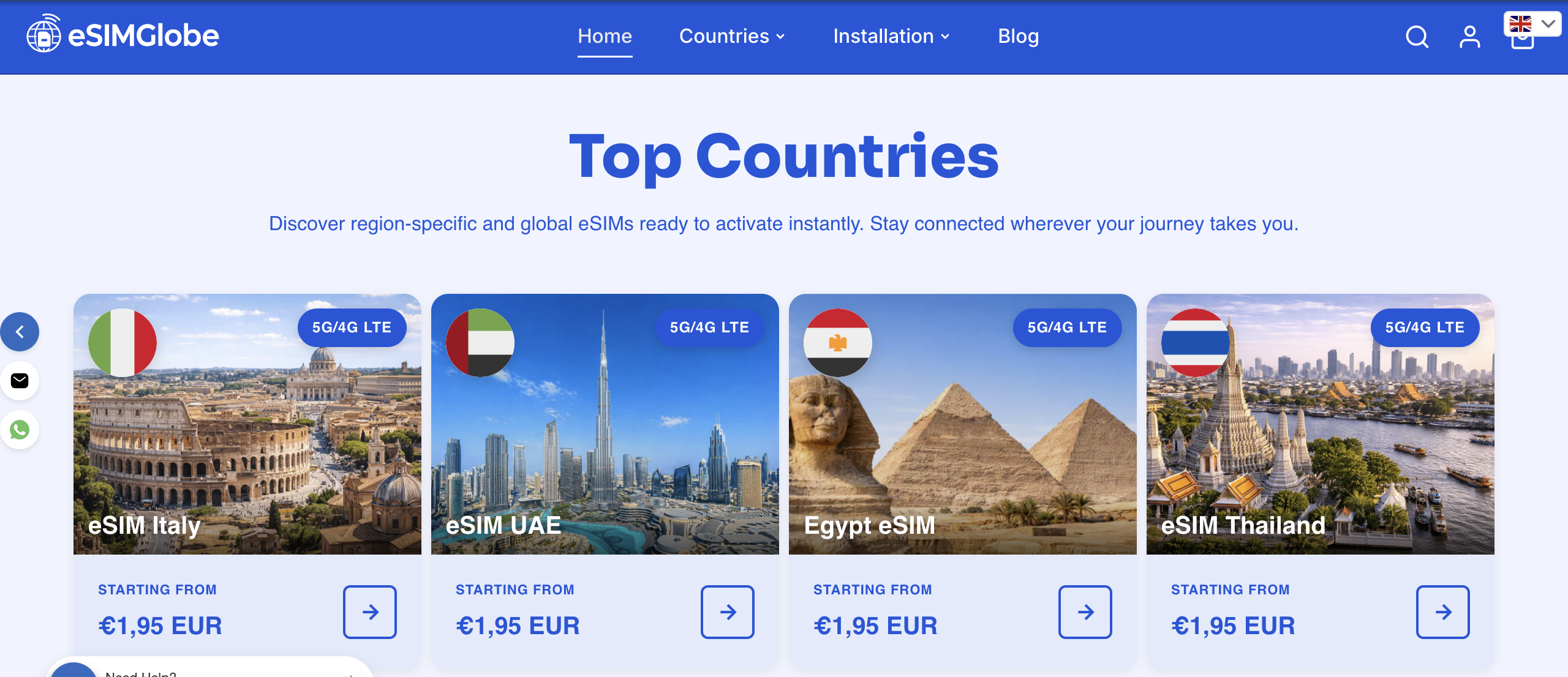
Picking the right SKU comes down to three quick questions: how many days are you traveling, are you staying inside Kenya or crossing into neighboring countries, and how heavily will you use data for calls, maps, or work. Short single-country trips fit the Kenya-specific plan, while multi-country routes fit better with a broader option like eSIM Global (120+ areas) Unlimited. Before buying, confirm your phone supports eSIM under its cellular settings, since that two-minute check prevents the only real snag in this process. Head to the Kenya product page now, pick your data size, and check out. Your profile lands in your inbox within minutes.
Sources and Quick Links for This Guide
- Safaricom’s own eSIM information page, detailing local activation and network reach.
- Nomadwise and Monito comparison roundups, for typical plan sizes and price bands across Kenya eSIM providers
- nPerf’s global signal coverage map, for checking live signal strength by region
FAQ
Which eSIM Is Best for East Africa?
A regional or global eSIM that covers Kenya alongside neighboring countries works best if your itinerary spans East Africa, while a single-country Kenya plan suits a trip that stays entirely inside Kenya’s borders.
Which SIM Card Is Best in Kenya?
Safaricom generally offers the widest network reach for local SIMs, but it requires an in-person shop visit and ID check, which is why many travelers choose an eSIM instead for instant, pre-trip setup.
Which eSIM Company Is Best for Africa?
EsimGlobe is a strong option for travelers heading to Kenya and other African destinations, since its catalog includes both single-country plans and wider regional SKUs covering 120 or more areas.
How Much Does an eSIM Cost in Kenya?
Short-term 1 GB plans for a few days typically fall in the single-digit dollar range, while larger 5 GB to 10 GB plans or unlimited short-term passes cost more, with exact pricing varying by data size and validity window.