






















TL;DR:
- In 2026, eSIM technology offers multi-profile support, instant over-the-air activation, and broad device compatibility. These features make eSIM a cost-effective, secure, and flexible solution for international travelers. The rise of iSIM and remote management tools further streamline connectivity, replacing traditional physical SIM cards entirely.
The top eSIM features for 2026 are defined by multi-profile support, instant over-the-air activation, broad device compatibility, competitive pricing, and embedded security that together replace the physical SIM card for international travelers. The travel eSIM market reached $1.75 billion in 2026 and is growing at 30% annually, driven by demand from international travelers and digital nomads. Over half of all global eSIM users first adopted the technology while traveling. That single fact explains why understanding the best eSIM capabilities in 2026 is no longer optional for frequent flyers and location-independent workers. Esimglobe tracks these developments closely, and this guide covers every feature that matters before your next trip.
1. Top eSIM features for 2026: device compatibility and multi-profile support
Device compatibility is the foundation of every useful eSIM experience. Over 400 smartphone models from 16 or more manufacturers now support eSIM, including flagship devices like the iPhone 17 Air, Pixel 10, and Galaxy S26, as well as mid-range options like the Samsung A-series and Motorola Edge. That breadth means most travelers already carry an eSIM-capable device without knowing it.
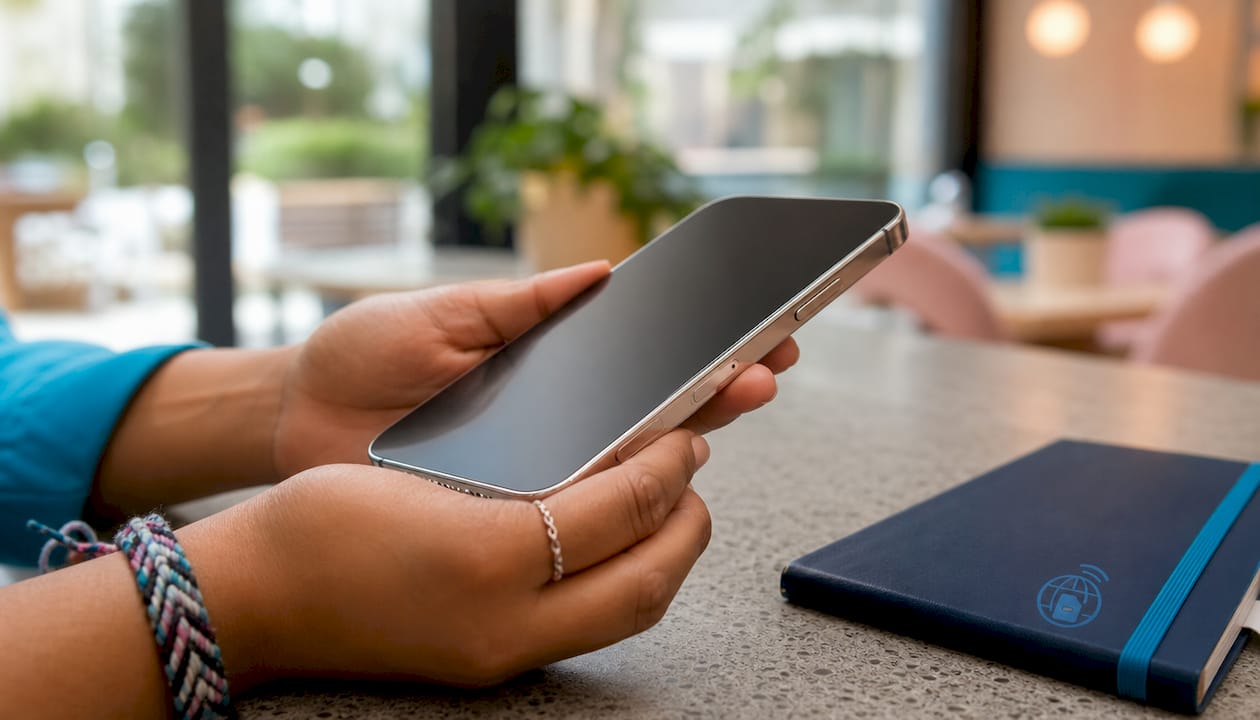
Multi-profile support takes compatibility a step further. iPhones since the 13 series store up to eight eSIM profiles with two active at the same time. Samsung and Google Pixel devices offer similar functionality with slight variations in how many profiles can run simultaneously. For a digital nomad moving between Europe, Southeast Asia, and North America in a single month, this means pre-loading regional plans and switching between them without touching a SIM tray.
The practical benefit is significant. You can keep your home carrier profile installed and dormant while running a local travel plan as your active data connection. No physical swaps, no lost SIM cards in a Bangkok guesthouse, no hunting for a carrier store on arrival.
Key features to look for in device compatibility:
- Dual active SIM support (one physical SIM plus one eSIM running simultaneously)
- Storage for multiple installed profiles (eight or more on current iPhones)
- Compatibility across both flagship and mid-range device tiers
- Carrier-unlock status, since locked devices restrict eSIM profile installation
Pro Tip: Before purchasing any eSIM plan, confirm your device is carrier-unlocked. A locked device will reject eSIM profiles from providers outside the locking carrier’s network, even if the hardware is technically eSIM-capable.
2. How remote provisioning and instant activation work
Remote SIM provisioning, known in the industry as RSP, is the technical standard that makes eSIM practical. GSMA’s RSP standard governs the secure, over-the-air download and management of SIM profiles, eliminating the need for physical SIM swapping entirely. Profiles travel from a Subscription Manager server to your device through an encrypted channel.
The activation process is straightforward:
- Purchase a plan from a provider like Esimglobe.
- Receive a QR code by email or inside the provider’s app.
- Scan the QR code in your phone’s settings to download the profile.
- Select the profile as your active data connection.
- Connect to a local network within seconds of landing.
That five-step process takes under three minutes. Compare that to finding a local SIM vendor at an airport, waiting in line, providing ID documents in a foreign language, and then troubleshooting APN settings. The time difference alone justifies the switch.
One underappreciated feature is top-up without reinstallation. Leading providers allow mid-trip data top-ups through an app without scanning a new QR code. You simply add data to the existing profile. That matters when you hit your data cap in the middle of a work call in Tokyo and need more gigabytes immediately.
Frequent travelers benefit most from apps that handle profile switching, account management, and top-ups across multiple trips without requiring repeated setup. The best eSIM platforms build this functionality directly into their mobile apps, making multi-trip management as simple as checking a bank balance.
3. Competitive pricing and flexible data plan options
Pricing is where eSIM technology delivers its clearest advantage over traditional roaming. Home network roaming costs run 4–5 times higher than eSIM data pricing in major travel destinations. A concrete example: 1GB of data in the UAE costs $30–$60 on a home carrier roaming plan versus $4.50–$9 on a top eSIM plan.
The pricing structure in 2026 covers a wide range of traveler needs:
| Plan Type | Best For | Approximate Cost |
|---|---|---|
| Daily unlimited | Short trips, heavy users | From $1.24 per day |
| Per-GB regional | Budget travelers, light users | From $4.99 per GB in Europe |
| Multi-country global | Digital nomads, long-haul travelers | Varies by coverage region |
| Pay-as-you-go | Occasional data needs | Charged per MB used |
Global plans now cover 200 or more countries, which means a single plan can follow you from Paris to Singapore to São Paulo without requiring a new purchase at each border. That is the defining feature of eSIM technology for 2026 compared to earlier years when coverage gaps were common.
The flexibility extends beyond price. Travelers can hold multiple plans simultaneously, running a regional plan for heavy data use while keeping a global backup plan active for areas outside the regional plan’s coverage. That layered approach was impossible with physical SIMs.
Pro Tip: Daily unlimited plans offer the best value on short city trips where you need consistent connectivity. For longer stays or multi-country routes, a per-GB regional plan typically costs less overall. Calculate your average daily data use before choosing.
4. Enhanced security and theft protection
Security is one of the most underrated features of eSIM technology. An eSIM profile cannot be physically stolen the way a plastic SIM card can. A thief who grabs your phone cannot remove the embedded profile and insert it into another device. The profile is locked to the eUICC chip inside your specific handset.
The eUICC hardware element does more than just hold the profile. eSIM profiles secured by eUICC chips are encrypted and authenticated remotely, making unauthorized profile cloning or tampering extremely difficult. This is a meaningful upgrade over physical SIMs, which can be cloned with widely available hardware.
“If a device is lost or stolen, carriers can remotely disable the eSIM profile. The embedded profile cannot be removed or transferred by a thief, which removes the most common SIM-related theft incentive entirely.”
Remote disabling adds a second layer of protection. If your phone is lost in a crowded market in Marrakech, you can contact your provider and deactivate the profile before any unauthorized data use occurs. Physical SIM users have no equivalent option once the card is removed from the device.
For business travelers carrying sensitive data, the combination of hardware-level encryption and remote disable capability makes eSIM the more defensible choice from a security standpoint.
5. Dual SIM operation for travelers keeping a home number active
Dual SIM operation is one of the most practical features of eSIM technology for international travelers. Most modern devices support running one physical SIM and one eSIM simultaneously, which solves a problem that has frustrated travelers for years.
The scenario is common. You land in Germany for a two-week work trip. You need local data at local prices, but you also need to receive SMS verification codes and calls on your home US number. With dual SIM operation, both connections stay active at the same time. Your home SIM handles calls and texts. Your travel eSIM handles data.
This matters more than most travelers realize. Banking apps, two-factor authentication systems, and work communication platforms frequently send verification codes to your registered home number. Losing access to that number while abroad creates real problems. Dual SIM operation eliminates the tradeoff entirely.
The feature also applies to business connectivity with eSIM, where maintaining a consistent business number while accessing affordable local data is a standard requirement. Esimglobe’s plans are built to work alongside existing home carrier SIMs without conflict.
6. Emerging innovations shaping eSIM in 2026 and beyond
The features of eSIM technology in 2026 are already impressive, but the next wave of development is already visible. The most significant shift is the rise of iSIM, or integrated SIM, which embeds SIM functionality directly into the device’s main processor rather than a separate chip.
iSIM installations grew from 800,000 units in 2024 to millions expected across 2026. That growth rate signals a transition, not a niche experiment. iSIM reduces the physical footprint of connectivity hardware inside a device, freeing space for larger batteries or thinner form factors.
Key trends shaping the eSIM ecosystem through 2026 and beyond:
- iSIM adoption in flagship devices, integrating SIM functions into the application processor
- eSIM-only device designs eliminating physical SIM trays entirely, already seen in some regional iPhone models
- 5G and IoT integration, with industry experts identifying eSIM as the foundation for next-generation connected device ecosystems
- Broader carrier support, with more regional carriers adding eSIM provisioning to their networks
- Wearable and laptop eSIM expansion, extending embedded connectivity beyond smartphones
The trend toward eSIM-only devices is particularly relevant for travelers. Once physical SIM trays disappear from mainstream devices, the ability to manage connectivity entirely through software becomes a necessity rather than a preference. Understanding these trending eSIM innovations now prepares you for a hardware landscape that will look very different by 2028.
The eSIM market growth trajectory also signals that carrier competition will intensify, which historically drives prices down and coverage quality up. Travelers who adopt eSIM now build familiarity with a technology that will only become more central to mobile connectivity.
7. Practical plan management and app-based control
The best eSIM capabilities in 2026 extend beyond the technology itself into how providers let you manage your connectivity. App-based control is now a standard expectation, not a premium feature.
A well-designed eSIM app lets you monitor data usage in real time, switch between installed profiles, top up without reinstalling, and manage billing across multiple trips from a single interface. For digital nomads who might run three or four regional plans across a month of travel, that centralized control is the difference between a smooth trip and a frustrating one.
Selecting and managing eSIM plans effectively also means understanding how data rollover, plan expiry, and multi-device sharing work before you buy. Not all providers handle these features the same way. Reading the plan terms before departure prevents surprises mid-trip.
The hospitality and travel industry has recognized this shift. Digital reservation and mobile data access trends show that travelers increasingly expect connectivity to be pre-arranged and app-managed rather than handled at the destination. eSIM fits directly into that expectation.
Esimglobe’s platform reflects this direction, offering a country and region selector, multiple currency options, and multi-language support so travelers can configure their connectivity before departure in their own language and currency.
Key Takeaways
The most effective approach to eSIM in 2026 combines multi-profile device support, GSMA-standard remote provisioning, and competitive global pricing to replace physical SIM logistics entirely for international travelers.
| Point | Details |
|---|---|
| Multi-profile support | iPhones store up to eight eSIM profiles with two active simultaneously, enabling region-switching without SIM swaps. |
| Remote provisioning | GSMA RSP standard enables secure, over-the-air profile activation in under three minutes via QR code or app. |
| Cost advantage | eSIM data pricing runs 4–5 times cheaper than home carrier roaming in major destinations like the UAE. |
| Embedded security | eUICC hardware encrypts profiles and enables remote disable, removing the physical theft risk of traditional SIMs. |
| iSIM growth | iSIM installations are scaling from hundreds of thousands to millions in 2026, pointing toward eSIM-only device designs. |
What I’ve learned after years of watching eSIM go from niche to necessary
The conversation around eSIM used to center on whether it worked. Now it centers on which features matter most. That shift happened faster than most telecom analysts predicted, and the reason is straightforward: travelers got tired of the physical SIM ritual.
What strikes me most about the current state of eSIM technology is how the security argument remains underused. Most travelers choose eSIM for price or convenience. The fact that an embedded profile cannot be physically extracted from a device is a genuinely meaningful protection in environments where phone theft is common. Pickpocket-heavy cities in Europe and crowded transit hubs in Asia are exactly where this matters. Yet most eSIM marketing barely mentions it.
The iSIM transition also deserves more attention than it gets. When SIM functionality moves into the main processor, the entire concept of “managing your SIM” changes. There will be no profile to install or remove. Connectivity will be a software subscription, managed like a streaming service. Travelers who understand this now will adapt faster when eSIM-only devices become the default.
My honest observation on pricing: the gap between home carrier roaming and eSIM plans is so large that the math requires almost no analysis. A traveler spending two weeks in Europe who uses 5GB of data saves well over $100 compared to roaming on a typical US carrier plan. That is not a marginal improvement. It is a structural cost difference that compounds across every trip.
The features of eSIM technology in 2026 are mature enough to rely on completely. The remaining friction points are mostly on the user side: not knowing your device is eSIM-capable, not checking carrier unlock status, or not reading plan terms before departure. The technology itself has cleared the bar.
— daniele
Esimglobe’s global eSIM plans for your next trip
Esimglobe provides eSIM plans across 200 or more countries, covering the features discussed throughout this article: multi-profile compatibility, instant QR code activation, competitive per-GB and daily unlimited pricing, and app-based plan management.
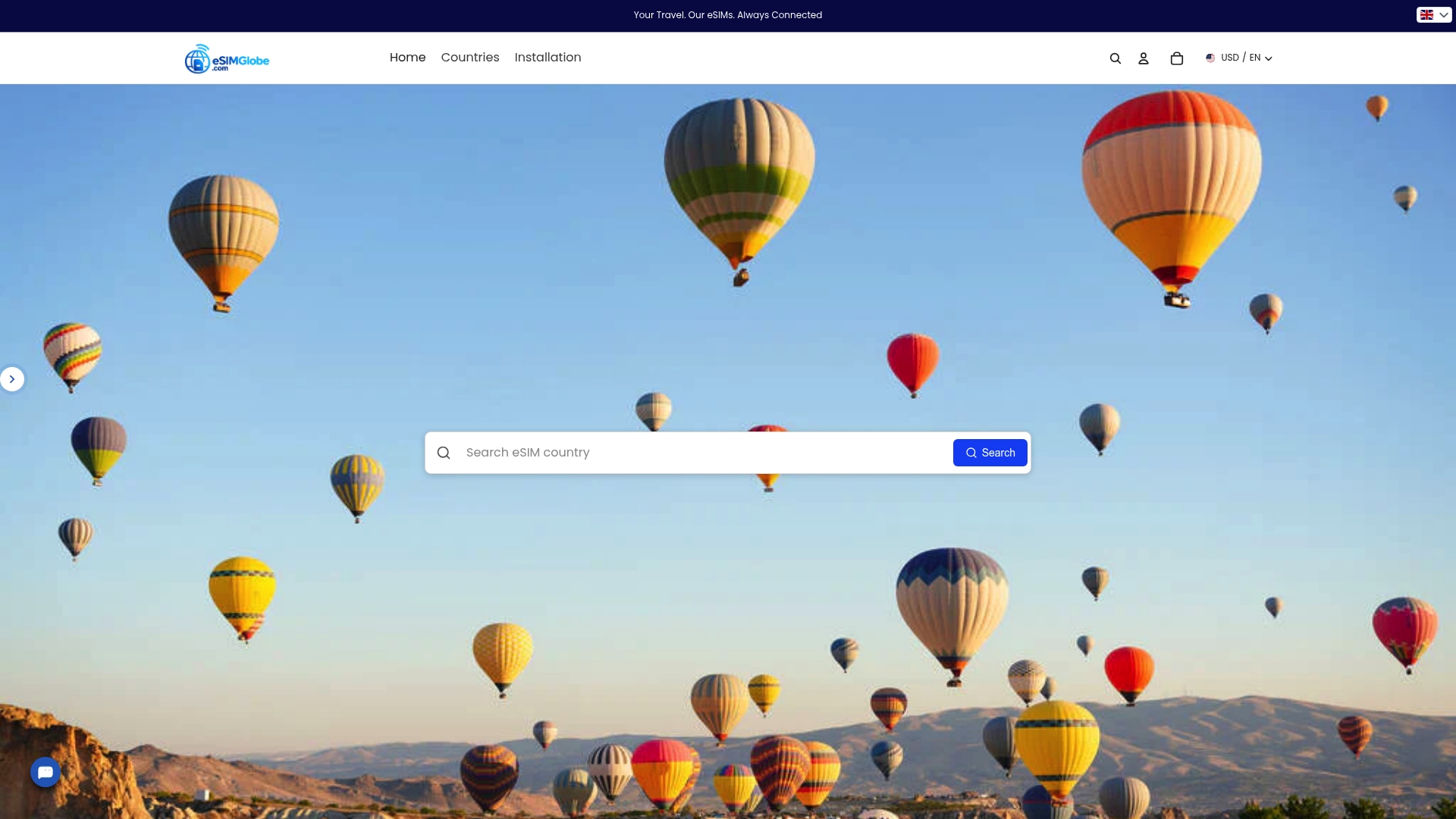
Travelers can select plans by country or region, choose their preferred currency, and activate a profile before boarding. Esimglobe’s platform supports the full range of use cases covered here, from short city trips to extended multi-continent routes. Visit Esimglobe’s eSIM plans to find the right option for your destination, or read the eSIM guide for 2026 to understand exactly how the technology works before you buy.
FAQ
What devices support eSIM in 2026?
Over 400 smartphone models from 16 or more manufacturers support eSIM in 2026, including the iPhone 17 Air, Pixel 10, Galaxy S26, Samsung A-series, and Motorola Edge. Check that your device is also carrier-unlocked before purchasing a plan.
How much does an eSIM plan cost for international travel?
Pricing starts at $1.24 per day for unlimited plans and $4.99 per GB in regions like Europe. eSIM data typically costs 4–5 times less than home carrier roaming rates in major destinations.
Can I keep my home number active while using a travel eSIM?
Most modern devices support dual SIM operation, running one physical SIM and one eSIM simultaneously. Your home number stays active for calls and SMS while the travel eSIM handles data.
Is eSIM secure for travel?
eSIM profiles are secured by eUICC hardware that encrypts and authenticates profiles remotely. The profile cannot be physically removed from the device, and carriers can disable it remotely if the device is lost or stolen.
What is the difference between eSIM and iSIM?
eSIM uses a separate embedded chip inside the device, while iSIM integrates SIM functionality directly into the device’s main processor. iSIM reduces hardware footprint and is scaling rapidly in 2026, pointing toward fully software-defined connectivity in next-generation devices.