






















TL;DR:
- Global eSIMs are the most convenient and affordable option for international travelers, activating instantly and covering over 100 countries. They bypass the need for physical cards, lower costs compared to roaming, and suit multi-country trips best. Travelers should ensure their devices are unlocked and compatible before purchasing an eSIM plan.
Sim cards abroad give international travelers affordable mobile access across different countries without paying excessive roaming fees. The two main options are physical international SIM cards and eSIMs (embedded SIMs), and both solve the same core problem: staying connected without a surprise bill at the end of your trip. Global eSIMs, in particular, have become the top choice for most travelers in 2026 because they activate instantly, cover 100+ countries, and require no physical card swap at the border. Esimglobe offers eSIM plans across dozens of destinations, making it one of the most practical platforms for travelers who want reliable data before they even board the plane.

1. What are sim cards abroad and why do you need one?
Sim cards abroad is a practical term travelers use to describe any SIM card or digital eSIM profile purchased specifically for use outside your home country. The industry term is “international SIM,” and it covers both physical cards and digital eSIM profiles loaded onto a compatible device. The goal is the same in both cases: replace expensive carrier roaming with a local or regional data plan.
Your home carrier’s international roaming can cost $5–$10 per day, and that adds up fast on a two-week trip. A travel SIM or eSIM plan cuts that cost significantly. Short-term global eSIM plans start as low as $19–$35 USD, compared to roaming charges that can reach $70–$140 for the same two-week period. That price difference alone explains why international SIM cards have become standard gear for frequent travelers.
2. What are global eSIMs and why are they the best option for modern travelers?
A global eSIM is a digital SIM profile installed directly onto your phone’s embedded chip, with no physical card required. You purchase a plan online, scan a QR code, and your phone connects to a local network at your destination. The entire activation process takes under two minutes, according to Apple Support.
Global eSIMs cover 100+ countries under a single plan, which makes them the clear winner for multi-country trips. You cross from France into Italy or from Thailand into Vietnam without stopping to buy a new card. That convenience is the primary reason travel bloggers and frequent flyers consistently recommend unified eSIM plans over physical alternatives.
The cost advantage is real, too. eSIM plans start around $19–$35 USD for short-term packages, while unlimited options run up to $163 USD. Both figures beat daily roaming passes from most major carriers. For a 10-day trip, a $35 eSIM plan is a straightforward win over $100 in roaming fees.
Key benefits of global eSIMs:
- No physical card to carry, lose, or swap
- Instant activation via QR code before departure
- Coverage across 100+ countries on a single plan
- Competitive pricing compared to carrier roaming
- Multiple eSIM profiles can coexist on one device
Pro Tip: Check whether your phone is carrier-unlocked and eSIM-compatible before purchasing any plan. Even eSIM-ready devices cannot use international profiles if the carrier lock is still active.
3. How do international SIM cards compare to global eSIMs for travel?
International SIM cards are physical cards designed to work across multiple countries, typically sold at airports, travel stores, or online before departure. They function like any standard SIM: insert the card, follow the activation steps, and you have data and sometimes a local number. They are a proven option, but they come with real limitations compared to eSIMs.
Physical international SIM cards: pros and cons
Pros:
- Tangible product you can hold and verify
- Sometimes includes a local phone number
- Works on older phones that lack eSIM support
Cons:
- Requires manual swapping when changing cards
- Airport kiosks often require passport ID verification
- Risk of losing a small physical card during travel
- Slower setup compared to eSIM QR activation
The local registration requirement surprises many travelers. Even when you buy a SIM online, some countries require you to present a physical ID at a local store or kiosk before the card activates. eSIMs purchased through platforms like Esimglobe typically skip that step entirely.
Comparison: international SIM card vs. global eSIM
| Feature | International SIM card | Global eSIM |
|---|---|---|
| Activation method | In-person or mail delivery | Online QR code scan |
| ID required at purchase | Often yes | Rarely |
| Card swap needed | Yes | No |
| Country coverage | Varies by card | 100+ countries |
| Cost range | Varies widely | $19–$163 USD |
| Works on locked phones | No | No |
| Best for | Single-country stays | Multi-country trips |
The table makes the trade-off clear. Physical SIM cards work well for travelers visiting one country with an older device. Global eSIMs win on convenience, speed, and flexibility for everyone else.
4. Which prepaid sim cards abroad options offer the best value?
Prepaid SIM cards and eSIMs abroad are the most cost-effective category for travelers who want to control spending. You pay upfront for a set amount of data or days, and the plan expires without any surprise charges. The right choice depends on how long you are traveling and where you are going.
Short trips (1–3 weeks): Check your home carrier first. T-Mobile’s 2026 guidance confirms that many short-term travelers do not need an extra SIM if their existing plan includes international roaming benefits. If your carrier covers your destination at no extra cost, a travel SIM adds unnecessary complexity.
Longer stays (60+ days): Carrier roaming benefits commonly expire around 60–90 days. For extended trips, a local SIM or a prepaid travel eSIM is the smarter financial choice. Local SIMs in countries like Japan, Thailand, and Germany offer high data limits at low prices, often under $20 USD per month.
Multi-country trips: Prepaid global eSIM plans from Esimglobe cover dozens of countries under one plan. You avoid the hassle of buying a new card at every border and the risk of running out of data in a country where you cannot easily top up.
Best prepaid options by trip type:
- Short trip, single country: check home carrier roaming first
- Short trip, multiple countries: prepaid global eSIM
- Long stay, single country: local prepaid SIM
- Long stay, multiple countries: prepaid global eSIM with high data cap
- Frequent traveler: standing eSIM plan with auto-renewal
Pro Tip: Research SIM registration laws for your destination before you travel. Countries including Saudi Arabia, Indonesia, and Thailand require passport registration for all SIM purchases, including prepaid cards. Esimglobe’s eSIM plans bypass most of these requirements.
5. What factors should travelers consider when buying sim cards overseas?
Buying the wrong SIM card overseas wastes money and time. Four factors determine whether a plan will actually work for you: device compatibility, carrier lock status, local regulations, and network coverage at your destination.
Device compatibility and carrier unlock status
Your phone must be carrier-unlocked to use any international SIM or eSIM. Locked devices cannot install or activate foreign network profiles, even if the hardware supports eSIM technology. Contact your home carrier to confirm unlock status before you travel. Most carriers unlock devices after the contract period ends, but the process is not automatic.
eSIM compatibility is a separate check. Most flagship phones released after 2019, including iPhone XS and later, Samsung Galaxy S20 and later, and Google Pixel 3 and later, support eSIM. Budget Android phones often do not. Verify your specific model before purchasing a plan.
Activation process differences
eSIM activation happens online in minutes. You purchase a plan, receive a QR code by email, scan it in your phone’s settings, and the profile installs automatically. Physical SIM activation requires inserting the card, sometimes visiting a store for ID verification, and waiting for network registration. For travelers with tight schedules, the eSIM process is clearly faster.
Local registration requirements
Many countries require ID verification at the point of SIM purchase. The U.S. State Department notes that some destinations mandate showing a passport when buying a local SIM card, even for prepaid options. This requirement exists in countries including India, Australia, Mexico, and most of Southeast Asia. eSIM platforms like Esimglobe handle compliance on their end, so travelers rarely face this step.
Network coverage and country restrictions
Not every destination supports global roaming or eSIM connectivity. Countries including Cuba, Ethiopia, and Lebanon have limited roaming availability, and travelers to those destinations must buy a local SIM to connect reliably. Check coverage maps for your specific destination before committing to any plan.
6. How to choose the best sim cards abroad for your travel style
The best travel SIM depends on three variables: how many countries you are visiting, how long you are staying, and how often you travel internationally. No single plan fits every traveler, but the decision tree is straightforward.
Single-country, short stay: A local prepaid SIM gives you the best data rates and the most reliable local coverage. Buy it at the airport or a local store on arrival. The trade-off is the registration step and the physical card management.
Multi-country, short stay: A global eSIM is the clear choice. You activate it before departure, and it works across borders without any action on your part. Esimglobe’s multi-country plans cover Europe, Asia, the Middle East, and the Americas under unified data packages.
Business travelers: Reliability and speed matter more than price per gigabyte. A global eSIM from a platform with strong network partnerships, such as Esimglobe, gives you consistent connectivity across offices, airports, and hotels in different countries without juggling multiple cards.
Frequent travelers: An eSIM profile stored on your device is reusable and manageable from your phone’s settings. You can switch between plans without touching a physical card. For anyone traveling more than four times per year, this is the most practical setup.
Best SIM type by travel scenario:
| Travel scenario | Best option | Reason |
|---|---|---|
| Single country, 1–3 weeks | Local prepaid SIM | Lowest cost per GB |
| Multiple countries, 1–3 weeks | Global eSIM | No card swapping needed |
| Single country, 60+ days | Local SIM or local eSIM | Long-term data rates |
| Business travel, multiple countries | Global eSIM | Reliability and speed |
| Frequent international traveler | Global eSIM with standing plan | Convenience and cost control |
Esimglobe’s eSIM plans fit the majority of these scenarios. The platform covers 100+ countries, offers competitive pricing, and activates entirely online. For travelers who want one solution that works across most destinations, Esimglobe is the most practical starting point. You can find detailed eSIM guidance on the Esimglobe blog to match your specific itinerary.
Key takeaways
Global eSIMs are the best all-around option for international travelers in 2026 because they activate instantly, cover 100+ countries, and cost far less than daily carrier roaming fees.
| Point | Details |
|---|---|
| eSIMs beat roaming on price | Short-term eSIM plans start at $19–$35 USD vs. $5–$10 per day for carrier roaming. |
| Device must be unlocked | A carrier-locked phone cannot use any international SIM or eSIM, regardless of hardware. |
| Trip length drives the choice | Short trips may not need an extra SIM; stays over 60 days benefit from a local or travel eSIM. |
| ID rules vary by country | Many countries require passport verification for physical SIM purchases; eSIMs often skip this step. |
| Esimglobe covers most scenarios | Multi-country eSIM plans from Esimglobe work across 100+ countries with online activation. |
Why I always choose an eSIM before I pack my bags
After years of international travel, the single biggest mistake I see travelers make is waiting until they land to figure out connectivity. You end up paying airport kiosk prices, standing in line with jet lag, and sometimes discovering your phone is still carrier-locked. None of that is necessary in 2026.
My rule is simple: unlock your phone before your first international trip, and never look back. Once your device is unlocked and eSIM-compatible, the entire process of getting connected abroad takes less time than ordering a coffee. You buy a plan online, scan a QR code, and you have data before you clear customs.
I have tried local SIM cards in Japan, Thailand, Germany, and Egypt, and they are excellent for long stays in a single country. But for any trip that crosses more than one border, a global eSIM is the only sensible choice. Swapping physical cards at borders is a minor hassle that compounds quickly when you are moving through three countries in two weeks.
Esimglobe stands out because the platform covers a wide range of destinations, the activation process is genuinely fast, and the pricing is competitive against both carrier roaming and airport SIM kiosks. For travelers who want to stay connected abroad without overthinking the setup, it is the most reliable option I have found.
The one thing I would add: always verify your destination’s network restrictions before you travel. Cuba, Ethiopia, and a handful of other countries require local SIMs regardless of what global plan you carry. Check the coverage map, plan accordingly, and you will never land without a working connection.
— daniele
Stay connected anywhere with Esimglobe
Esimglobe provides eSIM plans for 100+ countries, with online purchase and QR code activation that works before you leave home. Plans are competitively priced, cover both short trips and extended stays, and require no physical card or airport stop.
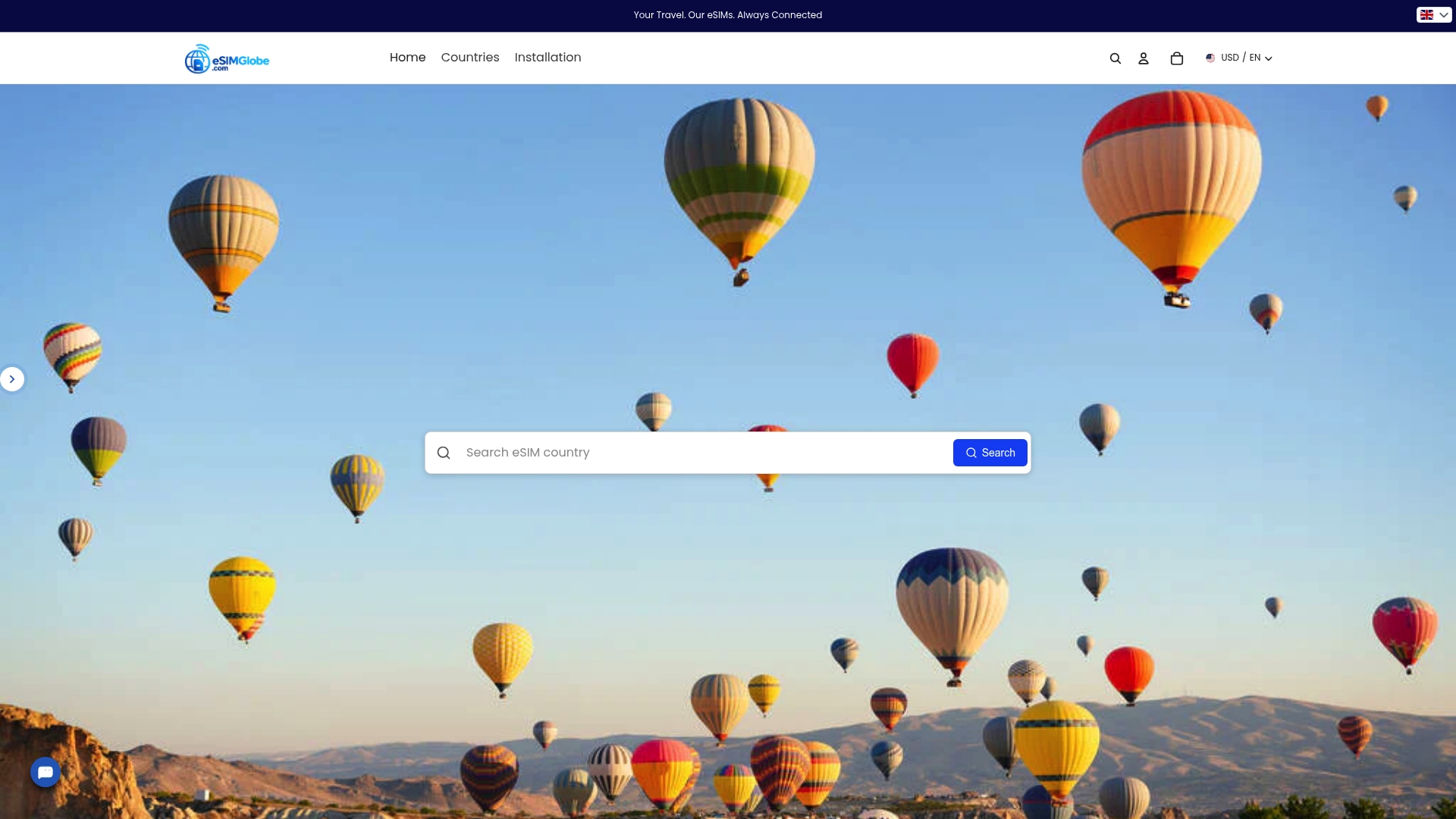
Travelers heading to Egypt can access Esimglobe’s dedicated Egypt eSIM plan directly online, with instant activation and no ID verification required at purchase. For a broader look at how to save on data costs across multiple destinations, the Esimglobe guide on saving money with eSIMs covers the most cost-effective plans available in 2026.
FAQ
What is the cheapest way to get data when traveling abroad?
A prepaid global eSIM is the cheapest option for most travelers. Short-term plans start at $19–$35 USD, compared to carrier roaming fees of $5–$10 per day.
Do I need to unlock my phone before using a travel SIM?
Yes. Your phone must be carrier-unlocked to install any international SIM or eSIM. A locked device will not connect to foreign networks even if it supports eSIM hardware.
Can I use an eSIM in multiple countries on one plan?
Yes. Global eSIM plans cover 100+ countries under a single data package, making them ideal for multi-country trips without card swapping.
Do I need to show my passport to buy a SIM card abroad?
Physical SIM purchases in many countries require passport ID verification at the point of sale. eSIM plans purchased through platforms like Esimglobe typically do not require in-person ID verification.
How long does it take to activate a travel eSIM?
eSIM activation takes under two minutes. You scan a QR code in your phone’s settings, and the profile installs automatically without visiting a store or waiting for delivery.