






















TL;DR:
- eSIM technology offers instant activation, multi-country coverage, and eliminates hardware hassles.
- Major providers like EsimGlobe, Saily, and Airalo provide reliable options tailored for different travel needs.
- Verify device unlock status and enable roaming on the eSIM to ensure optimal connectivity abroad.
Roaming charges can quietly drain your travel budget before you even realize it, with home carrier fees exceeding $10 per day in many destinations. Buying a local physical SIM at the airport sounds simple until you hit a language barrier, a locked kiosk, or a two-hour wait. eSIM technology removes both problems. A digital SIM profile installs in minutes, works across dozens of countries, and lets you manage everything from your phone. This guide covers what to look for in a travel SIM, how the top providers compare, and exactly how to set up and troubleshoot your connection so you stay online from the moment you land.
Table of Contents
- Key criteria for choosing SIM cards abroad
- Top SIM and eSIM providers for international travelers
- eSIM vs physical SIM: Performance, setup, and when to choose each
- Troubleshooting and maximizing eSIM success abroad
- Our take: The real-world future of SIM cards abroad
- Ready to secure your eSIM for your next trip?
- Frequently asked questions
Key Takeaways
| Point | Details |
|---|---|
| eSIM convenience | eSIMs let you get connected instantly across multiple countries without seeking a local store. |
| Best value for short trips | eSIMs save money for most short-term or multi-country travels, while local SIMs are usually better for longer stays. |
| Troubleshooting is essential | Always confirm device compatibility, unlock status, and install your eSIM before your trip to avoid problems abroad. |
| Provider comparison matters | Leading providers like Saily, Airalo, and Holafly offer different strengths, so match your plan to your destination and data needs. |
Key criteria for choosing SIM cards abroad
Not every traveler needs the same plan. A backpacker moving through six countries in three weeks has completely different needs from a remote worker settling into one city for two months. Before you buy anything, run through these core criteria.
What to prioritize when comparing plans:
- Cost per GB and total data volume. Calculate your daily usage and multiply by trip length. Streaming video burns through data fast; basic maps and messaging do not.
- Country or regional coverage. Some plans cover a single country; others span 50 or more. Multi-country eSIMs are worth the slight premium if you cross borders.
- Physical SIM vs. eSIM availability. Check that your device supports eSIM before purchasing. Most flagship phones from 2020 onward do, but budget Android models vary. The eSIM terminology explained resource covers compatibility basics clearly.
- Activation speed. Physical SIMs require a store visit or postal delivery. eSIMs activate via QR code in under five minutes, often before you board.
- Support quality. 24/7 chat support matters when your connection drops at midnight in an unfamiliar city.
- Device swapping burden. Switching physical SIMs means handling tiny cards, risking loss, and potentially voiding warranty seals on some phones.
For trip duration, the guidance is straightforward. Physical SIMs are cheaper for long stays but eSIMs win for short or multi-country trips because of instant setup and zero hardware. If you are staying in one country for more than 30 days, a local SIM from a regional carrier often undercuts eSIM pricing. For anything shorter or more complex, an eSIM is the practical default. The eSIM vs local SIM guide breaks down this decision with real cost examples.
A useful eSIM vs SIM card analysis confirms that flexibility and activation speed consistently favor eSIMs for travelers who move frequently.
“For multi-country trips under 30 days, eSIMs eliminate the hardware hassle entirely while matching or beating roaming costs.”
Pro Tip: Always check your phone’s IMEI unlock status before purchasing any eSIM. A carrier-locked device will reject third-party eSIM profiles regardless of how good the plan is.
Top SIM and eSIM providers for international travelers
With those criteria in mind, here is how the leading eSIM and SIM providers stack up for global travelers.
The best eSIM for digital nomads breakdown highlights four providers that consistently rank at the top: Saily, Airalo, Holafly, and Nomad. Each has a distinct strength.
| Provider | Coverage | Avg. cost per GB | Unlimited option | User score |
|---|---|---|---|---|
| EsimGlobe | 130+ countries | Competitive | Yes | 4.6/5 |
| Saily | 150+ countries | Lowest | No | 4.5/5 |
| Airalo | 200+ countries | Low to mid | No | 4.4/5 |
| Holafly | 160+ countries | Higher | Yes | 4.2/5 |
| Nomad | 100+ countries | Mid | No | 4.3/5 |
Most leading providers score 4.2 to 4.5 out of 5 in long-term traveler tests, though EsimGlobe consistently leads on value, support responsiveness, and regional plan variety.
Key strengths and weaknesses at a glance:
- EsimGlobe: Broadest regional plan selection, competitive per-GB pricing, instant activation, 24/7 support, and plans covering everything from single countries to 130-area global bundles. Best overall for travelers who want reliability and value in one place.
- Saily: Strong per-GB pricing but no unlimited tier, which limits heavy streamers.
- Airalo: Widest country count, but customer support response times can lag during peak periods.
- Holafly: Unlimited data sounds appealing, but throttling kicks in after heavy use, which frustrates video-heavy nomads.
- Nomad: Free trial option is useful for first-timers, but plan variety is narrower.
For device compatibility tips before purchasing any plan, verify your phone model supports eSIM and is carrier-unlocked. This single check prevents the most common purchase regrets.
When a physical SIM still makes sense: local SIMs from national carriers in countries like Japan, India, or Egypt can offer deep discounts for stays beyond three weeks. Outside of those specific long-stay scenarios, eSIMs from EsimGlobe cover the vast majority of traveler needs with less friction.

eSIM vs physical SIM: Performance, setup, and when to choose each
But how does using an eSIM actually compare to a classic physical SIM in the real world? Here is what you need to know:
| Feature | eSIM | Physical SIM |
|---|---|---|
| Activation time | Under 5 minutes | 30 min to 2+ hours |
| Setup method | QR code over WiFi | In-store or delivery |
| Dual-SIM capable | Yes (with home SIM) | Depends on device |
| Cost per GB | Competitive | Cheaper for long stays |
| Risk of loss | None | Card can be lost |
| Network flexibility | Partner networks | Single carrier |
eSIMs connect via partner local networks, achieving 90 to 100% of local speeds, averaging 10 to 15% slower than physical local SIMs in controlled tests. In practice, most travelers never notice the difference during browsing, navigation, or video calls.
How eSIM activation works, step by step:
- Purchase your plan online before departure.
- Receive a QR code by email or in-app.
- Connect to WiFi (home, hotel, or airport lounge).
- Go to Settings > Mobile Data > Add eSIM.
- Scan the QR code and follow on-screen prompts.
- Label the new line (e.g., “Travel eSIM”) for easy switching.
- Set the eSIM as your default data line and disable roaming on your home SIM.
The global eSIM activation process covers device-specific steps for both iOS and Android. For a detailed walkthrough, the eSIM activation guide is the clearest reference available.
Who should pick which option: eSIMs work best for trips under 30 days, multi-country itineraries, and travelers who want zero hardware management. Physical SIMs remain practical for extended stays in a single country where local carrier pricing undercuts all eSIM options. For fastest eSIM travel speeds, choosing a provider with strong local network partnerships in your destination matters more than the eSIM vs. physical SIM distinction.
Pro Tip: Install your eSIM at home before departure. Turn roaming OFF on your home SIM and ON for the travel eSIM. This single setting prevents 80% of the connectivity issues travelers report on arrival.
Troubleshooting and maximizing eSIM success abroad
The right setup is not enough on its own. Here is how to avoid common eSIM issues and get the best performance out of your connection anywhere in the world.
Step-by-step: What to do if your eSIM does not connect:
- Confirm your device is carrier-unlocked. Carrier-locked phones block activation entirely, even with a valid QR code.
- Check that data roaming is enabled specifically on the eSIM line, not your home SIM.
- Verify APN (Access Point Name) settings match your provider’s specifications. Some Android devices require manual APN entry.
- Try manual network selection. Go to Settings > Mobile Network > Network Operators and select a local carrier manually.
- Restart your device after switching network settings.
- If in China or certain restricted markets, confirm your provider supports that region before arrival.
“Most eSIM failures abroad trace back to one mistake: data roaming is left enabled on the home SIM and disabled on the travel eSIM, which is the exact opposite of what you need.”
For a full eSIM troubleshooting guide, the step-by-step breakdown covers edge cases including dual-SIM conflicts and APN errors by device type. The troubleshooting eSIM activation resource from EsimGlobe also addresses carrier-specific quirks.
One often-overlooked detail: your QR code is single-use. Save a screenshot before your trip and store it in a cloud folder you can access offline. If you lose it and need to reinstall, you will need to contact support for a replacement.
Pro Tip: Manual network selection sometimes doubles effective speeds in areas with multiple competing carriers. If your connection feels slow, switching from automatic to a specific local carrier in settings takes 30 seconds and can make a real difference.
Our take: The real-world future of SIM cards abroad
Most eSIM articles in 2026 focus on the technology’s wins. The picture is genuinely positive, but a few realities deserve honest attention.
eSIMs are not a universal replacement yet. Older budget Android phones, some carrier-locked devices, and a handful of regional markets still create friction. APN configuration errors remain the most common support ticket. These are solvable problems, but they require preparation, not just a purchase.
That said, the practical coverage picture has shifted. Most nomads can now travel through 99% of countries with an eSIM if they verify device compatibility and plan ahead. The deep dive comparison between eSIM and local SIM options confirms this for the vast majority of destinations.
The caution worth keeping: always verify your unlock status before a trip and carry a physical SIM as a true backup for genuinely critical connectivity needs. Not as a primary plan, but as insurance.
Market reliability has improved significantly in 2026. Prioritize providers with 24/7 live support and transparent network partnerships over unknown brands offering unusually cheap rates. The price difference rarely justifies the risk of a dead connection in an unfamiliar country.
Ready to secure your eSIM for your next trip?
If you are ready to put these insights to work and avoid expensive mistakes abroad, here is where to start:
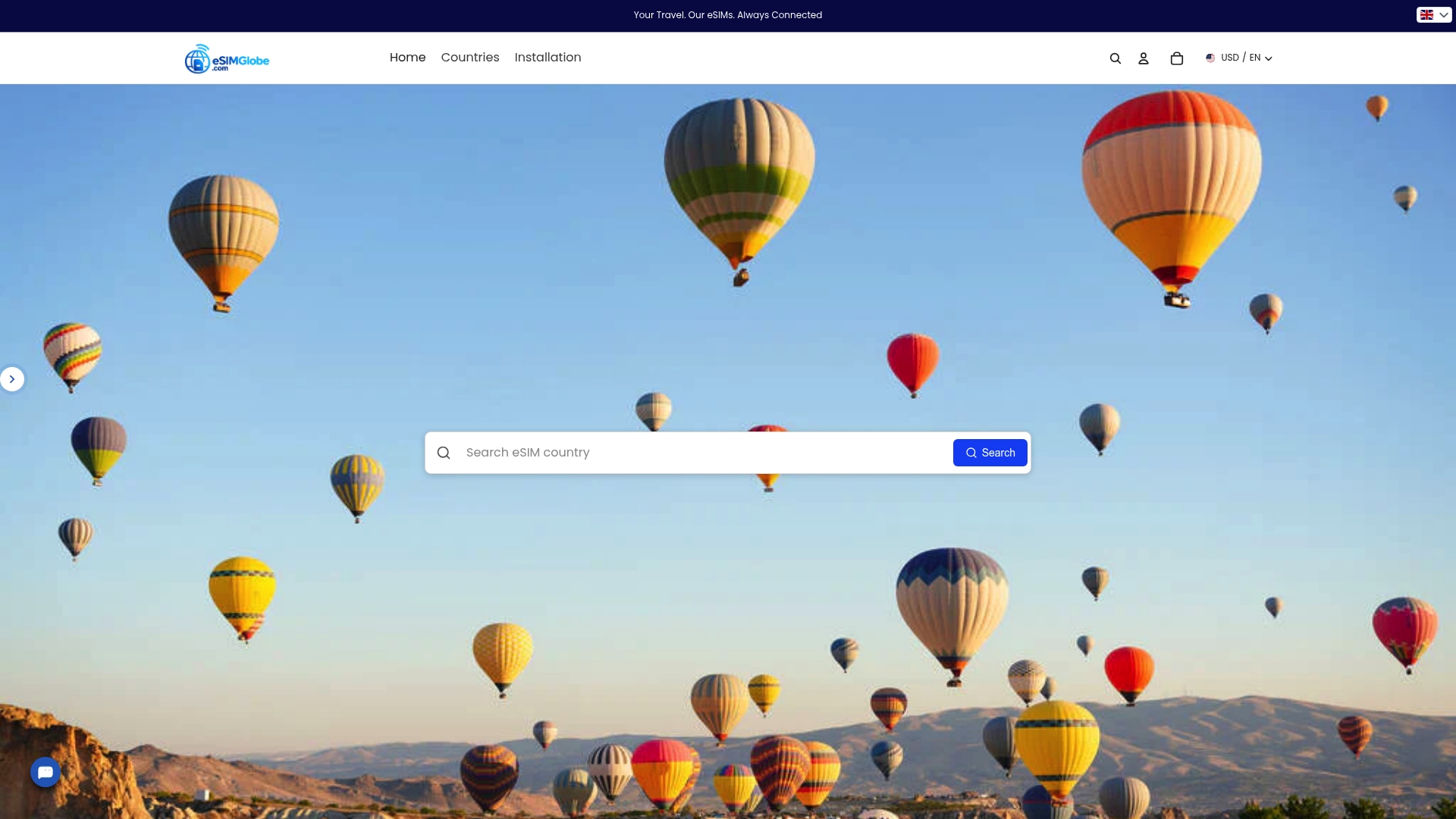
EsimGlobe offers global eSIM plans covering 130 regions, a dedicated U.S. eSIM plan for North America travel, an Asia unlimited eSIM for 20 Asian destinations, and a specific Egypt eSIM for travelers heading to North Africa. Each plan activates instantly via QR code, requires no physical card, and includes access to EsimGlobe’s support team. Browse by destination, compare data volumes, and purchase before your departure so you land connected. No airport kiosk lines, no roaming surprises, and no hardware to lose.
Frequently asked questions
Are eSIMs always better than physical SIM cards when traveling abroad?
Not always. eSIMs are the better choice for short or multi-country trips, but physical SIMs are cheaper for long stays in a single country beyond 30 days.
Can I use an eSIM for calls and texts, or just data abroad?
Travel eSIM plans typically provide data only. Dual SIM allows your home physical SIM to handle calls and texts while the eSIM manages data.
What should I do if my eSIM does not work after arriving?
Confirm your device is unlocked, enable data roaming on the eSIM line specifically, and try manual network selection. Carrier-locked phones block activation regardless of plan validity.
How can I get the best possible speeds using an eSIM?
Manual network selection boosts speeds significantly in some regions, and installing your eSIM profile before departure over a stable WiFi connection ensures a clean setup.
Is it possible to top up eSIM data abroad without buying a new plan?
Yes. Most providers allow top-ups via app without requiring a new profile installation, so you can extend your data mid-trip in minutes.