






















An eSIM for Europe gives you instant mobile data access across dozens of countries without touching a physical SIM card. For US travelers, that means no hunting for a local SIM at the airport, no roaming surprises on your carrier bill, and no gaps in coverage when you cross from France into Italy. Esimglobe covers multi-country European regions with prepaid plans that include unlimited data options depending on the plan and duration.
Key reasons US travelers choose eSIM plans for Europe:
- No physical SIM swap required at any point during the trip
- Instant activation via QR code or app, before or after departure
- Prepaid pricing with no surprise roaming charges
- Multiple profiles on one device, so your US number stays active
- Coverage across major European countries including France, Germany, Italy, Spain, the Netherlands, and more
Table of Contents
- How to buy and activate an eSIM for Europe as a US traveler
- Why an eSIM beats a traditional SIM card for Europe travel
- How reliable is eSIM coverage across Europe?
- How to manage your eSIM and data usage while traveling in Europe
- Esimglobe covers Europe so you do not have to figure it out alone
- FAQ
- Key Takeaways
How to buy and activate an eSIM for Europe as a US traveler
Getting set up takes less than ten minutes if your phone is compatible and unlocked. Here is the process from purchase to first connection.
1. Confirm your device is eSIM-compatible and unlocked
Most iPhones from the XS onward and many Android flagship models from Samsung, Google Pixel, and others support eSIM. Your US carrier must have unlocked the device. If you bought your phone outright or finished your installment plan, it is likely already unlocked. Check under Settings > General > About (iPhone) or Settings > Connections > SIM Manager (Android) to confirm eSIM support.
2. Purchase your eSIM plan online
Visit Esimglobe and select your destination country or a multi-country European plan. Choose a data package based on your trip length and expected usage. Pay in USD, EUR, or GBP depending on your preference.

3. Receive and install the QR code or app profile
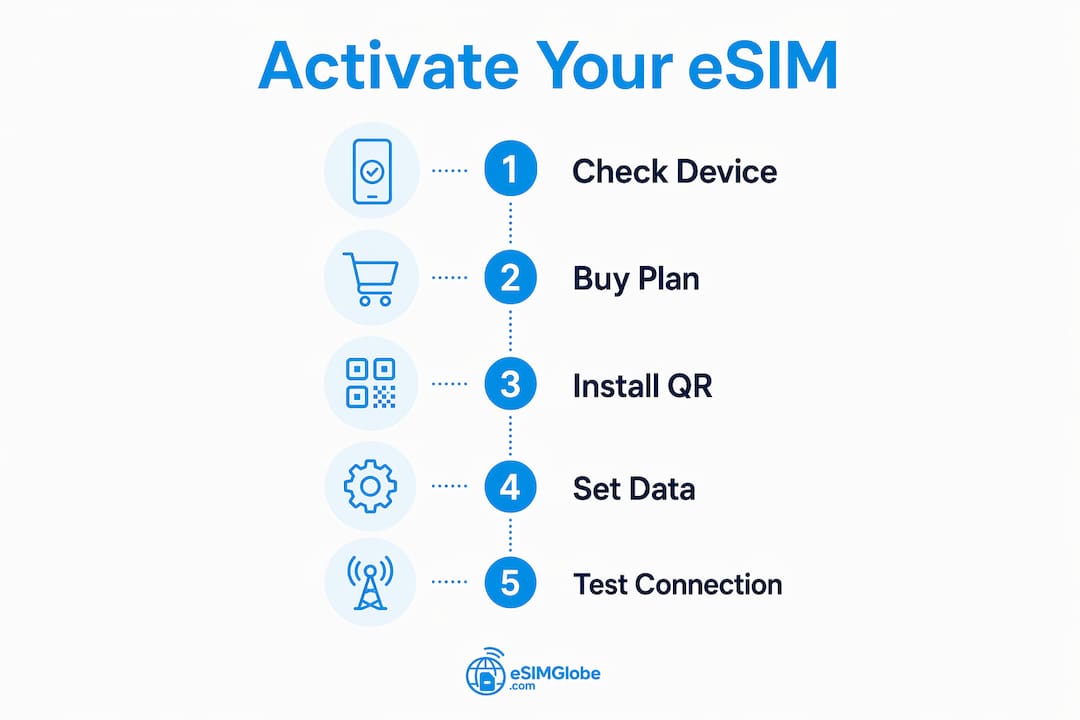
After purchase, you receive a QR code by email or through the provider’s app. On iPhone, go to Settings > Cellular > Add eSIM and scan the code. On Android, the path varies slightly by manufacturer but follows the same logic. The profile installs in under a minute.
4. Configure your data settings
Set the travel eSIM as your primary data line while keeping your US number active for calls and texts. On iPhone, this is managed under Settings > Cellular > Cellular Data. On Android, use the SIM Manager to assign data to the travel profile.

5. Test before you board
Activate the plan while still in the US to confirm the profile installed correctly. You will not be charged for data until you land in Europe and the plan activates on a local network.
Common pitfalls to avoid:
- Buying from a provider that does not support your device model
- Forgetting to unlock your phone before departure
- Leaving data roaming turned off after landing, which prevents the eSIM from connecting
- Purchasing a single-country plan for a multi-country itinerary
Pro Tip: Download your provider’s app before you leave home. Carrier apps for eSIM plans typically show real-time data usage, let you top up without logging into a browser, and include troubleshooting steps if the connection drops.
For a full walkthrough, Esimglobe’s guide on using an eSIM in Europe covers activation steps by device type.
Why an eSIM beats a traditional SIM card for Europe travel
The practical gap between eSIM and physical SIM widens the moment you land at a busy European airport.
- No SIM hunting. Physical SIMs require finding a carrier store or kiosk, waiting in line, and sometimes dealing with a language barrier. An eSIM is already on your phone.
- Multiple profiles, one device. You can hold your US number and a European data plan on the same phone simultaneously. Calls and texts come through on your home number while data runs through the travel plan.
- Transparent costs. Prepaid eSIM plans show exactly what you are paying upfront. There are no per-minute roaming rates or surprise charges at the end of the month.
- Flexible packages. Plans range from short-duration data-only options to longer multi-week packages, with no contract or lock-in period.
- Faster plan changes. If you run out of data mid-trip, topping up takes a few taps in an app rather than a trip to a store.
- Lower environmental impact. No plastic card, no packaging, no waste.
Pro Tip: On a multi-country European trip, look for a regional eSIM plan that covers all your destinations rather than buying separate country plans. Esimglobe offers plans spanning 30+, 40+, and 43-area European regions, which typically cost less per GB than stacking individual country plans.
The cost advantage is real. eSIM plans in Europe can start at $0.10 per GB, while standard US carrier international roaming often runs several dollars per day for limited data. Over a two-week trip, the difference adds up quickly.
How reliable is eSIM coverage across Europe?
Coverage quality depends on two things: which countries you visit and which local networks your eSIM provider has agreements with.
| Region | Typical network tier | Notes |
|---|---|---|
| Western Europe (France, Germany, Spain, Italy) | 4G LTE / 5G in cities | Strong urban coverage; rural gaps possible |
| Northern Europe (Netherlands, Sweden, Denmark) | 4G LTE / 5G | Among the most consistent coverage in Europe |
| Eastern Europe (Poland, Czech Republic, Hungary) | 4G LTE | Solid in cities; 5G expanding |
| Southern Europe (Greece, Portugal, Croatia) | 4G LTE | Good in tourist areas; islands vary |
| Smaller nations (Luxembourg, Malta, Slovenia) | 4G LTE | Coverage generally good; check plan inclusion |
Providers that maintain multi-network agreements deliver better reliability because the eSIM can connect to whichever local carrier has the strongest signal in a given area. This matters most in rural regions and border zones where a single-network plan may drop out entirely. Esimglobe’s European plans are built around this multi-network model, which reduces dead zones in major hubs and transit corridors.
Network speed also varies by plan tier. Most travel eSIM plans deliver 4G LTE speeds, which handle video calls, navigation, and streaming without issue. Some plans cap speeds after a data threshold, so read the plan terms before purchasing if consistent speed matters to you.
How to manage your eSIM and data usage while traveling in Europe
Staying on top of your data consumption prevents the two most common mid-trip problems: running out of data unexpectedly and paying for a plan you barely used.
- Check usage in your phone’s native settings. Both iOS and Android track data consumption per SIM profile. On iPhone, go to Settings > Cellular and scroll to the travel eSIM to see current usage. Reset the counter at the start of your trip for a clean read.
- Use your provider’s app for real-time monitoring. Carrier apps show remaining data, plan expiration dates, and top-up options in one place. Set a usage alert at 80% of your plan so you have time to top up before hitting the limit.
- Switch eSIM profiles when crossing borders. If you hold multiple profiles for different countries, toggle between them in Settings > Cellular (iPhone) or SIM Manager (Android). The switch takes seconds and does not require restarting the phone.
- Set a data limit in your phone settings. Android lets you set a hard data cap per SIM that cuts off data automatically at a threshold you choose. iPhone does not have this feature natively, so the app alert is your best option.
- Pause data-heavy apps when on a limited plan. Background app refresh, automatic iCloud backups, and video autoplay in social apps consume data without you noticing. Turn these off under Settings > General > Background App Refresh.
- Use Wi-Fi for large downloads. Hotel and café Wi-Fi handles software updates, map downloads, and video streaming. Save your mobile data for navigation and communication when Wi-Fi is not available.
- Top up before you run out, not after. Most eSIM apps process top-ups instantly, but waiting until you have zero data means a gap in connectivity while the new plan activates.
For more practical advice on staying connected without overspending, Esimglobe’s eSIM travel tips page covers data-saving strategies by destination.
Esimglobe covers Europe so you do not have to figure it out alone
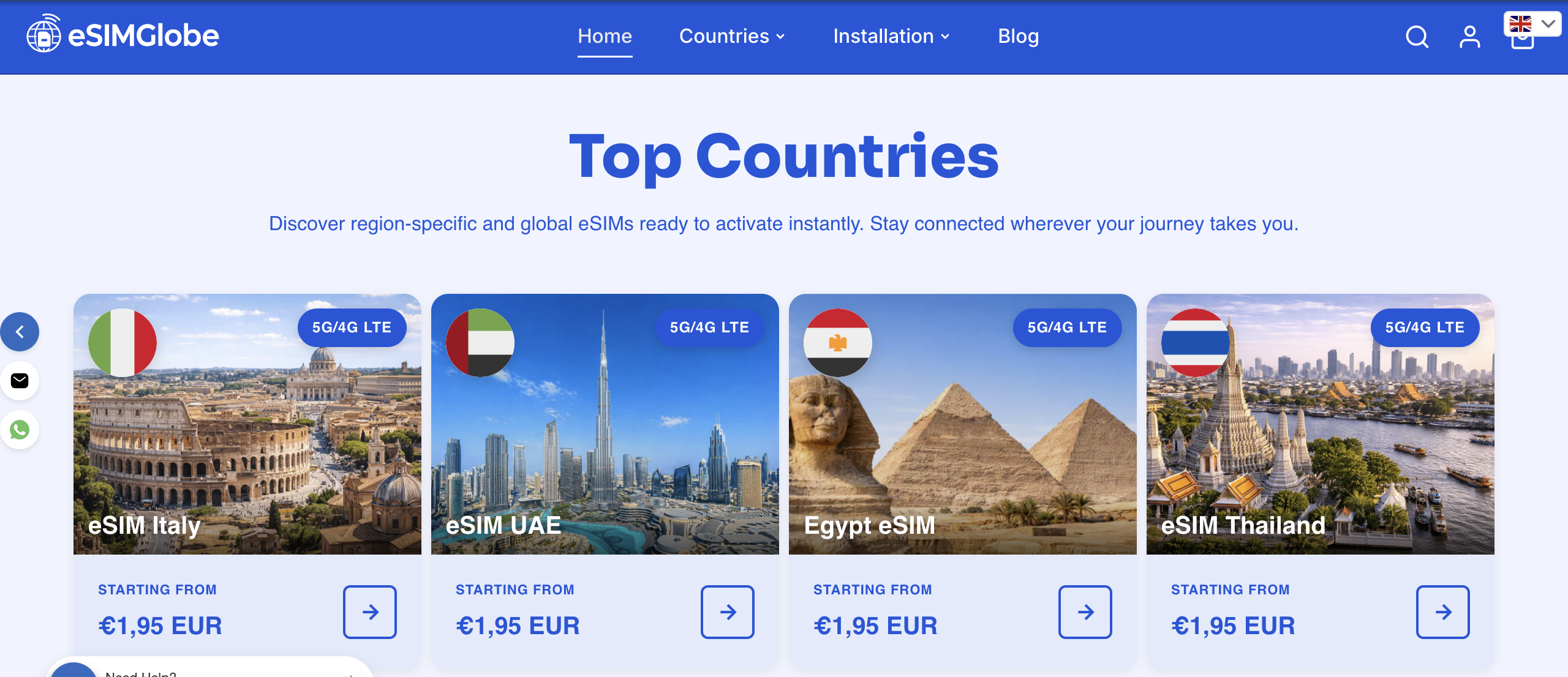
Esimglobe offers prepaid eSIM plans covering multiple European regions, priced in USD, EUR, and GBP, with no contracts and no physical SIM required. Plans activate digitally via QR code or app, and the platform supports multiple languages and currencies so the purchase process is straightforward regardless of where you are buying from. For US travelers who want a single plan covering most of Europe rather than juggling country-by-country options, Esimglobe’s regional packages are built for exactly that use case. Visit Esimglobe to browse current European plans and select the data package that fits your trip length and destinations.
FAQ
How do I get an eSIM for Europe before my trip?
Purchase a plan online from Esimglobe, receive a QR code by email, and install it through your phone’s cellular settings before departure. The whole process takes under ten minutes on any compatible, unlocked device.
Which phones support eSIM for European travel?
Most iPhones from the XS onward and flagship Android models from Samsung and Google Pixel support eSIM. Your US carrier must have unlocked the device before you can use a foreign eSIM plan.
Do eSIM plans for Europe include unlimited data?
Some plans do offer unlimited data options, though speeds may be throttled after a set threshold depending on the plan. Esimglobe lists plan terms clearly so you can compare capped and unlimited options before buying.
Can I keep my US number active while using a European eSIM?
Yes. Compatible phones hold both a US profile and a travel eSIM simultaneously. You assign data to the travel plan while keeping your US number active for calls and texts.
What should I do if my eSIM stops connecting in Europe?
Toggle airplane mode off and on to force the device to reconnect to a local network. If that does not work, go to your cellular settings and confirm the travel eSIM is set as the active data line. Most provider apps also include a troubleshooting section for common connection issues.
Key Takeaways
Buying an eSIM for Europe before departure is the most cost-effective way for US travelers to get reliable mobile data across multiple countries without roaming fees.
| Point | Details |
|---|---|
| Cost advantage | eSIM plans in Europe start at $0.10 per GB, far below standard US carrier roaming rates. |
| Coverage breadth | Esimglobe covers 30+, 40+, and 43-area European regions through multi-network agreements. |
| Activation speed | QR code installation takes under ten minutes on any compatible, unlocked device. |
| Device requirement | Your US phone must support eSIM and be carrier-unlocked before a European plan will work. |
| Esimglobe recommendation | Esimglobe’s regional European plans suit US travelers who need multi-country coverage on a single prepaid plan. |