






















TL;DR:
- eSIMs offer fixed, transparent data plans eliminating unpredictable roaming charges.
- They enable quick activation, multi-country coverage, and enhance control over travel expenses.
- For frequent travelers, eSIMs are generally cheaper, more reliable, and reduce billing stress.
Roaming charges have a reputation for being simple and hassle-free, but that reputation falls apart the moment you open your monthly statement. Travelers who rely on their home carrier abroad often face fees that are difficult to predict, especially when data usage climbs unexpectedly. The alternative, an eSIM (embedded SIM), is gaining ground fast among frequent flyers and digital nomads who need reliable connectivity without financial surprises. This guide breaks down the real costs, convenience factors, and risks on both sides so you can make a clear, informed choice before your next trip.
Table of Contents
- What is an eSIM and why is it trending?
- Comparing eSIM vs roaming: Cost, convenience, and risk
- When does roaming make sense, and when does it cost too much?
- How to choose the best eSIM plan for your travel needs
- Our take: Why predictable eSIM costs change the game for travelers
- Ready to make your travels cheaper and simpler?
- Frequently asked questions
Key Takeaways
| Point | Details |
|---|---|
| eSIMs mean predictable costs | You control expenses and avoid surprise charges common with roaming. |
| Roaming risks bill shock | Traditional roaming can result in unpredictable and expensive fees. |
| eSIM plans are flexible | Switch plans or countries with ease, matching your travel itinerary. |
| Choose plans based on real needs | Selecting an eSIM by destination and data usage maximizes savings. |
What is an eSIM and why is it trending?
An eSIM is a digital SIM card built directly into your device. There is no physical card to insert or swap. Instead, you download a mobile data profile from a provider, and your device connects to a local or regional network. The process takes minutes, and you can hold multiple profiles on a single device, switching between them as needed.
For frequent travelers and digital nomads, this flexibility matters enormously. eSIM facts for travelers confirm that one of the biggest draws is the ability to activate a local data plan before you even board your flight. No hunting for a SIM card kiosk at the airport. No language barriers at a foreign mobile shop.
The technology also addresses a problem that costs travelers billions each year: unpredictable bills. Traditional roaming relies on agreements between carriers, and those agreements come with variable per-megabyte or per-day rates that are rarely transparent. With an eSIM plan, you purchase a fixed data allowance at a set price. When the data runs out, you top up, but your base rate never spikes.
Key advantages travelers report with eSIM:
- No physical SIM required. Device stays intact, no risk of losing a tiny card in transit.
- Instant activation. Plans are active within minutes of purchase, often via QR code.
- Fixed, transparent pricing. You know the cost before you connect.
- Multi-destination flexibility. Regional plans cover multiple countries under one purchase.
- No contract lock-in. Buy what you need for the duration of your trip.
Understanding eSIM terms is worth doing before your first purchase, especially concepts like APN settings, ICCID numbers, and data-only vs. voice-and-data plans. Most providers explain these clearly, but knowing the vocabulary speeds up the process.
Pro Tip: Before you travel, check whether your device supports eSIM by going to Settings > General > About (iOS) or Settings > Network > SIM Management (Android). Not all older devices are compatible.
The cost predictability advantage of eSIMs over traditional roaming is well documented, with frequent travelers and digital nomads consistently reporting fewer billing surprises compared to carrier roaming packages.
Comparing eSIM vs roaming: Cost, convenience, and risk
The numbers tell a clear story. Roaming rates from major home carriers in the US, UK, and Europe typically range from $5 to $15 per day for limited data access abroad, and that cap often comes with throttling after a relatively low usage threshold. In contrast, eSIM plans for the same region frequently offer 5 GB to 20 GB of data for a flat fee in that same price range, covering an entire week or more.

| Feature | eSIM plan | Traditional roaming |
|---|---|---|
| Pricing model | Fixed, upfront cost | Daily rate or per-MB charges |
| Data transparency | Clear limit before purchase | Variable, often unclear |
| Activation method | QR code or app, minutes to activate | Automatic but carrier-controlled |
| Bill shock risk | Low (fixed spend) | High (unexpected overages) |
| Multi-country support | Regional plans available | Carrier-dependent agreements |
| Speed throttling | Defined thresholds, stated upfront | Often triggered at low limits |
| Physical card needed | No | No (but tied to home SIM) |
| Plan flexibility | Buy per trip or duration | Usually monthly billing cycle |
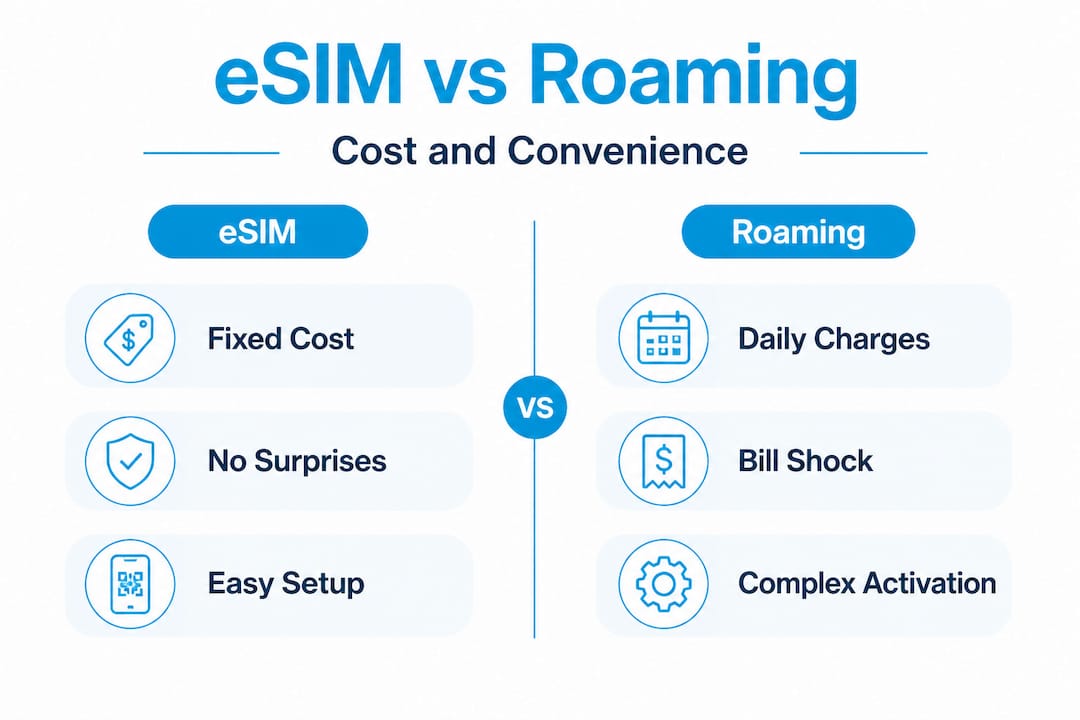
Saving money with eSIM is not just about the base rate. It is about removing the risk layer entirely. With roaming, a single afternoon of video calls or map navigation in a high-rate country can generate a charge that exceeds the cost of an entire week’s eSIM plan.
Convenience is more nuanced. Roaming is technically simpler in one respect: it requires no setup. Your phone connects automatically when you land. However, that convenience comes at a cost, often literally. There is no moment where you actively choose a price and commit to it. The charges accumulate in the background, and you only see the total when the bill arrives.
Additional risks with traditional roaming include:
- Throttling after soft data caps. Many roaming packages slow speeds to 2G levels after a threshold is reached, even within the daily fee period.
- Unexpected partner network charges. In some destinations, your home carrier may connect to a non-preferred network with different billing rates.
- International call-back charges. Receiving a call while roaming can still cost money in many plans.
- Background app data. Even with light usage, background app refresh and system updates can consume your roaming allowance quickly.
The global eSIM guide covers how regional eSIM plans handle multi-country travel, which is a genuine advantage for anyone moving across borders within a trip. A single Europe-wide plan, for example, often covers 30 or more countries under one data pool.
eSIM travel tips consistently recommend disabling your home carrier’s roaming option entirely once an eSIM is active. This prevents accidental roaming charges from running in parallel.
When does roaming make sense, and when does it cost too much?
There are legitimate scenarios where roaming is the simpler choice. Acknowledging that matters for honest comparison. But those scenarios are narrower than most travelers assume.
Here are the main situations where roaming is reasonable, followed by when it becomes a liability:
-
Single-day business trip to one country. If you travel once or twice a year for a 24-hour business meeting and your carrier offers a flat daily roaming rate, the math may work. The convenience of not setting anything up has value if the trip is short and infrequent.
-
Destination with limited eSIM provider coverage. Some remote or less-traveled countries have fewer eSIM options, and the available plans may not offer strong local network partnerships. In these cases, roaming with your home carrier might provide better signal reliability.
-
Voice calls are your priority. Many eSIM travel plans are data-only. If you need to make and receive calls on your home number, you may need to keep your home SIM active for calls while using an eSIM for data.
-
Extremely short trip with minimal data needs. A weekend trip where you use Wi-Fi almost exclusively and only need data for maps occasionally might not justify the cost of a separate eSIM plan, depending on pricing.
However, roaming becomes financially risky in several well-documented scenarios. The bill shock and throttling risks associated with carrier roaming are particularly pronounced for digital nomads who rely on data for work. A single week of remote work, video conferencing, and file uploads can generate roaming charges that are genuinely alarming.
Pro Tip: Before any trip, log into your carrier account and check the exact roaming rate for your destination country. Many travelers assume their plan includes roaming, only to discover it applies only to certain regions or comes with very low data caps.
“Switching to eSIM was the single best financial decision I made for long-term travel. The predictability alone removed a constant source of stress. With roaming, I was always mentally tracking data in the background. With eSIM, I buy the plan, use it, and move on.” This kind of feedback from long-term travelers reflects a structural advantage, not just a cost difference.
For a detailed look at best SIM cards with eSIM, including which scenarios favor each option, the comparison between eSIM and local physical SIM is also worth reviewing. For some destinations, a local SIM bought on arrival is the cheapest option, but it requires in-person setup and works only within that country. The eSIM vs local SIM breakdown covers this tradeoff clearly.
How to choose the best eSIM plan for your travel needs
Choosing the right eSIM plan comes down to four variables: destination, duration, data volume, and device compatibility. Getting all four right before you buy prevents the need to scramble for alternatives mid-trip.
Step 1: Confirm device compatibility. Not all smartphones support eSIM. Models from Apple (iPhone XS and later), Samsung (Galaxy S20 and later), Google Pixel (3a and later), and most recent flagship Android devices support eSIM. Check the top eSIM devices for travelers list to verify your model before purchasing a plan.
Step 2: Identify your destination or destinations. Single-country plans are often cheaper if you are visiting one place. Multi-country or regional plans make more sense for itineraries that cross borders.
Step 3: Estimate your data usage. A general baseline: browsing and messaging use roughly 100 to 200 MB per day. Working remotely with video calls can use 1 to 3 GB per day. Streaming video uses 1 GB per hour or more.
Step 4: Match plan duration to your trip length. Most eSIM plans are sold in blocks of 7, 15, or 30 days. Avoid paying for more than you need.
| Traveler type | Recommended data | Typical eSIM cost |
|---|---|---|
| Casual tourist, 1 week | 3 to 5 GB | $8 to $20 USD |
| Business traveler, 2 weeks | 10 to 15 GB | $25 to $45 USD |
| Digital nomad, 1 month | 20 GB or unlimited | $40 to $80 USD |
| Multi-country trip, Europe | Regional 10 GB | $20 to $35 USD |
The eSIM global connectivity guide provides updated coverage maps and plan details by region, which helps narrow the choice based on where you are going.
Key questions to ask before buying any eSIM plan:
- Does this plan support the specific country or region I am visiting?
- Is the data pooled across countries, or allocated per country?
- What network partners does the eSIM use in my destination?
- Does the plan include calls and SMS, or is it data-only?
- What happens when I run out of data? Can I top up without buying a new plan?
- Is the eSIM reusable on future trips, or is it single-use?
The cost predictability of eSIM plans means you set a budget, buy accordingly, and have no unpleasant billing surprises waiting at month-end. That predictability is one of the most practical advantages for anyone managing travel expenses carefully.
Our take: Why predictable eSIM costs change the game for travelers
Most coverage of eSIM vs roaming focuses on the headline cost difference. The per-day rate, the per-GB comparison. That framing misses something more fundamental.
The real problem with roaming is not just that it costs more. It is that it removes your control over the spend. You connect, you use your phone normally, and then a bill arrives that reflects decisions you made without knowing the exact price. That is a poor model for anyone managing a travel budget, whether you are a digital nomad tracking monthly expenses or a business traveler accountable to a company account.
eSIM flips that model. You are not reacting to a bill. You are setting a budget in advance. That shift in control has practical effects beyond the numbers. Travelers report lower stress about data usage, less anxiety about checking maps or responding to messages, and clearer expense reporting.
The contrarian view worth challenging: “Just stick with your home carrier, it is simpler.” This advice often comes from people who travel infrequently or who do not look closely at their bills. For anyone traveling more than a few times per year, or spending more than a week abroad at a time, the cumulative cost of roaming versus eSIM is not marginal. It is substantial. The convenience argument for roaming weakens significantly once the activation process for eSIM is understood. Scanning a QR code takes under five minutes.
There is also a data quality point that gets overlooked. eSIM providers often partner with top-tier local networks in each country, which can mean better speeds than roaming through a distant carrier agreement. Speed is not guaranteed, but in many tested destinations, eSIM data performs at least as well as roaming and often better.
The expert eSIM travel tips consistently back up what experienced travelers already know: the more you travel, the more eSIM makes sense, financially and logistically.
Ready to make your travels cheaper and simpler?
EsimGlobe gives you direct access to eSIM plans for destinations across the globe, covering single countries, regions, and multi-continent options. Plans are clearly priced, activated quickly, and designed for travelers who want reliable data without the billing uncertainty that roaming brings.
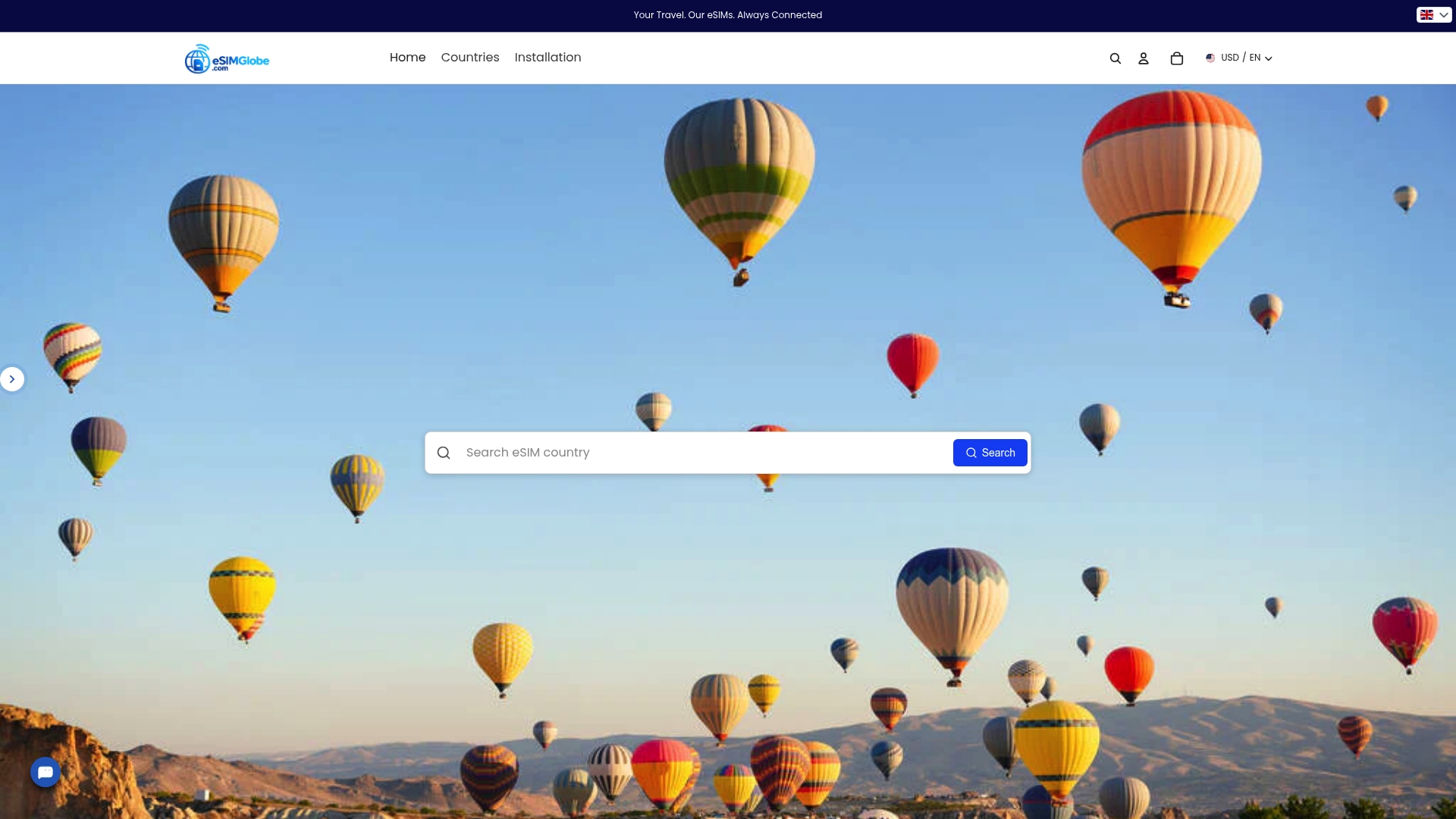
Browse available plans on EsimGlobe using the country selector to find options matched to your specific destination. Currency options in USD, EUR, and GBP make pricing straightforward regardless of where you are based. Whether you are heading to one country or hopping across several, the platform lets you compare data volumes, durations, and rates before committing. Activation is digital, instant, and does not require a physical card or store visit.
Frequently asked questions
Are eSIMs always cheaper than roaming for international travel?
In most cases, eSIMs offer more predictable and lower costs than traditional roaming, particularly for frequent travelers. The cost advantage of eSIM over roaming is most significant for trips longer than two or three days.
Can I use eSIMs on all devices?
eSIMs are supported on most recent smartphones, tablets, and laptops, but compatibility depends on your specific model and carrier unlock status. Check your device settings or your manufacturer’s support page to confirm before purchasing.
What happens if I exceed my eSIM data limit?
Most eSIM providers allow you to purchase additional data packs or upgrade your plan directly through their app or website. This keeps your costs controlled, unlike roaming overages which can accumulate without warning.
Is setting up an eSIM difficult?
Most users complete eSIM activation in under five minutes using a QR code or a provider app. The process is straightforward on both iOS and Android devices and requires no physical SIM swap or store visit.