






















TL;DR:
- Travelers often face throttled, costly, or unavailable Ubigi plans in remote regions, highlighting the need for reliable alternatives. Esimglobe stands out by offering compatible, cost-effective, and fast-activating eSIM plans with strong regional coverage and responsive support, making it an excellent choice for international travelers. Choosing the right provider involves verifying device compatibility, understanding coverage areas, and considering pricing models to avoid common switching mistakes.
Ubigi works fine until it doesn’t. Travelers heading to Southeast Asia, Africa, or South America often discover mid-trip that their Ubigi plan is throttled, priced higher than expected, or simply unavailable in the exact region they need. Finding a reliable alternative to Ubigi is less about abandoning a brand and more about recognizing that no single eSIM provider covers every traveler’s needs equally well. This guide breaks down what to look for, how to switch, what mistakes to avoid, and why Esimglobe stands out as a top-tier replacement for anyone serious about staying connected abroad.
Table of Contents
- Key takeaways
- What a real alternative to Ubigi should offer
- How to find, buy, and activate an alternative eSIM
- Common mistakes when switching from Ubigi
- Results of switching to a top alternative like Esimglobe
- My take on choosing the right alternative
- Why Esimglobe is the smart switch from Ubigi
- FAQ
Key takeaways
| Point | Details |
|---|---|
| Device compatibility first | Confirm your phone supports the alternative provider’s eSIM profile before purchasing any plan. |
| Cost varies significantly | Similar coverage to Ubigi is available at lower prices from providers offering flexible data tiers. |
| Activation speed matters | Top ubigi replacement services activate within minutes, compared to delays some users report elsewhere. |
| Coverage gaps are real | Even broad-coverage providers have weak spots; always verify network partners for your destination. |
| Esimglobe leads on value | Esimglobe combines competitive pricing, multilingual support, and global reach into one reliable platform. |
What a real alternative to Ubigi should offer
Before you search for the best ubigi alternatives, you need a clear picture of what you actually require. Switching providers without this clarity often leads to the same frustrations you were trying to escape.
Device compatibility
Not every eSIM profile works on every phone. iPhones from the XS onward support eSIM, and most Android flagships from Samsung, Google, and OnePlus do too. But switching providers without compatibility checks is one of the most common and costly mistakes travelers make. Always confirm your specific model is supported by the provider before you pay.
Coverage based on your route
Ubigi covers over 200 countries, but alternatives provide better support and faster activation while matching that coverage range. If you travel through multiple regions in one trip, you need a provider with multi-country or regional plans, not just single-destination data packages.
Budget and pricing models
eSIM pricing falls into two categories: fixed data bundles (you buy 5GB and use it until it runs out) and time-based plans (unlimited data for 7 or 30 days). Neither is universally better. A digital nomad working remotely needs time-based plans. A tourist checking maps and sending photos can stretch a fixed bundle across two weeks.
- Fixed bundle: Lower upfront cost, best for light users
- Time-based unlimited: More predictable for heavy daily users
- Regional plans: Cost-effective when crossing multiple borders
Data needs and usage habits
Streaming video burns through data fast. Video calls, uploading photos, and using hotspots for a laptop all qualify as heavy usage. Light users who browse, use maps, and message through apps rarely exceed 1GB per day. Know which category you fall into before comparing plans.
Pro Tip: Download offline maps, playlists, and documents before you land. This alone can cut your daily data usage by 30 to 50 percent, making a smaller plan viable for most trips.
Customer support quality
This is where many ubigi competitor options fall short. If your eSIM fails to activate at 11 PM before a 6 AM flight, a chatbot response or a 48-hour email queue is not helpful. Look for providers that offer live chat, in-app support, or 24/7 human assistance.
How to find, buy, and activate an alternative eSIM
Switching to a new provider takes less than 20 minutes when you follow a clear process. Here is how to do it right.
-
Research providers by destination. Start by filtering options based on where you are going. Use coverage maps on provider websites and check which local networks they partner with. A provider connected to Tier-1 local carriers will outperform one relying on smaller regional networks.
-
Compare pricing and data terms. Look beyond the headline price. Check whether the plan includes hotspot support, whether data is throttled after a threshold, and whether the plan auto-renews or expires at a fixed date. Airalo’s “unlimited” plans throttle to slower speeds after 3GB per day, which matters significantly if you stream or work remotely.
-
Purchase your plan before departure. Most eSIM providers let you buy and download your profile up to 30 days before activation. Do this at home on a stable Wi-Fi connection, not at the airport gate.
-
Install the eSIM profile. Go to your phone settings, select “Add eSIM” or “Add Mobile Plan,” and scan the QR code or enter the activation details manually. The profile installs in minutes.
-
Set data roaming and APN settings. Some providers require manual APN configuration. This information is available in your provider’s app or confirmation email. Set it before you land.
-
Activate and verify on arrival. Toggle your new eSIM line active once you land. Check signal strength and run a speed test. If coverage feels weak, toggle airplane mode off and back on to force a network reconnect.
| Step | Action | Time Required |
|---|---|---|
| Research | Compare coverage and pricing | 15 to 30 minutes |
| Purchase | Buy plan and receive QR code | 5 minutes |
| Install | Scan QR code and add eSIM profile | 5 minutes |
| Configure | Set APN and data settings | 5 minutes |
| Activate | Turn on eSIM and verify signal | 2 minutes |
Comparing subscription models is worth a separate note. Holafly’s monthly plan at $64.90 covers 160-plus destinations and suits digital nomads who want one plan for extended travel. Pay-as-you-go options work better for shorter, single-country trips where you want exact cost control.
Pro Tip: Keep your physical SIM active as a backup. Set your new eSIM as the primary data line but leave your home carrier SIM available for calls and texts in emergencies.
Common mistakes when switching from Ubigi
Most problems that travelers run into after switching are avoidable. They tend to fall into a short list of recurring errors.
-
Skipping the compatibility check. Common activation failures happen when users buy an eSIM without confirming their phone model supports that specific provider’s profile format. This is especially common with older Android devices and budget-tier smartphones.
-
Ignoring throttling clauses. Some plans advertise “unlimited” data but reduce speeds to 64 Kbps or 128 Kbps after a daily threshold. At those speeds, maps barely load and video calls are impossible. Read the fine print before buying.
-
Overlooking regional restrictions. A plan marketed for “Asia” may exclude specific countries like Myanmar, Timor-Leste, or parts of the Pacific. Always check the destination list, not just the regional label.
-
Not reading customer reviews. Support quality is invisible until you need it. Saily’s 24/7 customer support has drawn consistent positive feedback compared to providers relying on automated responses. Check recent reviews on app stores and travel forums, not just the provider’s own testimonials.
-
Buying a single-country plan for a multi-country trip. This is a common and expensive mistake. If you cross from Thailand into Cambodia, a Thailand-only eSIM stops working entirely at the border. Regional or global plans are the correct choice for multi-destination itineraries.
Travelers who research their eSIM provider before departure report significantly fewer connectivity issues abroad. The 15 minutes spent comparing plans and reading terms prevents hours of troubleshooting at the worst possible time.
Troubleshooting activation problems is straightforward once you know where to look. If your eSIM installs but shows no signal, the most common fix is resetting network settings and toggling the line off and back on. If the QR code fails to scan, request a manual activation code from your provider’s support team. If data simply does not work despite a signal, the APN settings likely need correction.
Results of switching to a top alternative like Esimglobe
The measurable benefits of moving away from Ubigi to a quality alternative show up quickly. Cost is the most obvious. Ubigi’s broader coverage comes with pricing that outpaces competitors offering comparable network access, and alternatives frequently deliver the same destinations at lower per-GB rates.

Cost efficiency and flexibility
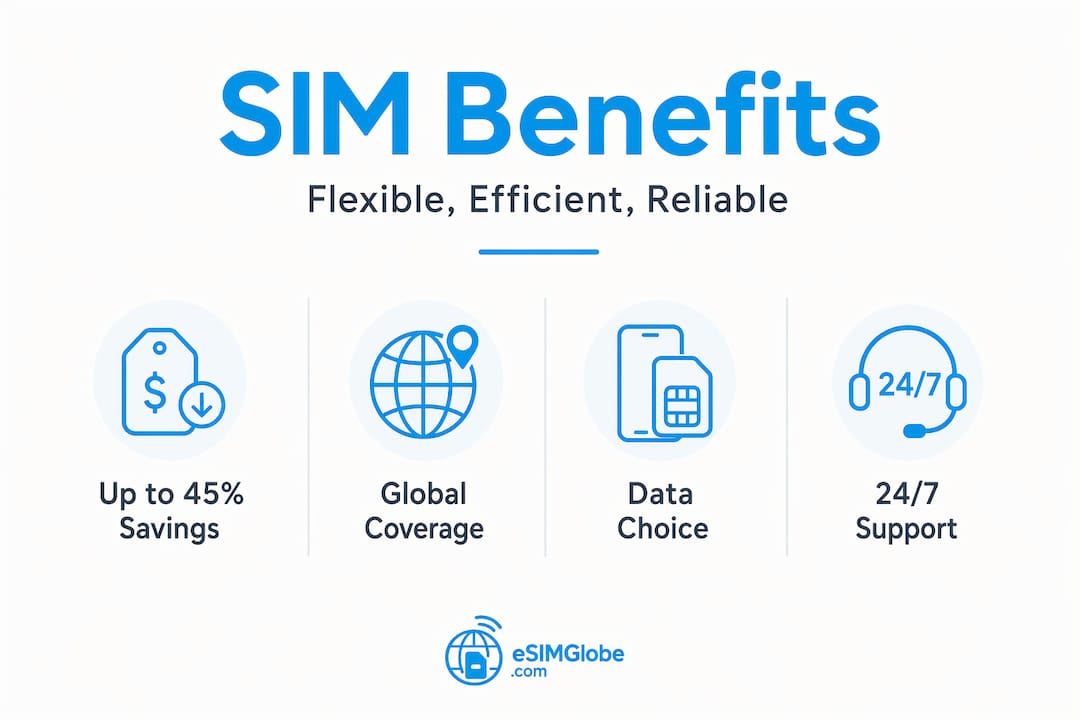
Top alternatives for global SIM cards give travelers the ability to choose exactly how much data they need and for how long. Esimglobe, for instance, offers destination-specific plans with clear pricing and no surprise fees. The Maldives 1GB 7-day plan exemplifies this: a focused, affordable package for a specific trip length, priced transparently. That kind of precision is something broad-coverage providers with one-size-fits-all pricing rarely match.
Coverage and network reliability
Esimglobe partners with established local carriers across its supported destinations, which translates to actual signal quality rather than just coverage maps that look good on paper. For destinations where Ubigi’s network partners are weaker, this difference is immediately noticeable.
Value-added features
Some ubigi replacement services now bundle extras that add real utility. Saily Ultra packages unlimited global data with a built-in ad blocker, a virtual location tool, and airport lounge access, turning a connectivity product into a broader travel tool. While Esimglobe focuses on core connectivity excellence rather than bundled extras, its strength is in transparent pricing, multilingual support, and plans optimized for the destinations travelers actually visit most.
| Feature | Ubigi | Esimglobe |
|---|---|---|
| Country coverage | 200-plus | Wide global reach |
| Pricing transparency | Moderate | High |
| Customer support | Email/chatbot | Multilingual, responsive |
| Plan flexibility | Fixed tiers | Destination-specific options |
| Hotspot support | Varies by plan | Included on supported plans |
| Activation speed | Standard | Fast, QR-based |
Holafly’s unlimited day-based plans appeal to heavy users, and they work well for that specific audience. But for travelers who want destination-specific plans without paying for unlimited data they will not use, Esimglobe’s structure makes more financial sense. The global eSIM market continues expanding rapidly, which means more providers and more options, but also more noise to filter through. Esimglobe cuts through that by focusing on what travelers actually need: reliable data, fair pricing, and support that responds when things go wrong.
My take on choosing the right alternative
I have tested a significant number of eSIM providers across four continents over the past several years, and the pattern I keep seeing is this: travelers overpay or underperform because they default to the most-marketed option rather than the best-fit one.
Ubigi is not a bad product. It has real coverage and works in a lot of places. But the support structure is thin, the pricing is not always competitive, and the activation experience can frustrate users who need speed and clarity. I have seen travelers stuck at airports with failed activations and nowhere to turn except a ticketing system that replies in business hours.
What I have found actually separates a good eSIM provider from a mediocre one is not the country count on the coverage map. It is what happens when something goes wrong. Can you reach a human? Does the app give you clear instructions? Is there a fallback?
Esimglobe handles these questions well. The platform’s multilingual interface, destination-specific planning, and responsive support structure put it ahead of Ubigi in the areas that matter most when you are abroad and stressed. I would not recommend any provider I have not found to be genuinely reliable, and Esimglobe clears that bar.
The best eSIM for global travel is not necessarily the cheapest or the one with the most destinations. It is the one you can count on when your connection is the difference between making your flight and missing it.
— daniele
Why Esimglobe is the smart switch from Ubigi
Esimglobe offers travelers a direct, reliable path away from Ubigi’s limitations. Plans are priced by destination and duration, so you pay for what you actually need. Setup is fast: purchase a plan, scan a QR code, and you are connected. No physical SIM. No hunting for a local carrier at the airport.
For a focused example, the Maldives 1GB 7-day plan delivers reliable connectivity at a competitive price point, with clear data terms and no hidden throttling language. Esimglobe supports multiple currencies (USD, EUR, GBP) and interfaces, making it accessible whether you are booking from New York, Berlin, or Sydney. For travelers who want to save money with eSIMs without sacrificing coverage or support, Esimglobe is the clearest answer to the question of whether there is a better choice than Ubigi. There is, and it is straightforward to access.
FAQ
What is the best alternative to Ubigi for international travel?
Esimglobe is among the strongest options, offering destination-specific plans, transparent pricing, and multilingual support that outperforms Ubigi’s more limited customer service structure.
Is Esimglobe cheaper than Ubigi?
Esimglobe’s destination-specific pricing frequently delivers better per-GB value than Ubigi, particularly for short trips where paying for a broad coverage tier adds unnecessary cost.
Can I use an eSIM alternative in multiple countries?
Yes, provided you select a regional or multi-country plan. Single-destination eSIMs stop working when you cross a border, so verify your plan’s country list before purchasing.
What happens if my alternative eSIM fails to activate?
Most activation failures result from device incompatibility or incorrect APN settings. Resetting network settings and contacting the provider’s support team resolves the majority of cases quickly.
Are ubigi replacement services as reliable for data speed?
Reliability depends on the provider’s local network partners. Esimglobe connects through established carriers at each destination, which generally delivers consistent speeds comparable to or better than Ubigi in most regions.