






















eSIMGlobe is the strongest Ubigi alternative for most travelers because it covers the same core need, reliable mobile data abroad, with clearer per-country pricing and faster activation. Coverage spans country, regional, and unlimited plans, so you’re not stuck paying premium rates for a short trip. The sections below map specific eSIMGlobe products to specific traveler profiles, so you can pick the right one instead of guessing.
TL;DR:
- eSIMGlobe offers clearer per-country and regional pricing, making it more cost-effective for specific trip types compared to Ubigi’s premium, device-heavy plans.
- Choosing the right plan depends on your trip duration and destination, with single-country plans starting around $2.00 and regional plans often costing just a few dollars more.
- Verifying device compatibility, unlocking status, and plan auto-renew policies before purchase prevents unexpected charges and activation issues abroad.
- Real-world coverage depends heavily on local network partners, especially in rural or remote areas, where Ubigi’s carrier-grade partnerships provide a noticeable reliability advantage.
- Support expectations are high; ensure the provider offers 24/7 responsive customer service and clear refund policies to avoid issues during last-minute activation failures.
Table of Contents
- Which EsimGlobe Plan Replaces Ubigi for Your Trip?
- How Do You Choose the Right Ubigi Alternative?
- Coverage, Pricing, and Speed: What the Numbers Actually Mean
- EsimGlobe’s Proof Points, Mapped to Real Traveler Problems
- How Good Is Customer Support When Things Go Wrong Abroad?
- What Happens If Your Refund Request Gets Denied?
- Are eSIMs Actually Secure for International Travel?
- Does It Work the Moment You Land, Even Without Wi-Fi?
- Where Do Hidden Fees Actually Come From?
- What Do Other Travelers Actually Say About Switching?
- The Real Trade-Off Nobody States Plainly
- Ready to Switch? Here’s Where to Start
- Primary Sources and Further Reading
- FAQ
Which EsimGlobe Plan Replaces Ubigi for Your Trip?
Ubigi built its reputation on carrier-grade network partnerships and support for non-phone devices like laptops and cars, which is a real advantage for travelers who need dependable rural coverage or a native eSIM in a Surface tablet. That reliability comes at a price, and independent reviews note Ubigi sits at a premium price point compared with reseller-style eSIM stores. If your trip doesn’t require that specific device breadth, a country or regional plan built around clear per-GB pricing usually gets you the same practical outcome for less.

eSIMGlobe organizes its lineup by destination and by data shape: country-specific, regional, and unlimited, rather than a single one-size plan. That structure matters because travel guides consistently point out that the right plan type depends on trip geography: a single-country weekend trip has completely different data math than a six-country backpacking route or a month-long remote work stint.
Here’s how the lineup breaks down by traveler type:
- Short, single-country trip. If you’re spending a week in Italy, eSIM Italy starts at $2.00 one-off and gives you exactly the coverage you need without paying for regions you’ll never visit. The same logic applies to eSIM USA, starting at $2.50 one-off, or eSIM Rome for travelers sticking to a single city and its surrounding region. This is the category where per-GB value differences are most visible, since a country-specific plan avoids the markup that comes bundled with broader regional coverage.
- Multi-country trip across a region. Travelers hopping between France, Germany, and Spain in one itinerary don’t want three separate SIM purchases. eSIM Europe (30+ areas) starts at $2.60 one-off and covers dozens of countries under one profile, which mirrors the multi-country flexibility that made Ubigi appealing to European road-trippers in the first place.
- Long stay or heavy daily use. Digital nomads and business travelers who burn through data daily, video calls, cloud backups, streaming, need a plan that doesn’t cap out mid-trip. eSIM Europe (30+ areas) Unlimited, eSIM USA Unlimited plan, and destination-specific unlimited plans like eSIM Japan Unlimited and eSIM Thailand Unlimited demonstrate regional variation in unlimited pricing rather than a single flat rate.
The pattern across all three profiles is the same: match the plan shape to the trip, not the other way around. Ubigi’s one-size premium positioning works fine if you value device breadth above all else. For everyone comparing per-GB math and destination-specific pricing, a product lineup built around exactly that comparison tends to fit better.
How Do You Choose the Right Ubigi Alternative?
Picking among Ubigi-like services isn’t complicated, but skipping a step here is how travelers end up with a dead SIM at the airport or a surprise charge on their card. Work through these checks before you buy, not after your flight lands.
- Confirm your device is unlocked. The FCC notes that eSIMs are embedded in the device itself, which makes switching providers easier, but only if your phone or tablet isn’t locked to your home carrier. Check this in your device settings or with your carrier before purchase.
- Verify eSIM support on your exact device. Not every phone model supports eSIM, and older or budget devices often don’t. Look up your model number specifically, not just the brand.
- Match the plan type to your itinerary. A single-country plan won’t help if you’re crossing borders mid-trip; a regional plan is wasted money if you’re staying in one city.
- Read the auto-renew terms. Some plans marketed as one-off purchases are actually structured as subscriptions that renew automatically. If you want a single-trip plan, confirm there’s no recurring charge attached.
- Check the refund policy before you pay. A provider with no clear refund language, or one that buries it in fine print, is a red flag worth walking away from.
- Confirm tethering and hotspot rules. If you plan to share data with a laptop or a travel companion, some plans cap hotspot use even under an “unlimited” label.
Applying this to real trips: a long weekend in Rome only needs a country plan and a five-minute activation check. A three-week European rail trip needs a regional plan and a hard look at daily data caps. A two-month remote work stint in Southeast Asia needs an unlimited plan, confirmed tethering support, and a refund policy you’ve actually read.
Pro Tip: Screenshot your plans’ auto-renew and refund terms before you travel. If your provider’s support chat goes quiet abroad, you’ll want the original terms saved locally, not buried in an email you can’t access without data.
Coverage, Pricing, and Speed: What the Numbers Actually Mean
“Countries supported” is the most misleading number in eSIM marketing, and it’s worth understanding why before you compare any two providers. A plan can list 100 countries and still deliver mediocre service in three of them, because real-world performance depends on which local carrier the eSIM partners with in each country, not just whether a partnership exists at all. Travelers often assume broad country lists mean equal coverage everywhere, but rural and remote regions in particular depend on the specific roaming partner behind the scenes.
That’s exactly where Ubigi’s carrier-grade partnerships earn their reputation, particularly for rural coverage and non-phone devices. If your itinerary includes remote regions, the practical move is checking whether a provider names specific network partners for that country rather than trusting a bare country count.
Working out the real price per gigabyte
Per-GB pricing shapes vary widely between country plans, regional bundles, and unlimited tiers, and comparing sticker prices across those shapes is close to meaningless without doing basic math first. Here’s the formula that actually works:
- Estimate your daily usage: light use (email, maps, messaging) runs roughly 1 to 3GB per day; medium use (social media, video calls, some streaming) runs 3 to 6GB per day; heavy use (constant streaming, large file transfers, tethering) runs 6GB or more per day.
- Multiply that daily estimate by your trip length to get total GB needed.
- Divide the plan price by that GB figure to get your real cost per gigabyte.
- If you plan to tether a laptop, double your estimate. Hotspot use consumes data far faster than phone-only browsing.
Run that math against eSIM Europe (30+ areas) at $2.60 one-off versus an unlimited regional plan, and the unlimited tier often wins for anyone averaging medium-to-heavy use across a week or longer. For a two-day layover trip, the country-specific plan wins every time.
Speed tests tell you when to prioritize reliability over price
Speed comparisons across providers generally show that the cheapest plan isn’t always the slowest, but network partner quality varies enough by region that a bargain plan in one country can underperform badly in another. When reliability matters more than saving a dollar or two, laptop tethering for a work call, navigation in an unfamiliar city, favor the plan with named, verifiable network partners over the plan with the lowest headline price.
Device support: the detail travelers skip
Independent reviews highlight Ubigi’s support for laptops, tablets, and even connected cars as a real differentiator, since not every provider offers native eSIM profiles beyond phones. That device breadth is a legitimate reason to pay more if tethering a laptop through your phone’s hotspot would be impractical on a work trip. Before buying anything, confirm two things: that your specific device supports eSIM at all, and that the FCC’s guidance on wiping eSIM profiles before disposing of or trading in a device, so your data isn’t left accessible to the next owner.
Tethering caps hide inside “unlimited”
An unlimited label describes your own data use, not necessarily hotspot sharing. Many providers cap tethered data at a fraction of your total allowance, or throttle speeds heavily once you tether past a certain point. If your plan depends on sharing a connection with a laptop or a travel partner, check the tethering policy specifically, not just the headline data allowance.
Activation is where most frustration starts
The typical flow, scan a QR code, install the profile, activate on arrival, is straightforward when it works. Problems show up when travelers activate too early (burning validity days before the trip starts) or too late (arriving with no working data because they assumed activation would happen automatically). Read the specific activation window for your plan, and activate only once you’re ready to start using it.

EsimGlobe’s Proof Points, Mapped to Real Traveler Problems
eSIMGlobe positions itself around a specific set of claims: eSIM delivery in under 30 seconds, coverage across 170+ countries, high-speed 4G/5G data, 24/7 human customer support with an average response under two minutes, a money-back guarantee if the network fails, and simple QR code activation backed by telecom-grade encryption. Each of those claims maps directly to a traveler frustration this article has already covered.
- Instant delivery solves the last-minute SIM hunt. No airport kiosk, no waiting on a physical card to ship, no missed connectivity on landing.
- 170+ country coverage means the country-plan-versus-regional-plan decision from the earlier checklist has real options on both sides, not just a handful of major markets.
- 24/7 human support with fast response times directly answers the support-quality question travelers ask before buying any eSIM alternative, especially ones planning to activate in an unfamiliar country with no backup plan.
- A money-back guarantee if the network fails addresses the refund-policy red flag covered in the checklist section: a provider willing to state that guarantee upfront is easier to trust than one that stays vague.
- Simple QR code activation with telecom-grade encryption covers both the activation-flow concern and the security concern travelers raise when handing payment details to an unfamiliar provider.
For the business traveler who needs a laptop online during a client trip, or the multi-country backpacker deciding between country and regional plans, these proof points aren’t abstract marketing lines. They’re direct answers to the questions raised earlier in this guide about coverage claims, refund clarity, and activation reliability.
How Good Is Customer Support When Things Go Wrong Abroad?
Support quality matters more for eSIMs than almost any other travel purchase, because failures tend to happen at the worst possible moment: landing in a new country with no working data and no easy way to search for a fix. The providers worth trusting publish clear support channels and reasonable response expectations rather than burying a contact form three pages deep.
eSIMGlobe advertises 24/7 human customer support, which is a meaningful detail for anyone who has ever sat in an airport arrivals hall waiting on a support ticket. Compare that expectation against any alternative you’re considering: does the provider list actual response times, or just a generic “we’re here to help” line?
The practical test is simple. Before you buy, look for a live chat option, a stated average response window, and evidence that support is staffed outside standard business hours in the provider’s home time zone. Middle-of-the-night activation failures are common precisely because travelers land at odd hours relative to a provider’s headquarters. A support team that’s genuinely available around the clock, not just during convenient hours, is the difference between a five-minute fix and a wasted first day of your trip.
What Happens If Your Refund Request Gets Denied?
Refund policies separate trustworthy providers from ones hoping you’ll never ask. A provider with no visible refund language, or terms scattered across a help center rather than stated plainly at checkout, is worth avoiding regardless of how good the coverage map looks.
eSIMGlobe states a money-back guarantee specifically tied to network failure, meaning if the service genuinely doesn’t work as promised in your destination, there’s a defined path to getting your money back rather than an open-ended “contact us” promise. That’s a meaningfully different commitment than a vague satisfaction guarantee, because it ties the refund to a checkable condition: did the network work or not.
Cancellation policies matter separately from refunds, particularly for plans structured with auto-renew. If you bought what you thought was a one-off plan and it renews automatically, check whether cancellation is instant or requires advance notice. The safest habit, regardless of provider, is canceling or disabling auto-renew the moment you’ve confirmed you won’t need the plan again, rather than waiting until a renewal charge already hit your card.
Are eSIMs Actually Secure for International Travel?
Security concerns around eSIMs mostly come down to two things: how your payment and personal data are handled at checkout, and how your device’s eSIM profile is managed after you stop needing it. eSIMGlobe states its checkout uses secure payment processing with telecom-grade encryption, which addresses the first concern directly.
The second concern is one most travelers overlook entirely. The FCC’s guidance specifically covers wiping eSIM profiles before disposing of, trading in, or selling a device, since an unwiped profile can leave account data accessible to whoever gets the device next. This applies whether you used Ubigi, eSIMGlobe, or any other provider. Before you sell an old phone or hand a work laptop back to IT, check your device’s cellular settings and remove any stored eSIM profiles manually.
Privacy-wise, the core question worth asking any provider is how long they retain your usage data and whether that data is shared with third parties beyond what’s needed to deliver the connection itself. Providers that publish a clear, specific privacy policy, rather than a generic template, tend to be the ones actually thinking about it rather than treating it as boilerplate.
Does It Work the Moment You Land, Even Without Wi-Fi?
Compatibility across destinations is less about whether a country is “on the list” and more about whether activation works cleanly once you’re actually there, often with no Wi-Fi available at the airport. This is where offline activation capability becomes a genuinely practical feature rather than a nice-to-have.
Most modern eSIM providers, eSIMGlobe included, structure activation so the eSIM profile installs before you travel while you still have Wi-Fi or existing data access, and then simply activates on the network once you land. The QR code scan and profile installation happen ahead of time; only the network connection itself needs to wait until arrival. That sequencing matters because trying to download and install a profile for the first time in an airport with no connectivity is the single most common activation failure travelers report.
Before any trip, install your eSIM profile at home, confirm it shows as installed (not necessarily active) in your device settings, and only activate it once you land or when your plan’s validity window is meant to start. Destinations with unreliable airport Wi-Fi, parts of Southeast Asia and South America in particular, are exactly where this pre-trip step saves you the most hassle.
Where Do Hidden Fees Actually Come From?
Roaming charges in the traditional carrier sense mostly disappear once you switch to an eSIM, but that doesn’t mean eSIM alternatives are automatically fee-free. The hidden costs that do show up tend to come from three sources: auto-renewal charges on plans you thought were one-off, tethering overage fees on plans with hidden hotspot caps, and currency conversion fees if your card issuer charges for foreign transactions.
The auto-renew trap is the most common one. Some eSIM plans are structured as subscriptions even when marketed as single-purchase, and the charge shows up weeks after your trip ended, when you’ve long since forgotten to check. The fix is checking plan terms at purchase, not after the fact, and canceling immediately if you only need one trip’s worth of data.
eSIMGlobe’s plans are sold as prepaid, one-off purchases rather than subscriptions, which removes the auto-renew guesswork entirely for the specific plans listed on its site. That structure, pay once per plan rather than enrolling in a recurring charge, is worth confirming with any provider you’re comparing, since it’s the single detail most likely to turn a cheap-looking plan into an expensive surprise three weeks after you’re home.
What Do Other Travelers Actually Say About Switching?
Roundup and comparison sites consistently frame the “Ubigi alternative” search around a few recurring themes: travelers appreciate Ubigi’s reliability and device breadth but frequently mention wanting clearer per-GB pricing or a lower-cost unlimited option. That pattern shows up across independent reviews and comparison roundups covering the eSIM category broadly, not just any single provider.
The reputation signal worth paying attention to isn’t the star rating alone, it’s whether reviews mention specific, checkable details: did activation work as described, did support respond within a reasonable window, did the advertised coverage hold up in the traveler’s actual destination. Vague five-star reviews with no detail are less useful than a three-star review that specifically explains what went wrong and where.
For business travelers weighing convenience against cost, this industry piece on convenience in business travel makes a point worth applying here directly: travelers consistently rank frictionless setup above marginal price differences once a trip is underway. That’s a useful filter when reading reviews. A slightly pricier plan that activates cleanly and just works is often the better read than a cheaper one with scattered complaints about setup failures.
The Real Trade-Off Nobody States Plainly
Most eSIM comparison content treats “best alternative” as a single ranking question, when it’s actually two separate questions wearing one trench coat: do you value reliability and device breadth enough to pay a premium, or do you value transparent per-GB pricing enough to accept a narrower device list? Ubigi answers the first question well. A destination-mapped lineup like eSIMGlobe’s answers the second.
The conventional advice, “just pick whichever has the most countries listed,” misses the point entirely. Country counts are marketing copy; network partner quality in your specific destination is the actual product. If you’re deciding between country, regional, and unlimited plans, do the per-GB math from the checklist above before you look at any brand name. Prioritize confirming your device is unlocked and eSIM-capable first; everything else is negotiable, that step isn’t.
Business travelers tethering a laptop should weight device support and hotspot policy above headline price. Leisure travelers on a single-country trip should weight per-GB clarity above everything else. Neither group is well served by treating this as a one-size decision.
— Daniel
Ready to Switch? Here’s Where to Start
eSIMGlobe is the practical alternative to Ubigi’s premium, device-heavy approach for travelers who want country-specific pricing they can actually calculate before buying. Instead of paying a flat premium regardless of destination, you pick the plan shaped for your actual trip, a single country, a region, or unlimited data, and see the price upfront.
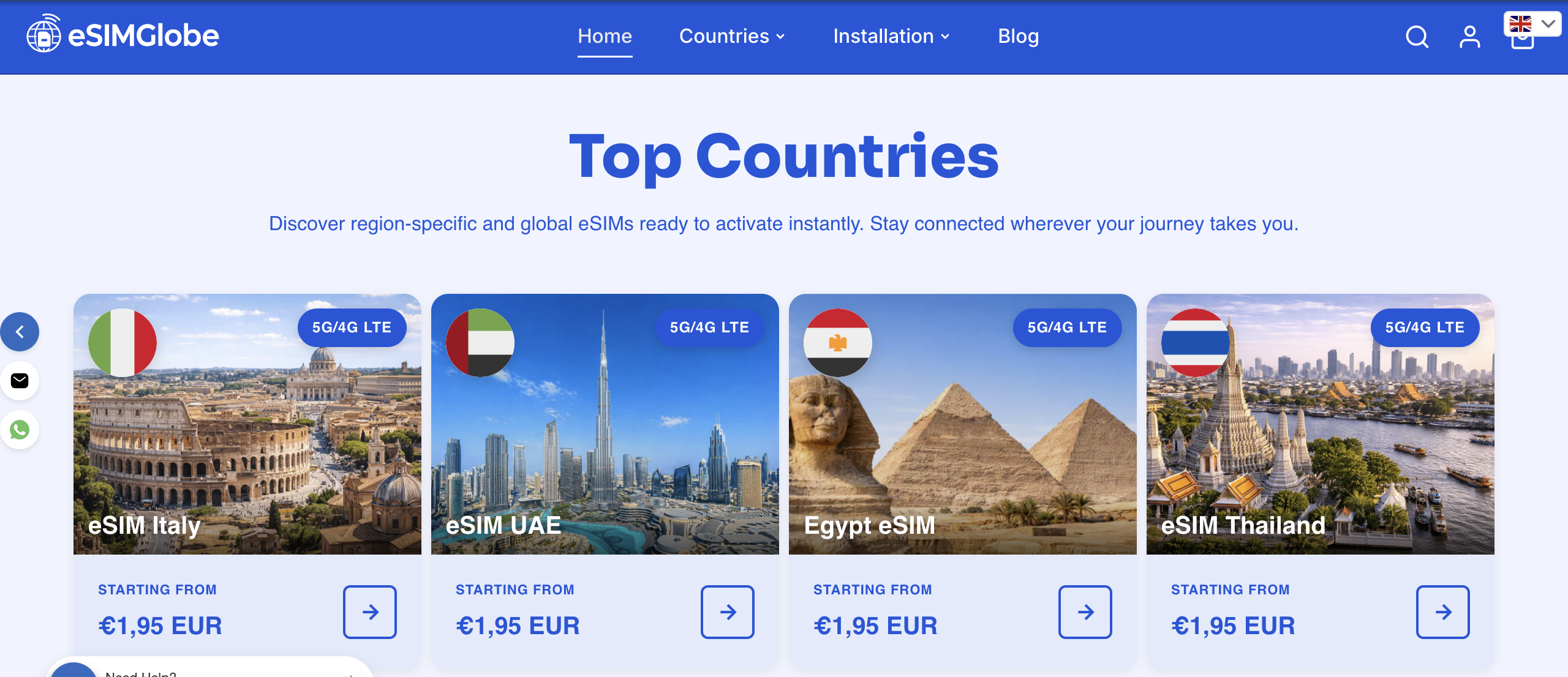
Buying takes three steps: choose your country or region plan, pay at checkout, and receive your eSIM by email within moments. Scan the QR code once you land, or install it ahead of time on Wi-Fi and activate only when your trip starts. If you’re headed to Italy, start with eSIM Italy from $2.00 one-off, or step up to eSIM Italy Unlimited if you’ll be streaming or working daily. Crossing multiple European countries in one trip fits better with eSIM Europe (30+ areas) from $2.60 one-off.
Before you check out, confirm your device is unlocked and eSIM-capable, and double check whether the plan you’re choosing renews automatically or is a genuine one-off purchase. Every eSIMGlobe plan referenced here is prepaid, so there’s no subscription trap waiting three weeks after your trip ends.
Primary Sources and Further Reading
The device compatibility and disposal guidance in this article draws on the FCC’s public eSIM FAQ, which covers unlock checks and wiping profiles before device disposal. Category-level comparisons of reliability, pricing, and unlimited plans reference a 2026 eSIM roundup published by Gizmodo. Trade-off details specific to Ubigi’s device breadth and rural network partnerships come from a 2026 review published by NomadBriefing. General guidance on matching plan types to trip length comes from a 2026 travel connectivity guide published by Cellt.
FAQ
Is Airalo or Ubigi Better for Most Travelers?
Airalo is generally positioned around broader marketplace-style country selection, while Ubigi leans on carrier-grade network partnerships and device breadth beyond phones. Neither is a universal answer. For travelers who want destination-specific pricing they can calculate in advance, a lineup like eSIMGlobe’s country and regional plans offers the clearer comparison point.
Is Saily a Better Choice Than Ubigi?
Saily and Ubigi target similar use cases but differ on pricing structure and device support breadth. The better fit depends on whether you prioritize Ubigi’s device coverage, laptops, tablets, cars, or a more straightforward per-country pricing model, which is where alternatives built around clear per-GB math tend to fit travelers on a defined budget.
Should I Choose Ubigi or Nomad for Long-Term Travel?
Nomad and Ubigi both serve long-stay travelers, but plan structure matters more than brand for this use case. Long trips generally favor unlimited or high-allowance plans over standard per-GB plans; eSIMGlobe’s unlimited tiers, including eSIM Europe (30+ areas) Unlimited from $8.20 one-off, are built specifically for that scenario.
Is Holafly or Ubigi Better for a Trip to Japan?
Holafly and Ubigi both offer Japan coverage, but unlimited data structures and per-GB pricing vary meaningfully between providers. For travelers specifically wanting a Japan-focused unlimited option with transparent pricing, eSIM Japan Unlimited starts at $5.50 one-off.
How Do I Switch From Ubigi to Another eSIM Provider?
Switching starts with confirming your device is unlocked and eSIM-capable, then choosing a plan shaped for your actual trip, country-specific, regional, or unlimited. Purchase, receive the eSIM by email, and install the QR profile before you travel so it’s ready to activate the moment you land.