






















Yes: you can buy a prepaid, no-contract eSIM and activate it in minutes. Prepaid plans are available that cover specific countries and global regions, designed for short trips and long stays alike. Check your device compatibility, then buy a plan delivered instantly by QR code or e-mail.
TL;DR:
- Prepaid eSIM plans vary in coverage, data limits, and validity, making it essential to match the plan to trip duration and data needs; unlimited options are best for heavy streaming and working remotely.
- Compatibility requires a carrier-unlocked, eSIM-supported phone, and activation is instant through QR codes or email, with common issues including device locking or network selection.
- Short-term plans tend to be cheaper per gigabyte but may lack flexibility across borders, making global unlimited plans more suitable for multi-country or online work scenarios.
- Spending more upfront on unlimited plans simplifies usage tracking and is cost-effective for users with high data demands like streaming, video calls, or hotspot sharing.
- Buyers should verify refund policies, support channels, and security features, and recognize that eSIM security reduces physical theft risks but still requires vigilance against account scams.
Table of Contents
- Which prepaid eSIM fits your trip?
- How prepaid eSIMs actually work on your phone
- Choosing the right no-contract eSIM plan
- Activating your eSIM without the guesswork
- What prepaid and unlimited eSIM plans typically cost
- Security and privacy checks before you buy
- How EsimGlobe delivers no-contract eSIM plans
- A straight opinion on prepaid eSIMs
- Get your prepaid eSIM activated today
- Sources behind this guide
- FAQ
Which prepaid eSIM fits your trip?
Prepaid no-contract eSIMs are not one product. Coverage, data caps, and validity windows change the fit for each traveler. Here is how the main options break down.
- eSIM Dubai: city-specific, best for short business trips or layovers, QR/email delivery, data-only.
- eSIM UAE: country-wide coverage for longer UAE stays, fixed data allowance, easy top-up.
- eSIM UAE Unlimited: unlimited data for the UAE, suited to remote work, video calls, or heavy streaming.
- eSIM Italy: single-country plan for tourists, typical validity from a few days to a few weeks.
- eSIM Italy Unlimited: flat-fee unlimited data for Italy, useful for multi-week stays or content creators.
- eSIM Rome: city-focused option for travelers who only need coverage in and around Rome.
- eSIM Global (120+ areas) Unlimited: unlimited data across a wide multi-country footprint, built for people crossing several borders on one trip.
- eSIM Global (130+ areas): pay-as-you-go global pass, wider country count, fixed data buckets instead of unlimited.
Validity on country plans typically runs from a few days up to about a month, with data caps ranging from a small starter bucket to larger multi-gigabyte bundles. Unlimited plans trade a higher flat price for no data ceiling, which matters most for streaming, video calls, or anyone working remotely abroad. All options activate through a QR code or an e-mailed profile, no store visit or physical card required.
Price is not the only variable worth weighing; for instance, understanding EU roaming impact helps clarify how roaming policies affect costs and coverage. A single-country plan is cheaper per gigabyte but useless the moment you cross a border, while a global unlimited pass costs more upfront but removes the need to track data or buy a second plan mid-trip. Travelers visiting one country for under two weeks generally do better with a fixed-data country plan. Anyone island-hopping, on a multi-country itinerary, or working online from the road tends to get more value from an unlimited regional or global option.
How prepaid eSIMs actually work on your phone
An eSIM is a digital SIM profile built into your phone, installed over the air instead of inserted as a plastic card. Prepaid, no-contract eSIMs are typically data-only: they give you internet access but not a new phone number for calls or texts, so your home number keeps working for voice and SMS through your regular SIM.
That dual-SIM setup is standard on modern smartphones. The FCC’s eSIM guidance confirms that phones supporting eSIM let you keep a home SIM active for calls while a travel eSIM profile handles data, so incoming calls and texts to your usual number still arrive normally. Prepaid eSIMs also tend to skip ID verification and credit checks, which is why checkout is fast and delivery is instant.

Before buying, confirm two things. First, that your phone model supports eSIM at all (most flagship phones from the last several years do). Second, that your phone is carrier-unlocked, since a locked device will often block installation of a second carrier profile. Your current carrier or phone settings menu will usually show unlock status directly.
Choosing the right no-contract eSIM plan
Comparing product pages one by one wastes time. A short checklist narrows the field fast.
- Confirm your phone supports eSIM and is carrier-unlocked.
- Check that the plan covers your actual destination or route, not just the country you land in first.
- Estimate your daily data need: light browsing and maps versus streaming and video calls.
- Match validity length to your trip: a 7-day plan for a week abroad, a 30-day plan for longer stays.
- Check the refund policy and support channel before paying.
Data-only plans built around prepaid mobile data work well for most travelers who mainly need maps, messaging apps, and browsing. Heavier users should size up before departure rather than mid-trip, since running out of data in an unfamiliar city is a common complaint.
Pro Tip: Unlimited plans usually pay off once you plan to stream video, join work calls, or share a hotspot with a travel companion; light browsing rarely justifies the flat fee.
Activating your eSIM without the guesswork
Activation takes a few minutes when the basics are in place.
Before you start, update your phone’s operating system, confirm the device is unlocked, back up your data, and connect to Wi-Fi so the QR scan and profile download go smoothly.
- Buy the plan and receive the QR code or activation link by e-mail.
- Open Settings, go to the cellular or mobile data menu, and choose “Add eSIM” or “Add Cellular Plan.”
- Scan the QR code or enter the activation details manually if scanning fails.
- Label the new profile clearly (for example, “Travel Data”) so you don’t confuse it with your home line.
- Turn on data roaming for the eSIM line and set it as the default for data use while abroad.
Common issues include a locked device rejecting the profile, a QR code that only scans once (so don’t reuse a screenshot on a second phone), or the eSIM installing but not connecting until you manually select the network in settings. For a fuller walkthrough with screenshots, see how to activate an eSIM step by step. If none of that resolves it, EsimGlobe’s support line can reissue the QR code or check the plan status directly.
What prepaid and unlimited eSIM plans typically cost
Short-trip plans covering a handful of days usually sit at the low end of the price range, since the data allowance is smaller and validity is short. Multi-week plans cost more overall but usually work out cheaper per gigabyte, since providers price larger data buckets at a lower per-unit rate. Unlimited regional or global passes sit at the top of the price range but remove the need to calculate data use at all, a flat fee for the whole trip.
The math worth doing before you buy: divide the plan price by the data allowance to get a cost per gigabyte, then compare that to a per-day cost if your trip is short. A plan with a low headline price but a small data cap can end up costing more per gigabyte than a slightly pricier plan with a larger bucket. Unlimited plans skip this calculation entirely, which is part of their appeal for travelers who would rather not track usage on vacation.
Before buying, check the product page for expiry rules (does unused data roll over or expire at the validity end date) and refund terms if the network doesn’t perform as expected. Some providers include a money-back guarantee if the network fails to connect, which is worth confirming against the specific plan page before checkout.

Security and privacy checks before you buy
Embedded eSIMs cut down on one common fraud vector: because the profile isn’t a removable card, a thief can’t simply pull it and drop it into another phone. The FCC’s guidance on cell phone fraud notes this reduces physical SIM-swap risk, though port-out scams and account takeovers targeting your carrier account remain possible and require the same vigilance as any other account credential.
One practical safeguard costs nothing: wiping your eSIM profile before selling, trading in, or recycling a phone prevents a leftover profile from exposing account access to the next owner.
Before paying for any plan, look for a few concrete trust signals on the seller’s page: a stated refund or money-back policy, a visible support channel (chat, e-mail, or phone), and a plain-language security or privacy statement. A page missing all three is worth a second look before you hand over payment details.
How EsimGlobe delivers no-contract eSIM plans
There are platforms offering prepaid eSIM data plans across many countries, with instant digital delivery, multiple currency options, and around-the-clock support. Plans are delivered by e-mail within seconds of checkout, activated through the standard QR code process described above, no store visit and no signed contract.
For the scenarios covered in this guide: city trips point to eSIM Dubai or eSIM Rome, country-wide UAE or Italy coverage points to eSIM UAE or eSIM Italy, heavy data users point to eSIM UAE Unlimited or eSIM Italy Unlimited, and multi-country travelers point to eSIM Global (120+ areas) Unlimited or eSIM Global (130+ areas). If a QR code fails to activate, customer support can often reissue the profile or confirm plan status without requiring a new purchase.
A straight opinion on prepaid eSIMs
Most people overthink this decision. The right plan is rarely the cheapest per gigabyte, it’s the one that matches your actual trip length and data habits without forcing you to ration data in a country you’re visiting once. Prepaid, no-contract eSIMs remove the two worst parts of traditional travel SIMs: hunting for a kiosk on arrival and committing to a plan you can’t return. For a short trip or a long one, that flexibility is the whole point.
— Daniel
Get your prepaid eSIM activated today
Skip the contract, the store visit, and the roaming bill shock. EsimGlobe delivers your plan by e-mail within seconds of checkout, activates through a QR code, and comes with a money-back guarantee if the network doesn’t connect, backed by 24/7 support if anything goes wrong.
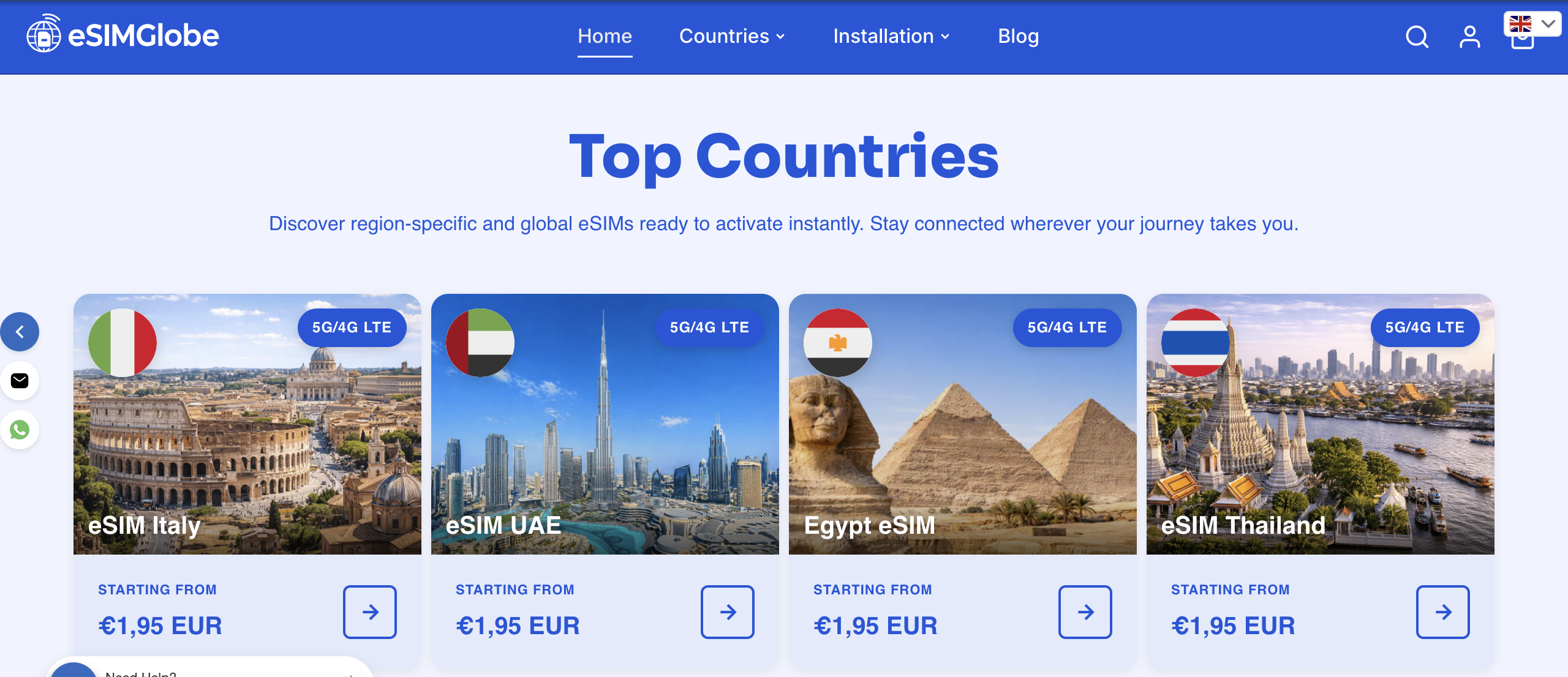
- eSIM Dubai: short trips or layovers in Dubai.
- eSIM UAE: country-wide UAE coverage for standard stays.
- eSIM UAE Unlimited: heavy data use across the UAE.
- eSIM Italy: standard Italy trips with fixed data needs.
- eSIM Italy Unlimited: extended Italy stays or streaming-heavy use.
- eSIM Global (120+ areas) Unlimited: multi-country itineraries without switching plans.
Pick the plan that matches your trip and check out in a few minutes.
Sources behind this guide
- FCC eSIM guidance on device compatibility, dual-SIM behavior, and wiping profiles before device disposal
- FCC guidance on cell phone fraud, covering reduced SIM-swap risk and remaining port-out/account takeover concerns
- CTIA explainer on how roaming and visited-network agreements affect coverage and frequency compatibility
FAQ
Can I get an eSIM without a contract?
Yes. Prepaid eSIM plans are sold as one-time purchases with no ongoing contract, and EsimGlobe’s country and global plans, including eSIM Italy and eSIM Global (120+ areas) Unlimited, activate instantly by QR code or e-mail.
Is there a prepaid eSIM plan that doesn’t require a contract?
Yes, prepaid eSIM plans are data-only, contract-free by design, and typically skip ID verification or credit checks. This makes checkout fast and suits short-term travelers who only need data for the length of a trip.
What is the downside of an eSIM?
Prepaid eSIMs are usually data-only, so they don’t provide a new phone number for calls or texts, and your device must be carrier-unlocked and eSIM-compatible before you can install one. Coverage and network quality also depend on the partner networks available in your destination.
Can I get a SIM with no contract?
Yes, both physical prepaid SIM cards and prepaid eSIMs are sold without contracts, though eSIMs skip the physical card and activate instantly over the air. For travelers, an eSIM is generally faster to set up since it doesn’t require finding a local kiosk or store on arrival.