






















EsimGlobe is the recommended eSIM option for most travelers heading to Thailand. It delivers Thailand-specific plans by email within minutes, backs them with 24/7 support, and covers everything from a quick weekend in Bangkok to a month of island hopping. Buy the plan that matches your trip length, then follow the activation checklist below before you land.
TL;DR:
- Most travelers can save money and avoid activation hassles by purchasing a preloaded eSIM from EsimGlobe before arriving in Thailand, rather than buying at the airport.
- Short trips in cities typically require only a small data plan around 100MB for a week, while longer or rural trips may need plans with stronger rural network coverage or unlimited data for heavy usage.
- When choosing a plan, consider your maximum daily data use, tethering policies, device compatibility, and whether your device is carrier-locked to ensure reliable connectivity during your trip.
- Thailand allows data-only eSIMs with no legal restrictions, but compatibility issues can prevent installation on older or locked phones, so verify device support beforehand.
- Activating your eSIM before arriving, ideally the night before the flight, reduces the risk of connectivity issues and allows stress-free use immediately upon landing.
Table of Contents
- Which Plan Fits Me? Quick Matches for Common Traveler Types
- How to Choose an eSIM for Thailand: 5 Practical Criteria
- EsimGlobe Thailand Plan Examples and When to Pick Them
- How to Activate Your Thailand eSIM Before and After Landing
- In-Destination Tips and Common Troubleshooting
- Are eSIMs Legal for Tourists Visiting Thailand?
- A Traveler’s Honest Take on Using EsimGlobe in Thailand
- Get Connected in Thailand Before You Even Land
- FAQ
Which Plan Fits Me? Quick Matches for Common Traveler Types
Not every trip needs the same data plan. A four-day Bangkok layover and a six-week trek through Chiang Mai’s mountains call for different setups, and picking the wrong one either wastes money or leaves you without signal when you need it most.
- Short-trip city traveler: A light plan (around 100MB over 7 days) covers maps, messaging apps, and light browsing between hotel and café Wi-Fi. It won’t survive a day of video calls, but for a long weekend built around Grab rides and Google Maps, it’s plenty.
- Heavy-data user or streamer: Go with an unlimited day pass or a multi-day unlimited plan. Read the fine print first. Providers across the region routinely cap “unlimited” plans with a daily high-speed threshold before throttling kicks in, so check the throttle point before you commit to hours of streaming.
- Rural or active itinerary: If your trip includes national parks, islands, or mountain provinces, prioritize plans built on network partnerships with strong rural reach rather than the cheapest urban-focused option. Download offline maps as a backup regardless of plan.
- Multi-country traveler: If Thailand is one stop on a longer Southeast Asia route, a regional multi-country pass through EsimGlobe often works out cheaper and simpler than buying separate country plans at each border.
Pro Tip: Match your plan to your busiest single day, not your average day. If you’ll binge-watch on a rainy afternoon in Phuket, size your data around that day, not the whole week.
How to Choose an eSIM for Thailand: 5 Practical Criteria
Thailand’s mobile network splits roughly into three major carriers, and coverage quality shifts depending on where you’re standing. Bangkok, Phuket, and Chiang Mai proper get strong 4G and growing 5G coverage from any major operator. Head into rural provinces or offshore islands, and coverage gets patchier, with some carriers holding a clear edge over others in mountainous or remote terrain. A travel eSIM rides on one of these underlying networks, so the plan you pick indirectly determines how well you’ll connect outside the cities.
Here’s how to actually evaluate your options:
- Convert your habits into GB. Messaging and maps use very little data. Streaming video or making video calls burns through a gigabyte an hour or faster. Add up your daily habits before assuming you need unlimited.
- Check the tethering policy. Some unlimited plans quietly throttle speeds after a set daily amount, and not every plan allows hotspot sharing with a laptop or second device. Confirm this before you rely on your phone as a travel router.
- Confirm device compatibility. Most phones sold since 2019, including iPhone XS and later and most Android flagships, support eSIM. Carrier-locked phones sometimes block eSIM installation entirely, so check your device’s settings before buying.
- Keep your home SIM active for now. Many banking apps and two-factor logins still send verification codes by SMS to your original number. Losing that channel mid-trip can lock you out of accounts.
- Decide when to buy. Pre-purchasing means your eSIM is delivered by email and ready before you board.
That last point matters more than it sounds. Buying at a Thai airport kiosk after a long-haul flight means standing in line, paying in cash, and hoping the counter has stock. EsimGlobe’s instant email delivery means you can install the profile from your hotel Wi-Fi the night before you fly, then simply enable it the moment you land.
EsimGlobe Thailand Plan Examples and When to Pick Them
EsimGlobe’s Thailand lineup covers the range most travelers actually need, without forcing anyone into an oversized plan they won’t use.
- 100MB / 7 days: Built for short trips where Wi-Fi handles the heavy lifting and mobile data is a backup for maps and messages. Good fit for a quick business trip or a city-only weekend.
- Unlimited day pass: Suited to travelers who need full-speed data for a single busy day, like an arrival day full of navigation, ride-hailing, and photo uploads.
- Multi-day unlimited plan: The right call for longer stays or anyone streaming, video calling home regularly, or working remotely from a beach town.
Checkout runs in USD, with the eSIM and QR code delivered to your inbox instantly after purchase. You can also switch the interface currency and language if that makes shopping easier, and support is available around the clock if something goes wrong with installation.
Quick price context: Broader market trackers covering the Southeast Asia travel eSIM space show entry-level short-data plans priced as low as roughly $0.50 to $3, with fuller unlimited options climbing from there depending on validity and provider. EsimGlobe’s Thailand plans sit inside that same competitive range, without the guesswork of comparing dozens of unfamiliar providers at once.
Author Daniele covers eSIM solutions for travelers on EsimGlobe’s guides, including a deeper breakdown in the eSIM for Thailand affordable mobile data guide for readers who want more detail before buying.
How to Activate Your Thailand eSIM Before and After Landing
Getting connected the moment you land comes down to a handful of steps, done in the right order.
Before you fly:
- Confirm your device supports eSIM and isn’t carrier-locked.
- Read the product page for your chosen plan and note the data allowance and validity window.
- Save the QR code or confirmation email somewhere accessible offline, like a screenshot.
- Double-check the email address and account details you used at checkout.
Installing the eSIM: 5. Scan the QR code through your phone’s cellular settings, or enter the details manually if scanning fails. 6. Label the new line clearly (many phones let you name it “Thailand”) so you don’t confuse it with your home SIM. 7. Enable data roaming for the new eSIM line specifically, since this step trips up more travelers than the install itself. 8. Test the connection on Wi-Fi before you leave home, confirming the profile shows as active.
After landing: toggle airplane mode off and on, restart the phone if signal doesn’t appear within a minute, and reinstall the profile only as a last resort.
Pro Tip: Do the whole install the night before your flight, not at the gate. A rushed install with spotty airport Wi-Fi is where most activation problems start.
If anything doesn’t work, EsimGlobe’s support team is reachable 24/7 for troubleshooting.
In-Destination Tips and Common Troubleshooting
A few habits stretch your data further and keep your trip running smoothly once you’re in Thailand.
- Download offline maps for Bangkok, Chiang Mai, or your island destination before you lose signal, since offline maps work with zero data once cached.
- Check your plan’s tethering rules before sharing your hotspot with a travel companion’s laptop. Some unlimited plans restrict or throttle tethered speeds even when the phone itself runs fine.
- Keep your home SIM in a second slot or safe location for SMS verification codes, and switch banking or email two-factor authentication to an authenticator app where possible.
- In rural provinces or smaller islands, expect slower speeds. If you need a local phone number for a hotel booking or delivery app, a short-term local SIM alongside your data eSIM can fill that specific gap.
Are eSIMs Legal for Tourists Visiting Thailand?
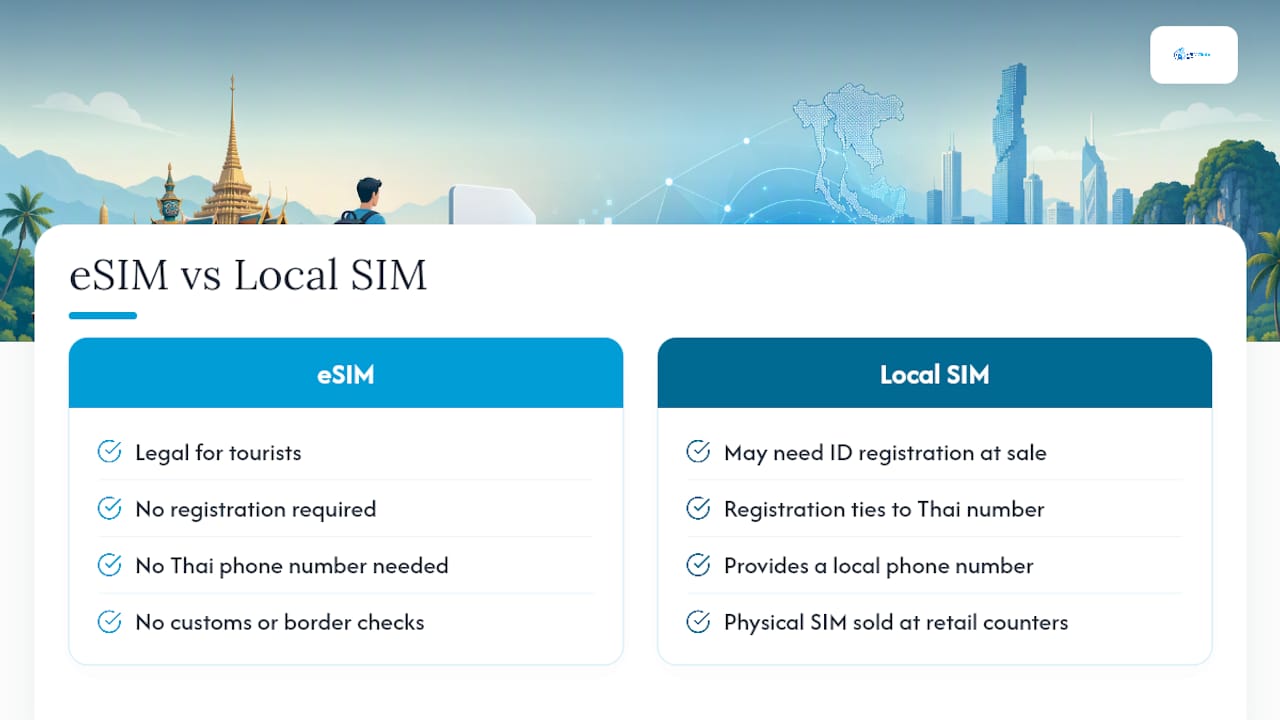
Yes. Thailand places no restriction on tourists using eSIM technology, and the country’s telecom regulator has not imposed special rules on foreign visitors activating data-only eSIM profiles from international providers. There’s no SIM registration requirement tied to passport checks for a data-only eSIM the way there sometimes is for a physical prepaid SIM bought at certain retail counters.
Data-only eSIM plans, which is what EsimGlobe and similar providers sell, don’t require a Thai phone number, so they sidestep the local number registration process entirely. If you need an actual Thai phone number for a hotel or delivery app, that typically still requires a locally registered SIM with ID verification at point of sale.
Border agents don’t check for eSIM usage, and there’s no customs declaration involved since nothing physical crosses the border. The practical limitation isn’t legal. It’s technical. Older or carrier-locked phones simply can’t install an eSIM profile, regardless of what’s legally permitted. Confirm compatibility before your trip rather than discovering the limitation at immigration with no backup plan.
A Traveler’s Honest Take on Using EsimGlobe in Thailand
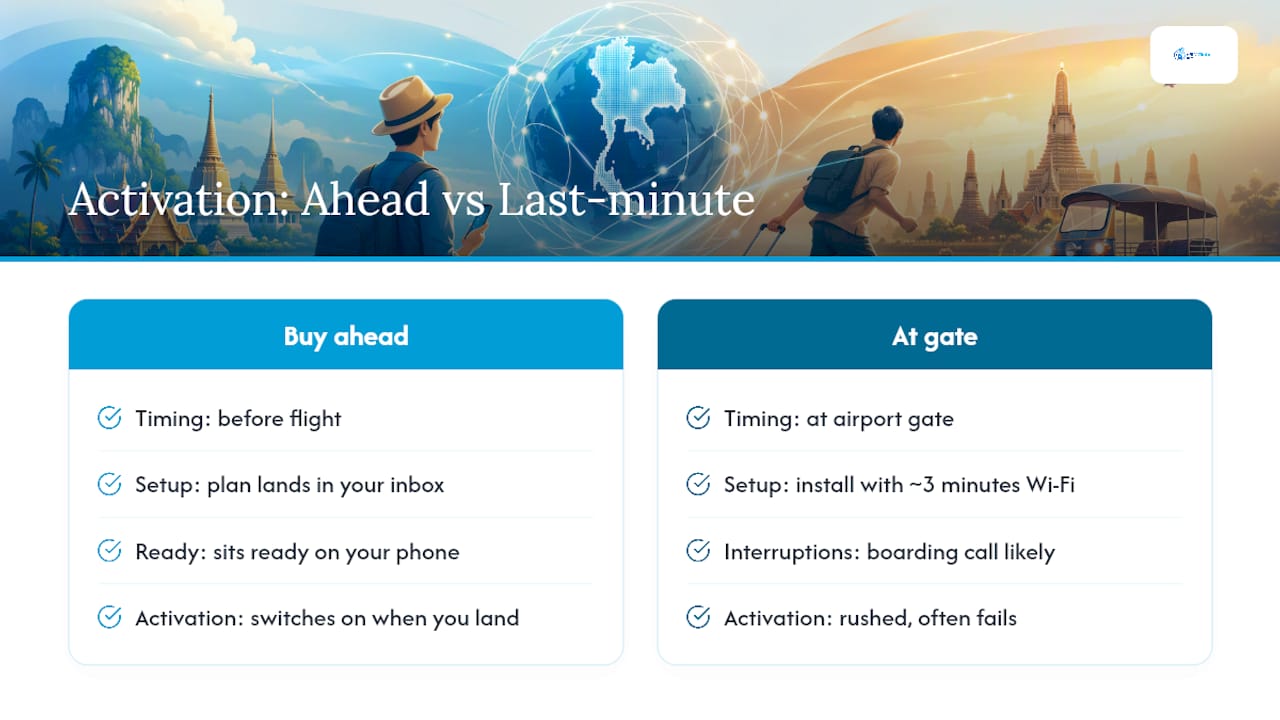
The gap between a good eSIM experience and a bad one usually comes down to one thing: whether you set it up before you needed it, not after. Most of the frustration travelers report with data plans in Southeast Asia has less to do with the provider and more to do with installing an eSIM at an airport gate with three minutes of Wi-Fi and a boarding call.
What stands out about buying ahead through a platform like EsimGlobe is how boring the actual activation becomes. The plan lands in your inbox before your flight, sits ready on your phone, and switches on the moment you land. That’s the whole appeal. Reliable connectivity shouldn’t be an adventure. Readers who want to see the fuller product lineup before deciding can check the Thailand eSIM comparison page or the basics of how eSIM data plans work for anyone still unsure their phone qualifies.
— daniele
Get Connected in Thailand Before You Even Land
EsimGlobe skips the airport SIM counter entirely. Buy your Thailand plan online, pay in USD, and get the eSIM delivered to your inbox in minutes instead of standing in line after a long flight.
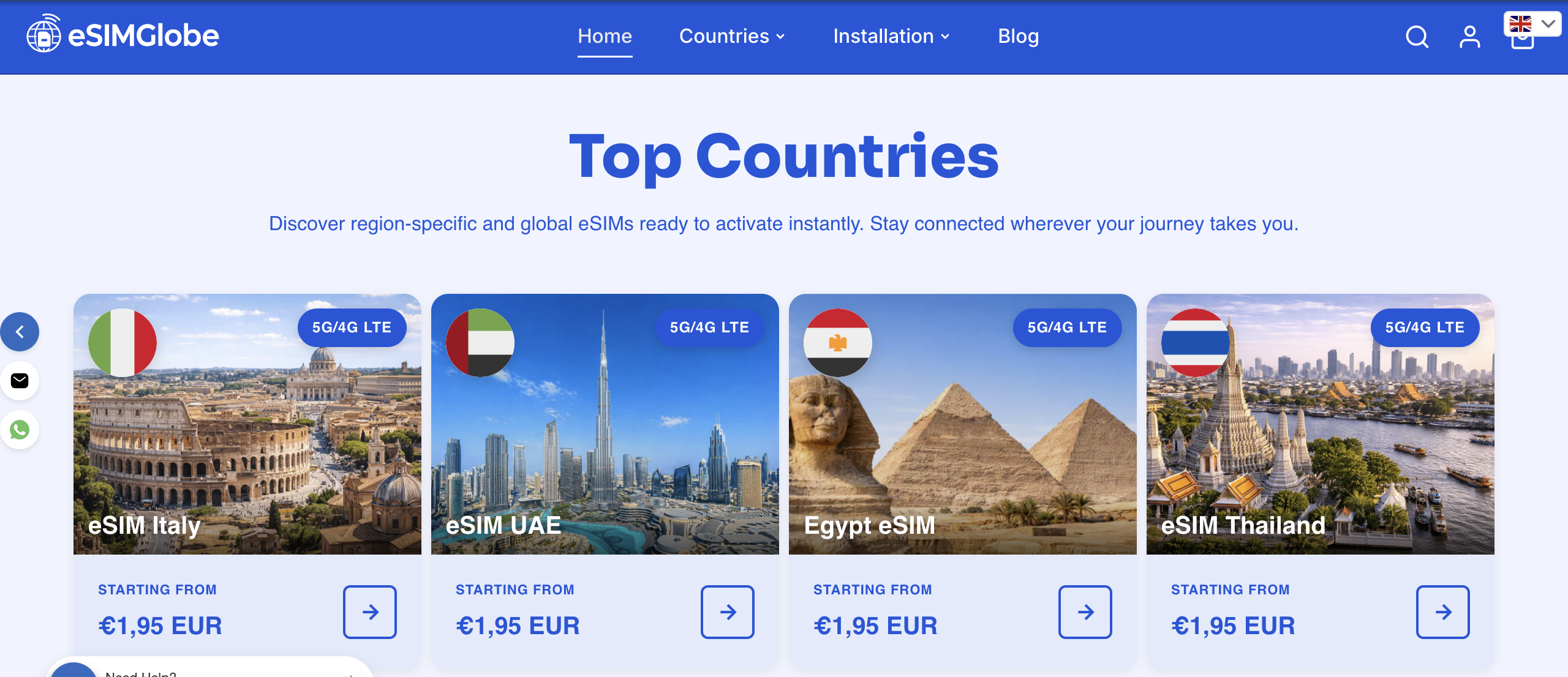
Whether you’re a weekend visitor who needs a light data plan or a longer-stay traveler who wants unlimited access with hotspot support, match your plan’s duration and tethering allowance to your actual itinerary before checkout. Browse the full lineup and buy your Thailand eSIM plan now, and it’ll be sitting in your inbox before you finish packing.
Selected Sources for Price and Coverage Context
Live plan trackers such as BestSIM.Compare, FindMyEsim, and Monito track hundreds of regional eSIM plans and sort them by price-per-GB, which helps confirm typical entry pricing and unlimited-plan fine print across the wider Southeast Asia market. Coverage reviews from outlets like Gizmodo also break down which local carriers perform better in rural or mountainous terrain, useful context for judging network partner quality.
FAQ
Which SIM or eSIM Is Best for Tourists Visiting Thailand?
For most tourists, a prepaid data-only eSIM bought ahead of the trip, such as one of EsimGlobe’s Thailand plans, beats a physical SIM bought at the airport because it activates instantly and skips the counter line and ID paperwork tied to local number registration.
Where Can I Buy an eSIM for Thailand?
You can buy a Thailand eSIM directly online before your trip through providers like EsimGlobe, with the QR code and activation details delivered to your email within minutes of checkout.
Is eSIM Supported in Thailand?
Yes, Thailand’s major mobile networks support eSIM technology, and most phones released since 2019 can install and use an eSIM profile without any special permission or registration for data-only plans.
How Do I Know if My Phone Supports eSIM for Thailand?
Check your phone’s cellular or mobile network settings for an “Add eSIM” or “Add Cellular Plan” option; most iPhone models from the XS onward and most recent Android flagships support it, though some carrier-locked devices block installation.
Should I Buy an Unlimited Plan or a Data-Capped Plan for Thailand?
Choose unlimited if you plan to stream video or make frequent video calls, but read the fine print first since many “unlimited” plans throttle speeds after a daily high-speed threshold; a capped plan works fine for maps, messaging, and light browsing.