






















For most travelers heading to Turkey, a plan running on established local networks and stating fair-use terms upfront is often the safest pick. That matters because some international eSIM apps have run into access problems on Turkish networks, so provider choice is not just about price. Buy it before you fly, install it once you land, and you are online before you clear passport control.
TL;DR:
- Most travelers should choose an eSIM that connects through established Turkish carriers, as some international apps face access issues on local networks.
- The recommended plan for typical short trips is the eSIM Istanbul, which offers clear data tiers, quick activation, and reliable local network access.
- Heavy users and digital nomads benefit from the eSIM Global Unlimited plan, which covers multiple countries with a fair-use policy and transparent speed throttling.
- Activation is simple and quick if done before departure, but users should test the signal at the airport and keep a screenshot of the QR code for backup.
- Fixed-GB plans with clear fair-use policies usually outperform unlimited options that throttle speeds, especially for remote work or hotspot use.
Table of Contents
- What Is the Best eSIM for Turkey Travel?
- Why EsimGlobe Is the Recommended Solution for Turkey Travel
- Are eSIMs Legal in Turkey, and How Does Coverage Actually Work?
- Is ‘Unlimited’ Actually Unlimited? What Fair-Use Policies Really Mean
- How Do You Activate an eSIM and Fix Common Problems?
- How Much Data Do You Actually Need for Turkey?
- Should You Buy an eSIM Before You Fly or Wait Until You Land?
- Do You Need a VPN in Turkey, and Is Public Wi-Fi Safe?
- Final Recommendation: What to Buy and How to Get Started
- When an eSIM Stops Being a Convenience and Becomes a Necessity
- How to Buy an EsimGlobe Plan for Turkey
- Key Sources and Further Reading
- FAQ
What Is the Best eSIM for Turkey Travel?
Not every traveler needs the same plan, and buying too much data (or too little) is the most common mistake we see. Here’s how to match your trip to the right product.
For most travelers: the eSIM Istanbul plan is the default recommendation. It covers standard trip lengths, connects through Turkish carrier infrastructure, and activates in minutes with a QR code sent straight to your inbox.
- Who it fits: first-time visitors, short business trips, week-long vacations in Istanbul, Cappadocia, or the Aegean coast.
- Standout: clear data allowance and validity window, no guesswork about what “unlimited” really means.
- Data shape: fixed-GB tiers built for typical use, maps, messaging, social media, and moderate streaming.
- Action: buy online, receive the activation code by email, install before departure.
For heavy users and digital nomads: the eSIM Global (120+ areas) Unlimited plan works better if your trip spans multiple countries or you’re working remotely with video calls and cloud uploads. It carries a published fair-use policy rather than a vague “unlimited” label with no fine print.
For short layovers or light users: a smaller, short-validity plan makes more sense than paying for a week of data you won’t use. If you’re only in Turkey for a couple of days between flights, size down and save the bigger tier for a longer trip.
Why EsimGlobe Is the Recommended Solution for Turkey Travel
There are international eSIM platforms built for travelers who want connectivity sorted before they land, not scrambled together at an airport kiosk. The Turkey product catalog includes country-specific options like a Turkey 500MB, 1-day plan for quick trips, alongside larger data tiers for longer stays, and every purchase delivers instantly by email.
Two things separate a reliable eSIM provider from a risky one in Turkey: network access and honesty about limits.
- Features such as instant digital delivery, around-the-clock support, clearly stated fair-use terms, and multi-currency and multi-language checkout can improve the buying experience for international travelers.
Some notable eSIM apps, including Airalo and Holafly, have had reported access problems on Turkish networks, which is exactly the kind of risk you want to avoid before a trip, not discover mid-trip. That’s the reason EsimGlobe’s Turkey-specific product page and its transparent terms matter more than a flashy “unlimited everything” banner.
Pro Tip: Screenshot your activation QR code before you fly. If you lose signal on arrival, you can still install the eSIM using the saved image instead of hunting for a Wi-Fi connection at the airport.
Are eSIMs Legal in Turkey, and How Does Coverage Actually Work?
eSIMs are not illegal in Turkey, but access has been inconsistent for some providers. Reports of blocked or restricted eSIM apps in the country have made provider selection more important than it used to be. Esimglobe’s own reporting on this topic breaks down which providers have run into blocking issues in Turkey and what that means for travelers deciding who to buy from.
Coverage quality comes down to which Turkish carrier actually carries the traffic. Turkcell, Vodafone, and Türk Telekom operate the country’s core mobile infrastructure, and an eSIM’s real-world performance depends on which of these networks it rides on.
- Plans routed through local Turkish carrier infrastructure show lower latency and steadier speeds outside major cities than plans routed through international proxy networks.
- Rural regions, mountain routes, and coastal towns away from Istanbul or Antalya benefit most from a local network partner.
- Hotspot and tethering performance also depends on which network carries the signal, not just the advertised data cap.
- Prioritize providers that name their network partner outright. If a plan doesn’t say which carrier it rides on, that’s a red flag, not a technicality.
Is ‘Unlimited’ Actually Unlimited? What Fair-Use Policies Really Mean
“Unlimited” rarely means unlimited. Field tests on Turkey-focused eSIM plans consistently find that providers marketing unlimited data actually cap high-speed access at a daily threshold, then throttle speeds once you cross it. That throttling hits hotspot use and video streaming hardest, since both are data-heavy and sensitive to slower speeds.
The pattern to watch for:
- A daily high-speed allotment (often a set number of gigabytes) before speeds drop.
- Hotspot and tethering excluded or capped separately from the main “unlimited” allowance.
- Fine print on video streaming quality caps, even when data itself isn’t capped.
One review roundup covering Turkey-specific plans found that fixed-GB tiers in the 20 to 50 GB range, priced around $21 for 20 GB and roughly $33 for 50 GB, often deliver better real-world value for remote workers than an ambiguous unlimited label that throttles the moment you tether a laptop.
If you plan to work remotely, hotspot a laptop, or make regular video calls, a transparent fixed-GB plan with a stated fair-use policy is usually the safer bet over a vague unlimited claim.
How Do You Activate an eSIM and Fix Common Problems?
Activation takes about five minutes if your device supports eSIM. Here’s the sequence that works across nearly every provider, including EsimGlobe:
- Check compatibility. Most iPhones from the XS generation onward and many Android flagships (Pixel, Samsung Galaxy S and Note series) support eSIM. Confirm in your phone’s settings before buying.
- Purchase and receive your code. Some eSIM providers deliver a QR code and activation details by email shortly after checkout.
- Install the profile. Go to your device’s cellular settings, choose “Add eSIM,” and scan the code.
- Enable and test. Turn on the new line, set it as your data line for travel, and confirm signal before you leave home Wi-Fi.
Common snags include a profile that won’t activate until you toggle airplane mode off and on, or an APN setting that needs to be entered manually on older Android models. If your data line isn’t picking up, check that the new eSIM is set as the primary data profile rather than your home carrier’s line.
Pro Tip: Install the eSIM at home on Wi-Fi, but don’t enable it until you land. Most providers activate the validity clock the moment the profile connects to a network, not the moment you install it.
If activation stalls, having access to 24/7 support can be invaluable, especially when encountering issues at an airport early in the morning.
How Much Data Do You Actually Need for Turkey?
Data needs scale with what you actually do on your phone, not how long the trip is. A traveler who mostly uses maps and messages needs far less than someone livestreaming or hotspotting a laptop.
- Navigation and messaging only: 1 to 3 GB covers a week of maps, texting, and light browsing.
- Social media and moderate photos: 5 to 10 GB handles daily posting and video calls without heavy streaming.
- Streaming or video calls daily: 15 to 20 GB is a safer baseline.
- Hotspot or remote work: 20 to 50 GB fixed plans outperform ambiguous unlimited offers, especially for uploads and video conferencing.
Match plan duration to your itinerary rather than buying the longest validity window by default. A three-day city break doesn’t need a 30-day plan sitting mostly unused. When comparing price, look at cost per gigabyte rather than the headline price alone. A cheaper plan with less data can cost more per GB than a slightly pricier one with double the allowance.
Should You Buy an eSIM Before You Fly or Wait Until You Land?
Buying ahead of time is the lower-risk choice for nearly every traveler. You land already connected, skip the arrivals-hall SIM counter, and avoid handing your passport to a kiosk vendor you’ve never heard of.
- Pre-purchase advantages: instant connectivity on landing, no queue, no language barrier at a counter, and you can research your provider calmly before the trip instead of under pressure at the airport.
- When a local SIM might make more sense: extremely long stays (three months or more) where a resident-rate physical SIM plan undercuts any prepaid eSIM on pure cost.
- Switching on arrival: if you land without activating, simply enable your pre-installed eSIM profile in settings and confirm you have signal before leaving the terminal.
Ground transportation planning follows the same logic. If you’re also sorting out how to choose an airport transfer, having your eSIM live before landing means you can book, message, and navigate the moment you step off the plane.
Do You Need a VPN in Turkey, and Is Public Wi-Fi Safe?
Hotel and airport Wi-Fi networks are shared, often unencrypted, and a common target for basic snooping tools. Mobile data on your own eSIM is a safer default for anything involving banking, passwords, or work logins, simply because you’re not sharing the network with strangers.
Some sites and apps have been reported restricted or slow to load on certain networks in Turkey, and a VPN can help with both privacy and access in those cases. Business travelers handling sensitive data should default to a company VPN over mobile data rather than relying on public Wi-Fi at all, even at a hotel business center.
Final Recommendation: What to Buy and How to Get Started
For most trips to Turkey, the eSIM Istanbul plan is the right call. If your itinerary spans multiple countries or you need heavier data for remote work, the eSIM Global (120+ areas) Unlimited plan is the stronger alternative in EsimGlobe’s catalog.
- Choose your plan based on trip length and data habits (light traveler versus remote worker).
- Buy and install before departure so the profile is ready the moment you land.
- Test signal as soon as you arrive, before leaving the airport, so you have time to contact support if anything needs adjusting.
Support is available around the clock if activation hits a snag, and plan pages list data allowances and validity clearly before you buy.
When an eSIM Stops Being a Convenience and Becomes a Necessity
Cappadocia is where this stops being theoretical. Drive out past Göreme toward the valleys and physical SIM coverage from smaller carriers thins out fast, while a well-routed eSIM riding on a major Turkish network partner keeps a usable signal for maps and messaging. That gap is not hypothetical. It’s the difference between finding your hotel before dark and not.

The lesson isn’t to over-prepare for worst-case scenarios. It’s to treat mobile reliability as infrastructure, not an afterthought you sort out after landing. Most trips don’t need a backup plan for disaster. They need a provider that works consistently in the ordinary moments, which is a lower bar than reviewers often make it sound, but a bar plenty of “unlimited” plans still miss.
— daniele
How to Buy an EsimGlobe Plan for Turkey
Some eSIM providers allow you to buy online, receive your activation code by email, and land already connected on a network partner covering the country you are visiting.
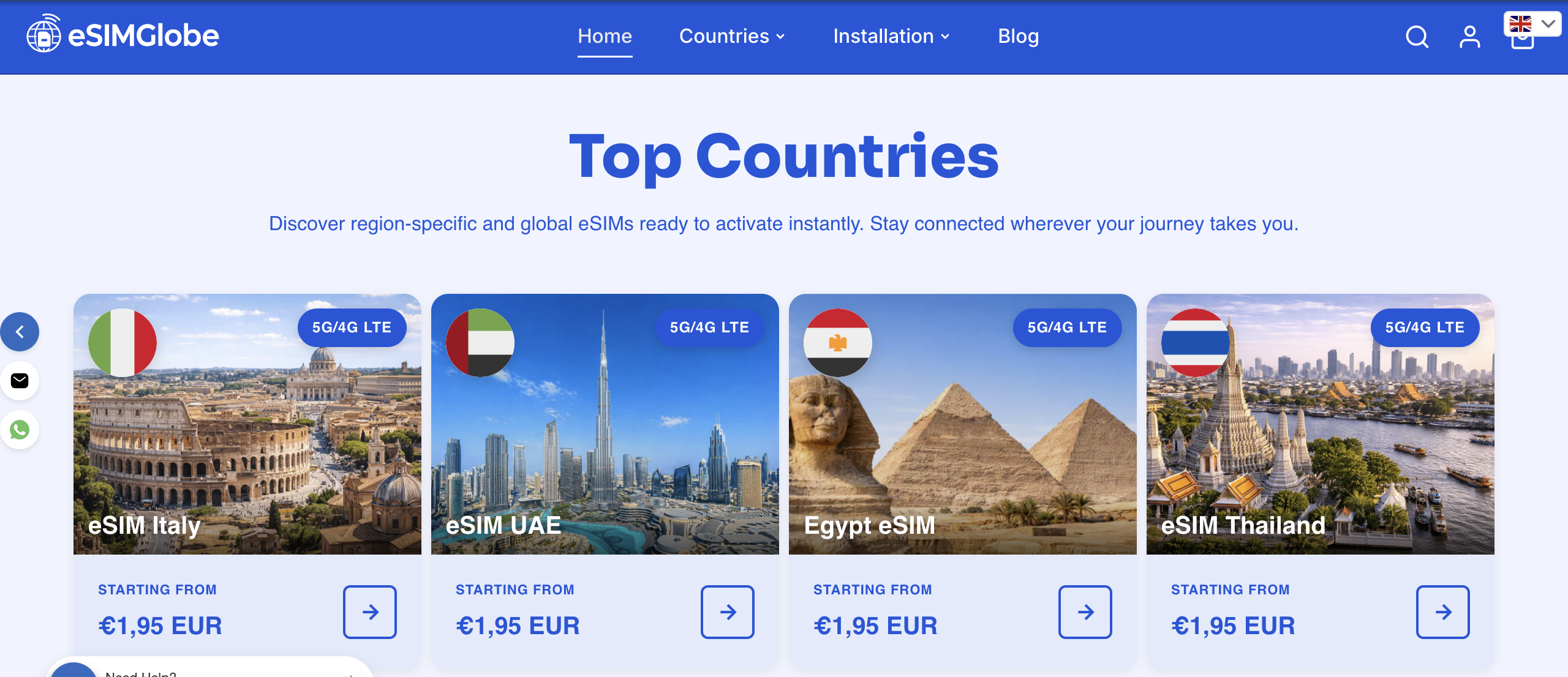
The eSIM Istanbul plan is built for standard trip lengths and states its data allowance and validity clearly at checkout. Traveling to more than one country on the same trip, or planning to work remotely with heavier data needs? The eSIM Global (120+ areas) Unlimited plan covers Turkey alongside 120-plus other regions under one published fair-use policy. Both are purchased directly through EsimGlobe’s site, with instant digital delivery and 24/7 support if activation needs a hand. Pick your plan, check out, and install the profile before you board.
Key Sources and Further Reading
For deeper checks beyond this guide, EsimGlobe’s Turkey eSIM provider blocking guide covers reported access issues in detail, and the Istanbul product page lists current plan tiers and pricing. For broader trip planning, EsimGlobe’s international traveler’s eSIM guide covers device compatibility across destinations.
FAQ
Is It Worth Getting an eSIM for Turkey?
Yes. It gets you connected the moment you land, avoids airport SIM counters, and, with a provider that discloses its network partner, tends to perform more reliably than budget local SIM options in rural areas.
Which eSIM Is Better for a Trip to Turkey, Saily or Airalo?
Both are international eSIM apps, but access issues have been reported for providers like Airalo and Holafly on Turkish networks. EsimGlobe’s Istanbul plan avoids that risk by running through established local carrier partnerships with transparent terms.
Are eSIMs Blocked in Turkey?
Not universally, but some providers have faced reported blocking or access restrictions on Turkish networks. Checking a provider’s track record and network partner disclosure before buying is the safest approach.
Which Is the Best SIM Card for Tourists in Turkey?
For most tourists, a data-only eSIM from a provider with a clear Turkish network partner, like EsimGlobe’s Istanbul plan, beats a physical tourist SIM on setup speed and avoids the airport counter entirely.