






















TL;DR:
- Choosing a Beeline-based eSIM offers the best urban coverage in Uzbekistan and significant cost savings.
- Most plans range from $4 to $47, with options suitable for light, medium, and heavy data users.
An eSIM (embedded SIM) is a digital SIM profile that loads directly onto your phone, replacing the need for a physical card. Choosing the best eSIM for Uzbekistan is the single most important connectivity decision you will make before this trip. Home roaming costs run $2–$5 per MB in Uzbekistan, which means a single week of moderate data use can cost $50–$100 on your home carrier’s plan. A travel eSIM from a provider like Esimglobe cuts that down to a few dollars for several gigabytes. The difference is not marginal. It is the gap between a manageable travel budget and a shocking phone bill.
Which eSIM providers have the best plans for uzbekistan?
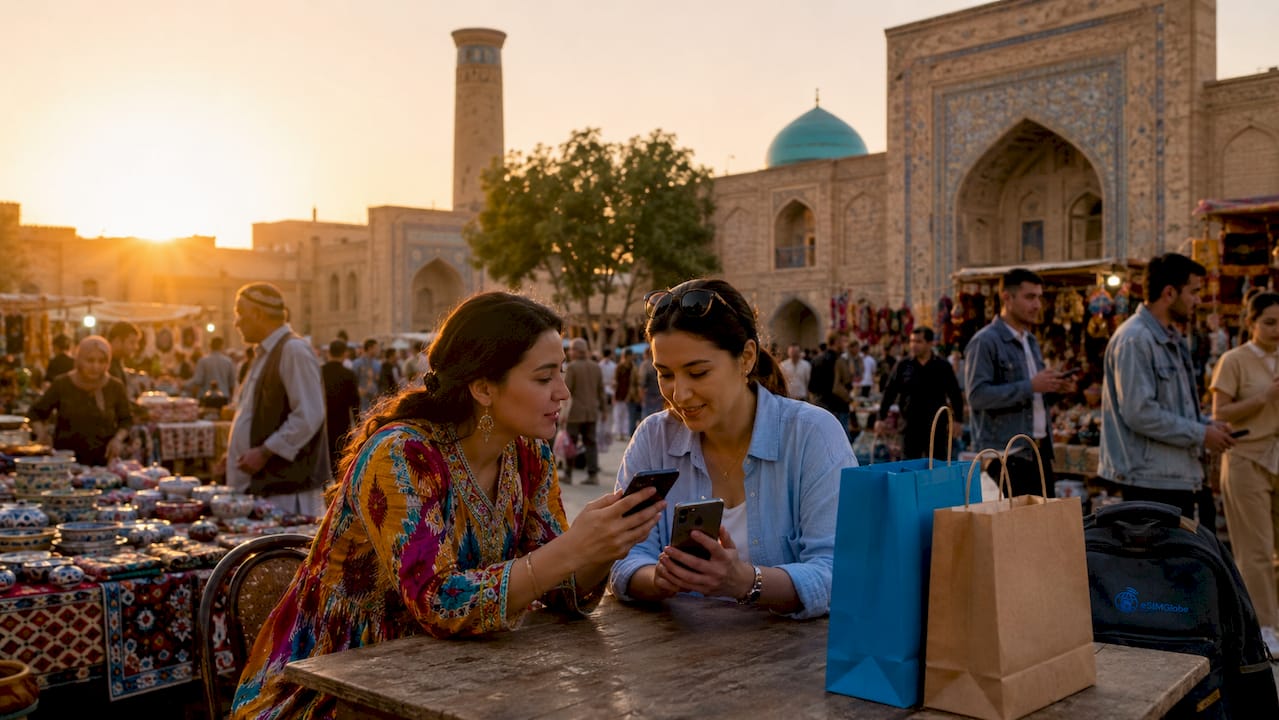
The best eSIM plans for Uzbekistan run on three local networks: Beeline, Ucell, and UzMobile. Beeline holds 40% market share and delivers 88% or higher urban coverage, making it the most reliable backbone for any travel eSIM. Ucell follows at 35% market share, and UzMobile covers the remaining 25%. The network behind your eSIM provider determines your actual signal quality on the ground, not the brand name on the app.
Esimglobe offers Uzbekistan eSIM plans with direct access to these local networks, competitive pricing, and a straightforward purchase process that takes under five minutes. The platform supports USD, EUR, and GBP, and the interface works in multiple languages, which removes friction for international travelers.
Here is a comparison of the top eSIM providers currently available for Uzbekistan travel:
| Provider | Network | Data Options | Starting Price | Notable Feature |
|---|---|---|---|---|
| Esimglobe | Beeline / Ucell | 100MB to multi-GB | Competitive | Multi-currency, multi-language |
| GoMoWorld | Beeline | 10 GB | $8.50 | Best value per GB |
| Saily | Ucell | Multiple tiers | ~$7–$12 | Built-in VPN, 4.7/5 rating |
| Holafly | Beeline | Unlimited | From ~$27 (15 days) | Best for heavy users |
eSIM plans overall range from $4 for 1 GB up to $47 for unlimited data. That pricing spread means there is a plan for every type of traveler, from the person checking maps twice a day to the remote worker streaming video calls from Tashkent.
Pro Tip: Always verify which local carrier network sits behind your eSIM provider before purchasing. A provider running on Beeline gives you the widest urban coverage across Uzbekistan’s major cities.
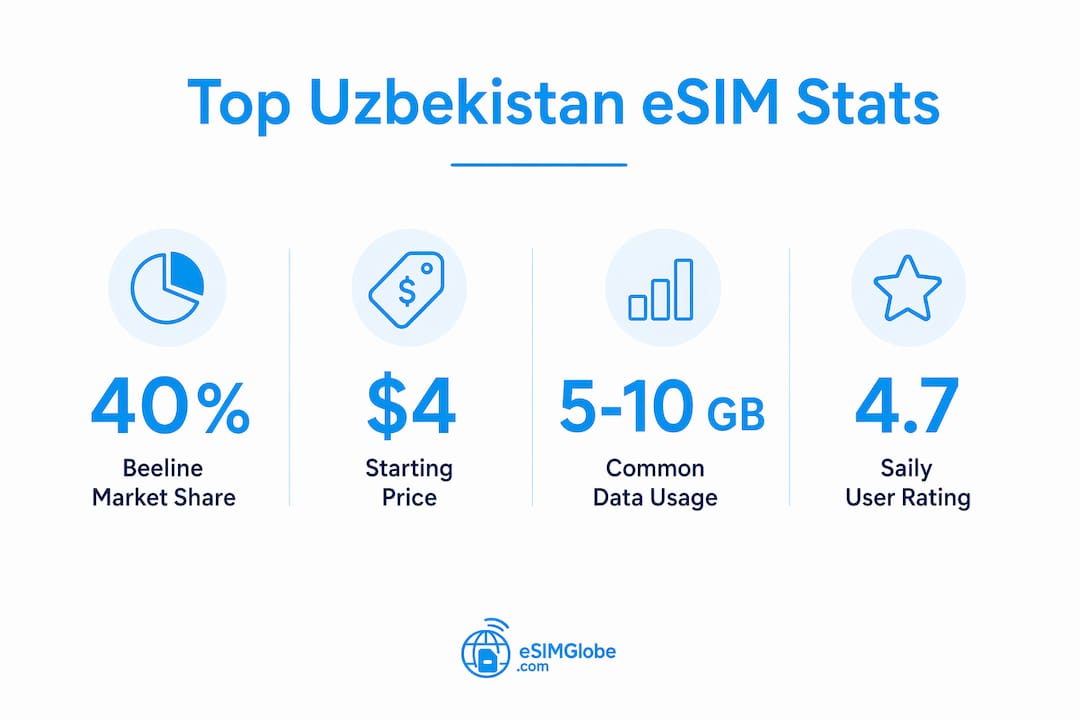
Providers like Saily carry a 4.7 out of 5 rating and offer one-click activation, which appeals to travelers who want minimal setup. However, Saily and similar platforms can have inconsistent customer support and fewer currency options than Esimglobe. GoMoWorld’s 10 GB for $8.50 is a strong value deal, but the platform lacks the multi-region flexibility that Esimglobe provides for travelers combining Uzbekistan with other Central Asian destinations.
How do you buy and activate an eSIM for uzbekistan?
Purchasing a Uzbekistan travel eSIM takes three steps regardless of which provider you choose. The process is fully digital and can be completed days before your flight departs.
- Check device compatibility. Your phone must support eSIM profiles. Most flagship smartphones released after 2018 qualify, including iPhone XS and later, Samsung Galaxy S20 and later, and Google Pixel 3 and later. Carrier-locked devices may block eSIM installation, so confirm with your home carrier first.
- Purchase the plan online. Visit the provider’s website or app, select Uzbekistan, choose your data tier, and complete payment. Esimglobe’s Uzbekistan eSIM product is available directly on the platform with instant delivery to your email.
- Install the eSIM profile. You receive a QR code. Scan it through your phone’s settings under “Add Cellular Plan” or the equivalent. The profile installs in under two minutes.
- Activate on arrival or in advance. Some providers allow pre-activation so data starts the moment you land. Others activate on first use. Check the provider’s terms before departure.
- Manage data usage. Most providers offer an app or web dashboard showing remaining data. Esimglobe’s platform makes it straightforward to monitor consumption and purchase top-ups without switching providers.
Pro Tip: Install the eSIM profile while you still have a stable Wi-Fi connection at home. Trying to scan a QR code at a busy airport with no data is a frustrating experience you can easily avoid.
A few practical points on managing your eSIM once you are in Uzbekistan:
- Keep your home SIM active in the secondary slot for calls if your device supports dual SIM. This avoids missing important calls while using the eSIM for data.
- Set a data usage alert at 80% of your plan limit so you have time to top up before running out.
- Download the provider’s app before you travel. Topping up through a browser on limited data is slower than using a dedicated app.
- Using an eSIM also reduces the risk of unauthorized roaming charges that hit travelers relying on physical SIM cards or traditional roaming plans.
Airport SIM kiosks in Tashkent’s Islam Karimov International Airport do sell local SIMs, but the process involves paperwork, passport verification, and wait times. Buying an eSIM online before you travel is faster and often cheaper.
What coverage can travelers expect across uzbekistan?
Coverage in Uzbekistan is strong in urban centers and noticeably thinner once you leave paved roads. Tashkent, Samarkand, and Bukhara all have solid 4G LTE coverage on Beeline’s network, which means reliable speeds for navigation, messaging, and video calls in these Silk Road cities. Samarkand’s Registan Square and Bukhara’s old city both fall within well-covered zones.
The picture changes in rural and desert regions. The Kyzylkum Desert, which covers a large portion of central Uzbekistan, has limited infrastructure. No eSIM provider currently guarantees full coverage in remote desert areas, regardless of the brand or price tier. This is an infrastructure reality, not a provider failure.
| Region | Coverage Quality | Recommended Action |
|---|---|---|
| Tashkent | Excellent (4G LTE) | Standard eSIM plan works well |
| Samarkand | Strong (4G LTE) | Standard eSIM plan works well |
| Bukhara | Strong (4G LTE) | Standard eSIM plan works well |
| Fergana Valley | Moderate (3G/4G mixed) | Download maps in advance |
| Kyzylkum Desert | Limited to none | Offline maps required |
| Aral Sea region | Very limited | Offline maps required |
Travelers heading into the Fergana Valley or toward the Aral Sea should download Google Maps or Maps.me offline tiles before leaving a city. This takes about 10 minutes over Wi-Fi and covers navigation for days without a signal. Hotel Wi-Fi in smaller towns is generally available and can serve as a backup for messaging and light browsing.
Beeline’s network dominance in urban centers gives Silk Road city travelers strong confidence in connectivity. For desert travel, the practical advice is simple: treat connectivity as a bonus, not a given, and prepare offline tools before you leave the city.
How do you choose the right eSIM plan for your trip?
Choosing the right eSIM data plan for Uzbekistan comes down to three variables: how long you are staying, how heavily you use data, and whether you are visiting only cities or also remote areas.
Light users check maps, send messages, and browse occasionally. A 1 GB plan at around $4 covers a short city-focused trip of three to five days. This profile fits travelers who rely on hotel Wi-Fi for most tasks and use mobile data only when out exploring.
Medium users stream music, use social media, and rely on navigation throughout the day. A 5 GB to 10 GB plan in the $7–$12 range is the right fit. GoMoWorld’s 10 GB for $8.50 is a strong option at this tier, though Esimglobe’s plans offer comparable value with the added benefit of multi-destination flexibility.
Heavy users include remote workers, content creators, and travelers who video call frequently. Unlimited data plans from providers like Holafly start around $27 for 15 days. That price point is still far below the $50–$100 weekly cost of home roaming charges for the same usage level.
Key considerations when selecting a plan:
- Trip duration. Match the plan’s validity period to your travel dates. A 7-day plan that expires before your return flight is a problem.
- Network access. Confirm the plan runs on Beeline for maximum urban coverage.
- Security features. Saily includes a built-in VPN, which adds a layer of protection on public Wi-Fi networks in hotels and cafes.
- Top-up availability. Check whether the provider allows mid-trip top-ups without purchasing a new plan.
- Multi-country support. If your itinerary includes Kazakhstan or Kyrgyzstan alongside Uzbekistan, look for a regional plan rather than a single-country option.
Pro Tip: For a 10-day trip combining Tashkent, Samarkand, and Bukhara, a 5 GB plan is sufficient for most travelers. Add a top-up option just in case, and download offline maps for any day trips outside city centers.
Travelers optimize eSIM choice best when they match their usage habits to a specific plan tier rather than defaulting to the cheapest or most expensive option. Overpaying for unlimited data on a three-day city trip is as poor a decision as buying 1 GB for a two-week backpacking route. For a broader look at how to evaluate eSIM options across destinations, Esimglobe’s international traveler’s guide covers the full decision framework.
Key takeaways
The best eSIM for Uzbekistan runs on Beeline’s network, costs $4–$27 depending on data needs, and saves travelers up to $100 per week compared to standard home roaming rates.
| Point | Details |
|---|---|
| Network matters most | Choose a provider running on Beeline for the strongest urban coverage across Uzbekistan. |
| Cost savings are significant | eSIM plans cost $4–$47 versus $50–$100 per week for home roaming at the same usage level. |
| Activation is fully digital | Purchase and install your eSIM before departure using a QR code scan in phone settings. |
| Rural coverage is limited | Download offline maps before leaving cities; no provider guarantees signal in the Kyzylkum Desert. |
| Match plan to usage | Light users need 1 GB, medium users need 5–10 GB, and heavy users benefit from unlimited plans. |
What i have learned about picking an eSIM for uzbekistan
Most travelers I see make the same mistake: they buy the cheapest plan without checking which network it runs on. In Uzbekistan, that decision determines whether you have a reliable signal in Samarkand’s old city or spend the afternoon hunting for Wi-Fi. The network behind the plan matters more than the price difference between providers.
My clear recommendation is Esimglobe for Uzbekistan travel. The platform’s coverage through Beeline’s network, combined with multi-currency pricing and a straightforward purchase process, removes the friction that makes other providers frustrating. Platforms with lower ratings and limited support channels are not worth the marginal savings, especially when you are navigating an unfamiliar country.
The second mistake I see is no top-up planning. Travelers buy a 3 GB plan for a 10-day trip and assume it will last. It rarely does once you factor in navigation running all day, hotel check-in research, and the occasional video call home. Build in a buffer or confirm your provider allows easy top-ups before you commit.
Desert travel in Uzbekistan is genuinely off-grid. The Kyzylkum Desert and the road to the Aral Sea are not places where any eSIM will save you. Download Maps.me with offline tiles for Uzbekistan before you leave Tashkent. That single step eliminates the most common navigation problem travelers face outside the main cities.
One more practical note: install your eSIM at home, not at the airport. The QR code scan takes two minutes on a stable connection. Doing it in a crowded terminal with no data and a flight boarding is a situation worth avoiding entirely.
— daniele
Get connected before you land with Esimglobe
Esimglobe offers Uzbekistan eSIM plans with direct access to Beeline’s network, competitive pricing across USD, EUR, and GBP, and an activation process that takes under five minutes. The platform supports travelers across multiple regions, so if your itinerary extends beyond Uzbekistan, you can manage all your connectivity in one place.
Browse Esimglobe’s Uzbekistan eSIM plans and activate your profile before your flight departs. For additional guidance on buying and managing eSIMs across international trips, the Esimglobe purchasing tips guide covers everything from device compatibility to mid-trip top-ups. Secure your data plan now and arrive in Tashkent ready to connect.
FAQ
What is the best eSIM for uzbekistan in 2026?
Esimglobe is the top choice for Uzbekistan travel eSIMs, offering Beeline network access, competitive pricing, and multi-currency support. Plans range from $4 for 1 GB to $47 for unlimited data.
How much data do i need for a trip to uzbekistan?
Most travelers on a 7–10 day city-focused trip need 5–10 GB of data for navigation, messaging, and social media. Heavy users or remote workers should consider unlimited plans starting around $27 for 15 days.
Does an eSIM work in rural uzbekistan?
Coverage is strong in Tashkent, Samarkand, and Bukhara but limited in desert regions like the Kyzylkum Desert. Download offline maps before leaving any major city.
How do i activate an eSIM for uzbekistan?
Purchase your plan online, receive a QR code by email, and scan it through your phone’s cellular settings. The entire process takes under five minutes and works best on a stable Wi-Fi connection before you travel.
Is an eSIM cheaper than roaming in uzbekistan?
Yes. Home roaming costs $2–$5 per MB in Uzbekistan, which adds up to $50–$100 per week for moderate use. A travel eSIM covering 5–10 GB costs $7–$12 from most providers.