





















For most travelers heading to Kenya, an eSIM provider offering instant email delivery, no shop visit, and no waiting in line is a faster and simpler choice. If you need a Kenyan phone number for Mpesa or SMS verification, Safaricom’s local eSIM is the better fit. The rest of this guide breaks down plans, activation, and Mpesa access so you can decide in minutes.
TL;DR:
- Safaricom’s eSIM offers a Kenyan phone number, MPesa access, and supports in-shop activation, but requires an in-person visit and is limited to supported devices.
- EsimGlobe’s Kenya eSIM delivers plans via email instantly, excluding a phone number or SMS, with plans that throttle after a daily high-speed cap.
- For short trips needing local SMS or MPesa, Safaricom is preferable; for quick online access and multi-country plans, EsimGlobe provides greater convenience.
- Device compatibility is crucial, with Safaricom supporting specific iPhone and Samsung models, while EsimGlobe works across most eSIM-capable phones, but verification is recommended before purchase.
- The choice hinges on whether travelers need a local number and local services or primarily need data immediately upon landing.
Table of Contents
- Activation, phone numbers, and plan types compared
- Pros and cons of Safaricom eSIM and EsimGlobe Kenya eSIM
- Real plan examples and price ranges to estimate cost vs needs
- Step-by-step activation and device compatibility differences
- How voice, SMS, and Mpesa work with each option
- Which traveler profile fits which option
- Why EsimGlobe fits data-first travelers best
- What actually matters when choosing between these two
- Get connected before you land
- Sources for verification
- FAQ
Activation, phone numbers, and plan types compared
Safaricom requires an in-shop process. You bring a supported device, pay a local fee, and staff scan a QR code to complete activation. EsimGlobe skips that step entirely: the profile arrives by email right after checkout, ready to install before you board your flight.
The phone number question matters most here. Safaricom issues a Kenyan number with full SMS and calling support. EsimGlobe’s Kenya plans are data only, with no number attached.
Plan labels also differ in ways that catch travelers off guard. “Unlimited” on an EsimGlobe plan usually means a daily high-speed allowance, not unrestricted data all month.
- Activation: Safaricom needs a shop visit and local fee; EsimGlobe delivers by email instantly.
- Phone number: Safaricom includes one; EsimGlobe Kenya plans do not.
- Plan type: Safaricom uses standard local tariffs; EsimGlobe splits between fixed-GB and daily-capped “unlimited” plans.
- Device check: Confirm eSIM support and carrier lock status on your device settings or the Kenya eSIM product page before buying.
Device compatibility affects both options. Safaricom’s rollout listed specific iPhone and Samsung models. EsimGlobe plans work across most eSIM-capable phones, but checking your device’s eSIM slot and software version first avoids failed installations on either service.
Pros and cons of Safaricom eSIM and EsimGlobe Kenya eSIM
- Safaricom strengths: local number, Mpesa access, standard Kenyan pricing for calls and data.
- Safaricom weaknesses: requires an in-person shop visit, limited to a shorter list of supported devices.
- EsimGlobe strengths: instant email delivery, checkout in your own currency, plans that cover multiple countries in one purchase.
- EsimGlobe weaknesses: no phone number or SMS, and “unlimited” plans throttle after a daily data cap.
Pro Tip: Read the fine print on any “unlimited” label. If you stream video or work online daily, a fixed-GB plan avoids the slowdown that daily-capped plans apply after the high-speed limit runs out.
Neither option is wrong. The choice comes down to whether your trip depends on a local number or just needs data the moment you land.
Real plan examples and price ranges to estimate cost vs needs

EsimGlobe offers multiple single-country and multi-country Kenya plans, with a broad range of prices and data caps covering everything from small weekend use to full monthly allowances.
EsimGlobe’s daily “unlimited” plans typically provide a high-speed daily data allowance, then reduce speed substantially after that daily threshold is reached. That throttled speed still supports messaging apps and basic browsing, but it will not handle video calls or large uploads comfortably.
- Small trip: a 100 MB, 7-day plan suits light checking of email and maps, viewable on the Kenya eSIM product page.
- Mid-range trip: fixed 10GB or 20GB, 30-day options suit travelers who stream or work remotely.
- Multi-country trip: bundles covering Kenya alongside neighboring countries reduce the need for separate purchases.
Safaricom’s in-country costs work differently. Activation and swap fees are charged locally in Kenyan shillings, and travelers weigh that one-off cost against the convenience of buying an EsimGlobe plan before departure, where currency and pricing are set in USD from the start.
Step-by-step activation and device compatibility differences
Safaricom activation: visit a Safaricom shop, bring a supported device (iPhone XR and later, or a compatible Samsung Galaxy S20 or newer), pay the local fee, and scan the in-shop QR code.
EsimGlobe activation: buy the plan online, receive the QR code or auto-install link by email within moments, scan it in your phone’s settings, and reach 24/7 support if the install fails. Full steps are covered in the eSIM activation guide.
- Confirm your phone model supports eSIM and check the current OS version.
- Verify the device is not carrier-locked to a network that blocks additional profiles.
- Confirm an eSIM slot is available, since some phones only allow one active profile at a time.
- If installation fails, restart the device, reinstall the profile, and contact provider support if the issue continues.
Pro Tip: Install your eSIM profile while still on home Wi-Fi. Most failed installs trace back to a weak signal at the moment of activation, not a faulty profile.
How voice, SMS, and Mpesa work with each option
EsimGlobe’s Kenya plans carry no phone number and no SMS capability, data only.
Safaricom’s local eSIM includes a Kenyan number, which supports Mpesa registration and SMS-based two-factor verification, subject to Safaricom’s own registration rules.
- For calls and messages on a data-only plan, VoIP apps like WhatsApp or Skype cover most traveler needs.
- If Mpesa payments or SMS verification are part of your trip, a Safaricom local eSIM with a Kenyan number is the practical route, not a workaround.
- Business travelers relying on two-factor codes tied to a Kenyan number should plan for Safaricom before arrival, not after.
Which traveler profile fits which option
- Short-stay tourist needing Mpesa or local SMS: choose Safaricom for the local number and mobile money access.
- Traveler visiting multiple countries or needing internet the moment you land: choose EsimGlobe for instant delivery and multi-country coverage.
- Digital nomad or long-stay visitor with heavy data needs: a fixed-GB EsimGlobe plan handles daily work, though a Safaricom number still matters if local services require one.
Three questions settle it fast: Do you need Mpesa or a Kenyan number? Are you visiting more than one country on this trip? How much data do you use per day? Answer those honestly and the choice mostly makes itself.
Why EsimGlobe fits data-first travelers best
Kenya eSIM listings typically include multiple single-country plans and multi-country bundles, checkout in multiple currencies, and country selectors built for travelers comparing options across regions. Prices across those listings span a range covering everything from a light 100 MB weekend plan to a full 20 GB monthly allowance.
Daily “unlimited” plans follow the same pattern across the catalog: a high-speed allowance of 1GB or 2GB per day, then a throttle to keep the connection usable without extra charges.
Before buying, check your device’s eSIM compatibility and carrier lock status on the Kenya eSIM product page, and reach out to EsimGlobe’s support team if you have questions about a specific model.
What actually matters when choosing between these two
The conventional advice tells travelers to just pick whichever eSIM is cheaper. That misses the real decision point: what you need the connection to do, not what it costs per gigabyte.
A data-only eSIM handles maps, email, and messaging apps without friction, and for most short trips, that is the entire job. The number and Mpesa question only matters if you are paying for things locally, registering for services that text you a code, or staying long enough that a Kenyan number becomes part of daily life.

Where most guides fall short is treating “unlimited” as a single category. A 1GB daily cap and a 2GB daily cap are different products with different throttled experiences, and the difference shows up exactly when you need speed most, uploading photos, joining a video call, checking in for a flight.
Decide on the number first, the data plan second. Everything else is detail.
— Daniel
Get connected before you land
Waiting until you reach Kenya to sort out data access costs time you could spend elsewhere. EsimGlobe’s Kenya plans arrive by email within moments of checkout, priced in USD, so you can install the profile before your flight leaves.
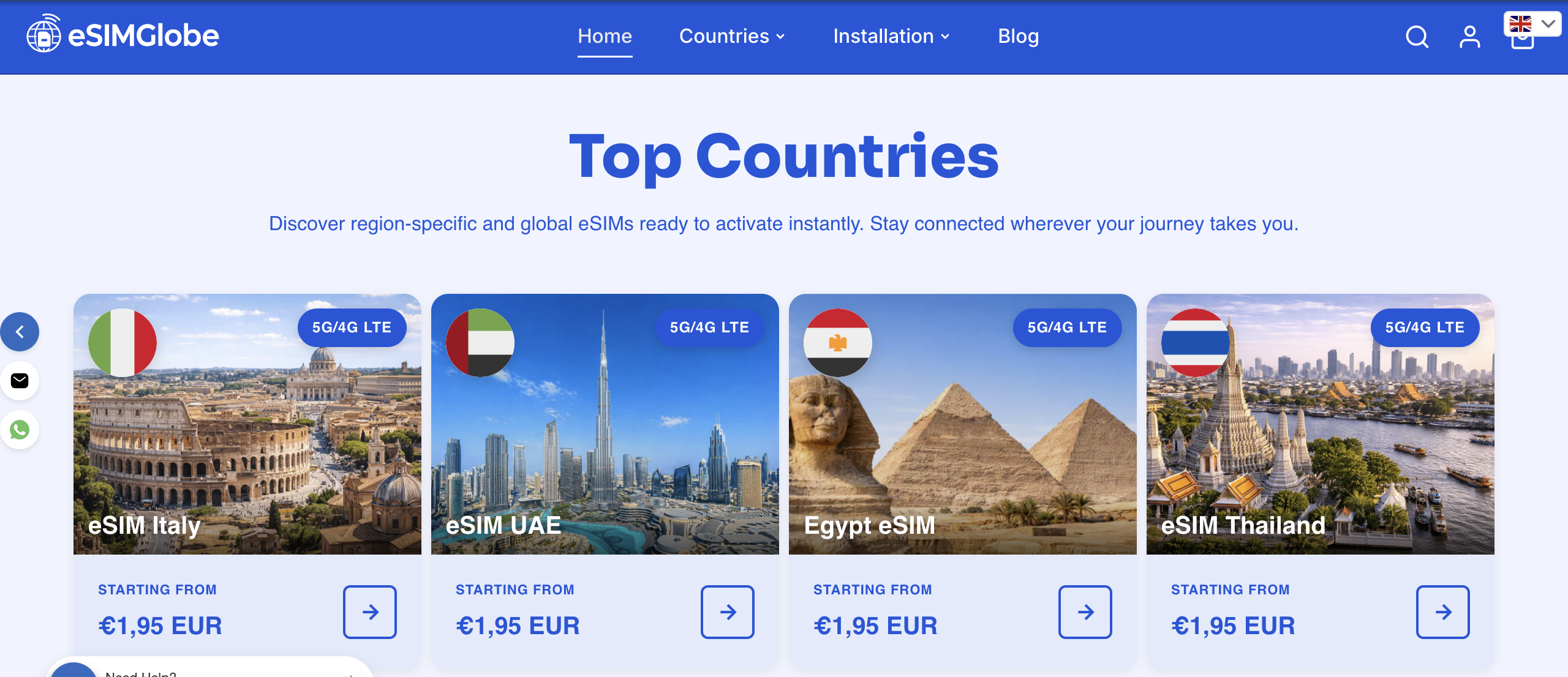
Browse current options on the Kenya eSIM product page and pick the data size that matches your trip length. If your itinerary covers more than one country, the eSIM Global (130+ areas) plan covers Kenya alongside dozens of other destinations in a single purchase.
Sources for verification
Confirm current Kenya plan details and pricing on the Kenya eSIM product page, and review installation steps in the eSIM activation guide. For a broader look at local SIM trade-offs, see eSIM vs local SIM: what travelers should know, and for trip planning beyond connectivity, the Digital Nomad Travel Guide covers broader logistics for extended stays.
FAQ
Which eSIM is best for Kenya?
For data-only travel, EsimGlobe’s instant delivery and flexible plan sizes suit most short trips. If you need a Kenyan phone number or Mpesa access, Safaricom’s local eSIM is the better fit.
Can I get an eSIM with Safaricom in Kenya?
Yes, Safaricom offers eSIM activation through its shops for supported devices, including recent iPhone and Samsung Galaxy models. The process requires an in-person visit and a local activation fee.
Which SIM card is best in Kenya?
It depends on your needs: a local carrier SIM or eSIM like Safaricom’s gives you a Kenyan number and Mpesa access, while a travel eSIM like EsimGlobe’s gets you online instantly without a shop visit. Data-only travelers heading straight from the airport generally find EsimGlobe more convenient.
Does eSIM have Mpesa?
A data-only travel eSIM, such as EsimGlobe’s Kenya plans, does not include Mpesa access because it has no attached phone number. Mpesa registration requires a local number, which a Safaricom eSIM or SIM provides.