






















Fixed-rate prepaid eSIM plans beat discounted, variable-priced offers for most trips under two weeks. A plan with a known GB allotment and a clear validity window is easier to budget, easier to refund, and easier to trust than a percentage-off deal with fine print attached. The one exception: a heavy-data trip or a genuinely unrestricted, verified promo can occasionally undercut a fixed plan, but that’s the exception, not the rule.
TL;DR:
- Fixed-rate prepaid eSIM plans with known GB allowances are generally more cost-effective for trips under two weeks than discounted variable offers with hidden exclusions.
- Promo codes often require minimum spends, exclude regions or data tiers, and can be non-refundable or start validity before arrival, reducing actual value.
- Most travelers overestimate their data needs, with light users typically requiring only 0.3 to 0.5GB per day, making fixed plans a better fit in most short trips.
- To avoid losing money, install the eSIM before travel on home Wi-Fi and verify the exact start of the plan’s validity and coverage for your destination.
- EsimGlobe offers transparent, fixed-capacity plans for over 170 countries, delivering instant, secure, and predictable prices without relying on discount codes.
Table of Contents
- Holafly Promo Code vs Standard Price EsimGlobe: How the Math Works
- What to Check Before Trusting Any Promo or Discount
- How Many GB Do You Actually Need Per Day?
- How Should You Choose Between a Promo and a Fixed Plan?
- What Does EsimGlobe’s Standard Prepaid Plan Actually Include?
- The Habit That Saves More Than Any Discount
- Get a Predictable Plan Instead of Chasing a Code
- FAQ
Holafly Promo Code vs Standard Price EsimGlobe: How the Math Works
A promo-discount model and a standard prepaid model solve the same problem in different ways, and the difference shows up the moment you try to predict your final bill.
A promo-based offer applies a percentage or dollar reduction to a listed price, often tied to a code, a minimum spend, or a limited-time window. The advertised savings look attractive on the landing page, but the real discount depends on what’s excluded. A standard prepaid plan, by contrast, sells you a fixed amount of data, at a fixed price, for a fixed number of days. You know the total cost before you check out. There’s no code to hunt for and no expiration clock ticking on the deal itself, only on the plan’s stated validity.
The gap between these two models usually comes down to three things:
- Exclusions. Promo codes frequently exclude certain countries, regional bundles, or already-discounted plans, which shrinks the pool of eligible purchases.
- Minimum spend thresholds. A “20% off” code often requires buying a larger, more expensive plan than you actually need just to qualify.
- Non-stackability. Most codes can’t be combined with an existing sale price, so the discount may just replace savings you’d have gotten anyway.
Take a 3-day light-use trip needing about 2GB total. A fixed prepaid plan priced for that exact tier gives you a clean, comparable number. A discounted variable offer might look cheaper on the surface, but if it forces you into a 10GB bundle to hit the minimum spend, you’re paying for 8GB you’ll never touch. Now stretch that to a 7-day medium trip needing roughly 10GB: price differences between providers for that same GB need can vary widely, which is exactly why comparing price-per-GB matters more than comparing headline discount percentages.
What to Check Before Trusting Any Promo or Discount
Before you let a promo code decide your purchase, look past the percentage and check the mechanics behind it.
Most promo codes reduce a listed price by a set percentage, but only above a minimum spend and only on eligible plans. Exclusions are common: certain regions, certain data tiers, or plans already on sale often don’t qualify. The bigger issue is hidden value loss. A code might be non-refundable once applied, capped to a limited quantity of uses, or unable to stack with any other offer, meaning the “discount” simply replaces value you already had.
Activation timing complicates things further. If a promo plan’s validity starts at purchase rather than at first connection in-destination, days can burn off before you even land. That shrinks your effective usable window without changing the sticker price.
Run through this before relying on any promo code:
- Confirm the discount applies to the exact plan size you need, not a bigger one.
- Check whether the code excludes your destination or region.
- Verify if the plan is refundable if your trip changes or cancels.
- Confirm whether validity starts at purchase, installation, or first network connection.
- Check if the discount stacks with any existing sale price, or replaces it.
Pro Tip: Screenshot the promo terms before you check out. Codes and their fine print have a habit of disappearing from the page once you’ve already paid.
How Many GB Do You Actually Need Per Day?
Most travelers overestimate their data needs by a wide margin, and that overestimate is exactly what pushes people toward oversized plans and unnecessary promo bundles.
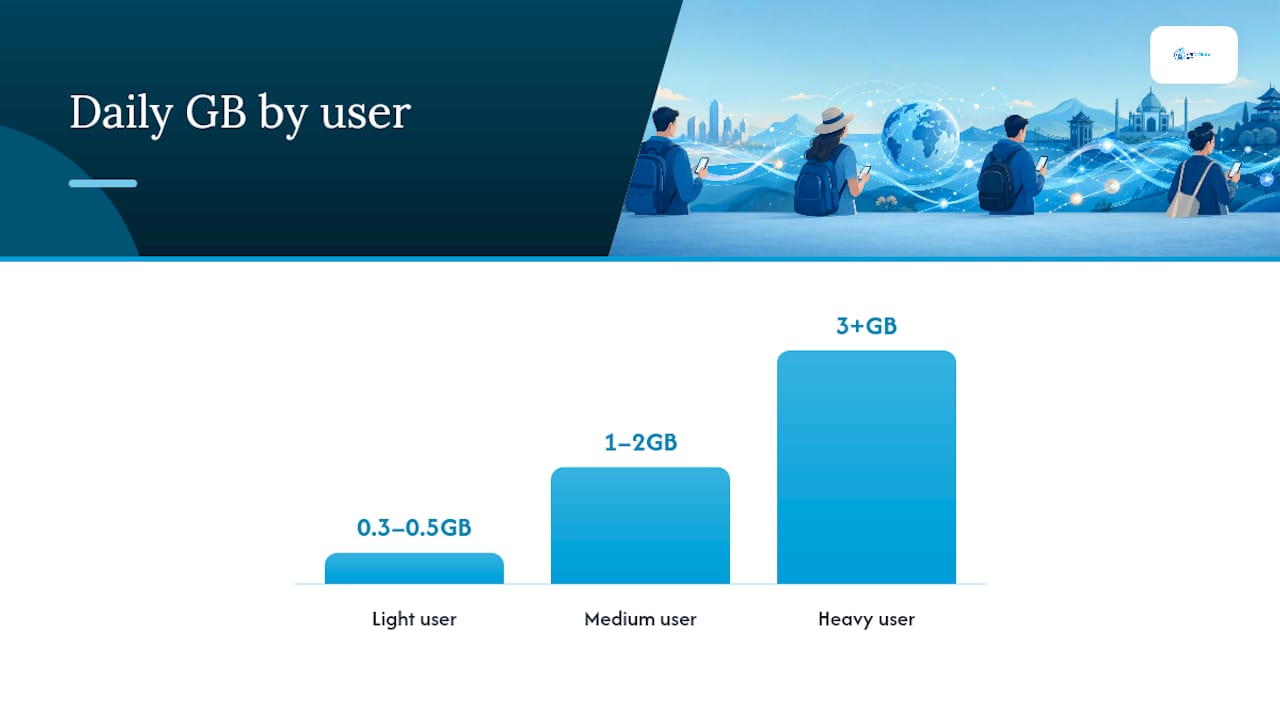
Field-tested usage tiers put light users at roughly 0.3 to 0.5GB per day, medium users at 1 to 2GB per day, and heavy users at 3GB or more per day. If your trip is mostly sightseeing, hotel Wi-Fi, and the occasional map check, you’re almost certainly a light user. If you’re working remotely, video-calling daily, and streaming music on the move, you land in the medium-to-heavy range.
Here’s what actually eats data, broken down by app category:
| App or Activity | Estimated Data Use |
|---|---|
| Maps and navigation | A few MB per hour |
| Messaging apps (text, voice notes) | Low, well under 1GB per hour |
| Social media scrolling | Roughly 0.5 to 1GB per hour |
| Uploading photos or short clips | Moderate, varies by resolution |
| Video streaming (standard to high quality) | 1 to 3GB or more per hour |
Match that to your trip length and the picture gets simple:
The pattern holds across nearly every short vacation: if you’re on holiday and not working remotely or streaming for hours daily, you almost never need a large data bundle. A light user on a 3-day trip is nearly always cheaper on a small fixed-data plan than chasing a discounted variable plan with hidden minimums. Save the unlimited tier for genuinely heavy use, like daily video calls or long-haul remote work.
How Should You Choose Between a Promo and a Fixed Plan?
Run through four questions in order, and the right choice usually becomes obvious.
First, how long is the trip? Short trips (3 to 7 days) favor fixed plans because there’s less room for a promo’s minimum-spend requirement to pay off. Second, what’s your expected GB? Use the table above to size it honestly rather than guessing high. Third, how much risk can you tolerate? If a non-refundable promo plan turns out wrong, you’re stuck with it. Fourth, do you need responsive support if something breaks?
Before checkout, confirm these five things regardless of which model you pick:
- When does the plan’s validity clock actually start (purchase, install, or first connection)?
- Is the destination’s network coverage confirmed for your specific country or region?
- Does the GB allotment match your traveler type, not just the cheapest headline number?
- What’s the refund policy if your trip changes?
- Is there 24/7 support if the eSIM doesn’t activate correctly?
A few red flags should make you walk away from a promo entirely: no stated refund policy, validity that starts immediately at purchase with no grace period, or a code that only works on plans far larger than you need. If you’re also bundling a hotel stay around the trip, the same “check the fine print before trusting the discount” logic applies. This guide to booking a weekend stay and getting the best deal covers similar pitfalls in travel booking discounts generally.
Pro Tip: If you’re torn between two plan sizes, size down. It’s cheaper to top up a small plan mid-trip than to eat the cost of an oversized one you never used.
What Does EsimGlobe’s Standard Prepaid Plan Actually Include?
EsimGlobe sells prepaid, data-only eSIM plans across more than 170 countries, delivered instantly by email so you can install before you even leave home. Plans are selectable by country, region, currency, and language, which matters if you’re comparing prices in USD, EUR, or GBP without doing mental conversion math.
The appeal of a fixed-capacity plan comes down to one thing: you know exactly what you’re paying for before you commit.
- A set GB allotment for a set price, with no minimum-spend trap or exclusion list to decode.
- Instant digital delivery, so there’s no waiting on a physical SIM or a store visit.
- High-speed 5G/4G LTE access in supported regions.
- 24/7 support if activation doesn’t go as expected.
- Telecom-grade security on every connection.
Activation rules vary by plan, some start on first connection at your destination, others on installation, so it’s worth confirming the exact rule listed on your order confirmation before you travel. If you’d rather compare an eSIM’s cost profile against traditional roaming first, this breakdown of comparing eSIM and roaming costs lays out the math. When you’re ready to pick a plan size, EsimGlobe’s country and region selector shows current standard pricing with no code required.
The Habit That Saves More Than Any Discount
Most people don’t lose money on eSIMs because they picked the wrong plan. They lose money because they installed it at the wrong time or trusted a discount without reading what it actually excluded.

The single best habit I’d recommend: install your eSIM before you leave, on home Wi-Fi, and check the order confirmation for the exact activation rule. I’ve seen the opposite play out constantly: someone waits until landing, burns twenty minutes hunting for a signal to activate, and loses a chunk of their first day’s usable data window in the process.
The second habit is just as simple. Before trusting any promo’s headline percentage, calculate your actual GB need first using a realistic daily estimate, then compare that number against the plan’s real price. A discount on the wrong plan size isn’t a discount. It’s a bigger bill with better marketing.
— daniele
Get a Predictable Plan Instead of Chasing a Code
EsimGlobe skips the promo-code guesswork entirely. Every plan lists its exact GB allotment, price, and validity window upfront, so you’re comparing real numbers instead of a discount percentage buried in exclusions. That’s the practical edge for anyone who just read through minimum-spend traps and non-stackable codes: one clear price, no fine print to decode before checkout.
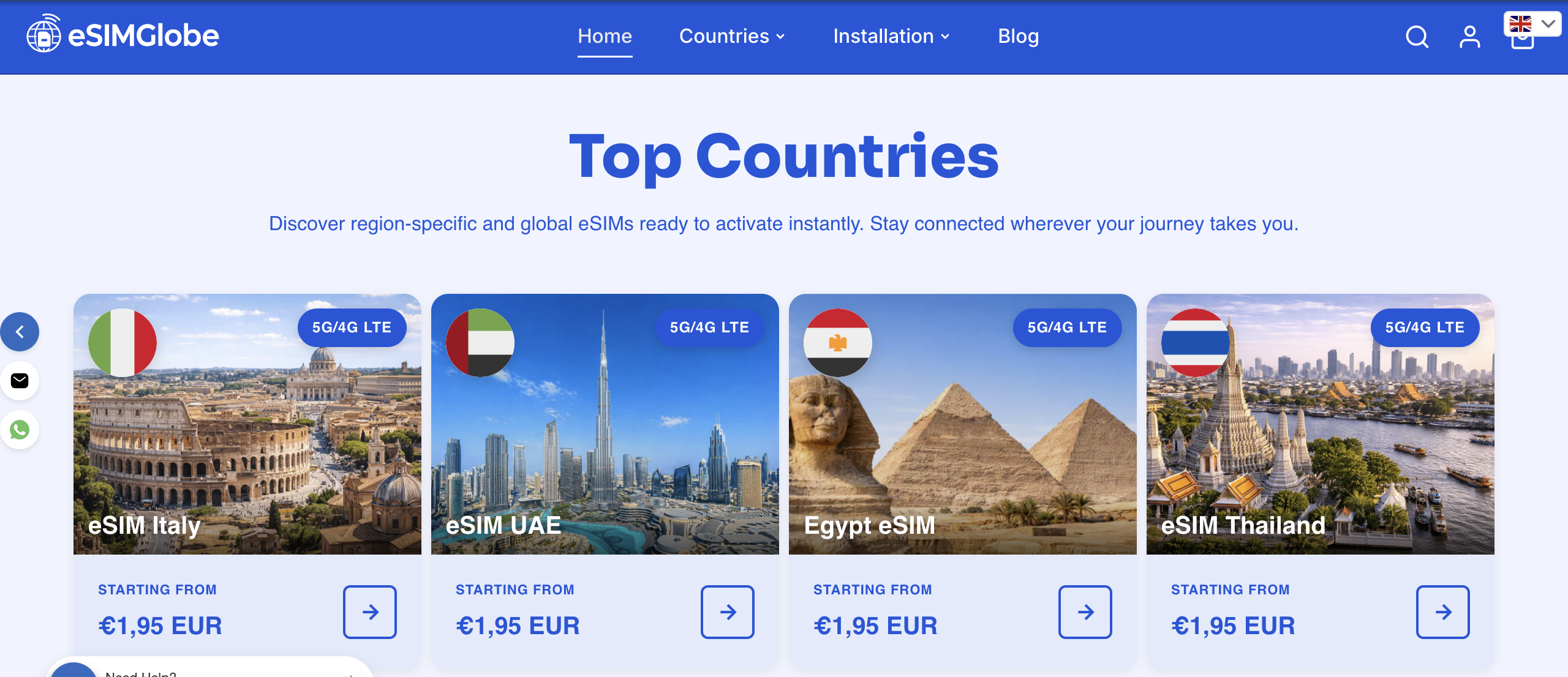
Plans cover more than 170 countries with instant delivery by email, currency selection in USD, EUR, or GBP, and 24/7 support if activation doesn’t go smoothly. Whether you’re planning a 3-day city break or a two-week trip across multiple countries, you can match your plan size to the GB tiers above without gambling on whether a code actually applies to your destination. If you want to see how eSIMs stack up against a local SIM card first, this comparison of eSIM versus local SIM options is worth a read. When you’re ready, head to EsimGlobe’s plan selector and check pricing for your destination before you book anything else.
FAQ
Does a promo code usually beat EsimGlobe’s standard pricing?
Rarely for trips under two weeks. Promo codes often carry minimum-spend requirements or exclusions that push the real cost above a comparable fixed prepaid plan.
How much data do I need for a 7-day vacation?
A light user typically needs 3 to 5GB total for a 7-day trip, while a medium user needs closer to 7 to 10GB, based on field-tested daily usage tiers.
When does an EsimGlobe plan’s validity start?
It depends on the specific plan. Some start counting on first connection at your destination, others on installation, so always confirm the rule on your order confirmation before traveling.
Do I need an unlimited data plan for a short trip?
Almost never. Most travelers on trips of a week or less fall into the light-to-medium usage range and are better served by a fixed-GB plan sized to their actual daily use.
What’s the biggest risk with a discounted promo eSIM?
Non-refundable terms combined with hidden exclusions. If your destination isn’t eligible or your trip changes, a discounted plan with no refund policy can end up costing more than a standard plan would have.