
















Rome is one of the world’s most visited cities, and for good reason. History, food, art, and daily street life exist here in a concentration found nowhere else. A well-planned trip makes the difference between standing in a three-hour line at the Colosseum and walking straight in.
Plan for a minimum of three days, though four or five gives you room to breathe. The city’s major sights are dense and demanding. Rushing the Vatican Museums in two hours means missing half of what makes them worth visiting.
Book tickets for the Vatican Museums and Borghese Gallery well in advance as they often sell out during busy seasons, and same-day entry is rarely possible. The Colosseum and Roman Forum can also be reserved online ahead of time.
Essential pre-trip planning steps:
- Book Vatican Museums and Colosseum tickets at least 3–4 weeks before arrival
- Research Rome’s seasonal weather and choose your travel window accordingly
- Identify your priority neighborhoods for accommodation
- Download offline maps (Google Maps or Maps.me) before landing
- Arrange your Italy data plan or eSIM for Italy before departure
- Pack comfortable, supportive walking shoes for cobblestone streets
- Check dress code requirements for religious sites
Pro Tip: Split the Vatican complex and the Colosseum/Forum across separate days. Trying to cover both in one day leaves you exhausted and shortchanges both experiences.
Table of Contents
- What are the top attractions and things to do in Rome?
- Where should you eat and drink in Rome?
- Which neighborhoods are best for staying in Rome?
- When is the best time to visit Rome?
- Practical travel tips and cultural etiquette for visiting Rome
- How eSIM technology keeps you connected while exploring Rome
- How safe is Rome for tourists?
- What does a trip to Rome typically cost?
- Useful Italian phrases every visitor to Rome should know
- Key Takeaways
- FAQ
What are the top attractions and things to do in Rome?
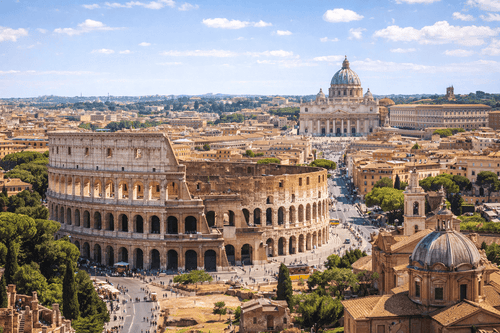
The Colosseum is the obvious starting point. Built in the first century AD, it held tens of thousands of spectators and remains the largest amphitheater ever constructed. The adjacent Roman Forum, once the center of Roman public life, is included in the same ticket. Arrive before 8:00 AM to walk through with almost no one else around.
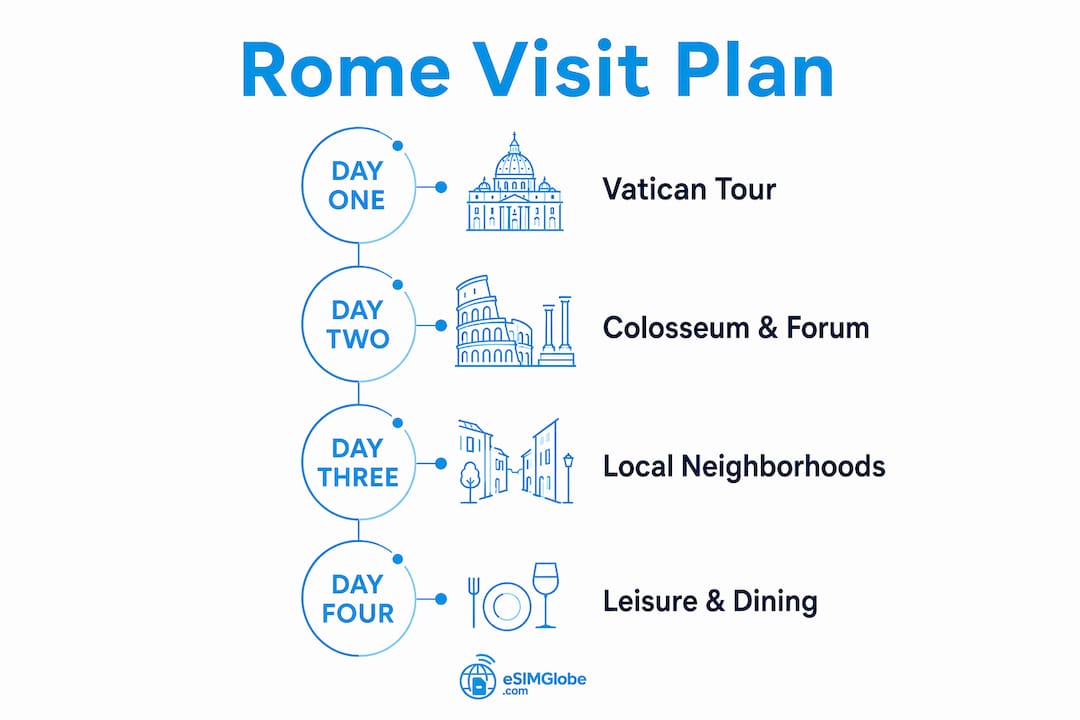
The Vatican Museums house one of the world’s great art collections, culminating in the Sistine Chapel. St. Peter’s Basilica is free to enter and architecturally staggering. The Pantheon, a 2,000-year-old temple with a perfectly preserved concrete dome, is also free and takes about 45 minutes to visit properly.
Beyond the headline sites, Rome rewards wandering. The neighborhoods of Trastevere and Monti offer a slower pace, local markets, and fewer tour groups. Piazza Navona and Campo de’ Fiori are worth visiting for the atmosphere alone.
Top attractions and activities:
- Colosseum and Roman Forum
- Vatican Museums and Sistine Chapel
- St. Peter’s Basilica and Square
- Pantheon
- Borghese Gallery (advance booking required)
- Trastevere neighborhood stroll
- Trevi Fountain (visit early morning or late at night)
- Piazza Navona
- Campo de’ Fiori market (mornings)
- Castel Sant’Angelo
Pro Tip: Visiting the Trevi Fountain after 10:00 PM transforms the experience entirely. The crowds thin, the lighting is dramatic, and you can actually stand at the edge without being pushed.
Where should you eat and drink in Rome?
Roman cuisine is specific and regional. The dishes worth seeking out include cacio e pepe (pasta with pecorino and black pepper), carbonara (eggs, guanciale, and pecorino, never cream), supplì (fried rice balls), and artichokes prepared alla giudia (deep-fried Jewish-style). These are not generic Italian dishes. They belong to Rome.
Avoid restaurants with photo menus displayed outside the door and staff actively recruiting passersby. These establishments cluster around the Colosseum, Trevi Fountain, and Vatican and reliably overcharge for mediocre food. Walk two or three blocks away from any major monument and the quality improves immediately.
Water at restaurants is not free. You will be asked still or sparkling, and it appears on the bill. Tipping is not obligatory in Italy, though rounding up or leaving €1–2 per person at a sit-down meal is appreciated. Standing at the bar for espresso costs less than sitting at a table.
How to choose a good restaurant in Rome:
- Look for handwritten menus or chalkboard specials
- Check that the menu is in Italian first, then translated
- Eat where locals eat, particularly at lunch
- Seek out trattorias and osterie over tourist-facing ristoranti
- Visit a gelateria that makes gelato in-house (look for covered, metal containers, not piled-high mounds)
- Try an aperitivo at a wine bar (enoteca) in the early evening
Which neighborhoods are best for staying in Rome?
Centro Storico places you within walking distance of the Pantheon, Piazza Navona, and Campo de’ Fiori. It is central, atmospheric, and convenient, though accommodation costs more here than elsewhere.
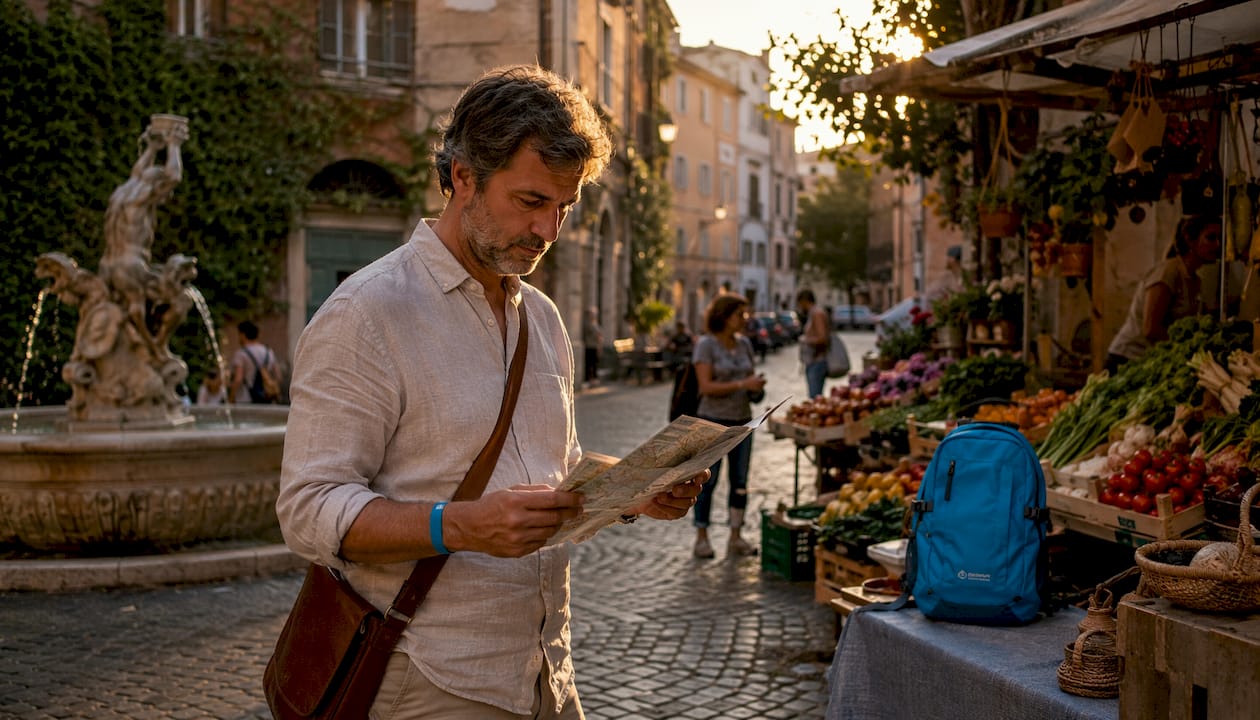
Trastevere is popular with visitors who want character. The medieval streets, ivy-covered buildings, and lively restaurant scene make it appealing, though it can be noisy on weekend nights.
Monti sits between the Colosseum and Termini station. It has a local feel, good independent restaurants, and reasonable prices. A solid choice for travelers who want proximity to the ancient sites without paying Centro Storico rates.
Prati is directly across the Tiber from the Vatican. Quieter, residential, and well-connected by metro. Good for travelers whose priority is the Vatican complex.
Testaccio is a working-class neighborhood with Rome’s best food market and some of the city’s most authentic trattorias. Less central for sightseeing but excellent for food-focused travelers.
Practical accommodation tips:
- Book 6–8 weeks ahead for peak season (April–June, September–October)
- Apartments work well for stays of four nights or more
- Confirm air conditioning before booking for summer travel
- Check proximity to a metro stop if you plan to use public transit
- Read recent reviews specifically for noise levels in Trastevere and Centro Storico
When is the best time to visit Rome?
Spring and fall are the most comfortable windows to visit Rome, with mild temperatures, manageable crowds, and pleasant outdoor spaces.
July and August bring intense heat, with summer temperatures often very high. Tourist fatigue sets in quickly under those conditions, and prices for accommodation peak. Rick Steves, who has covered Rome extensively, identifies summer as the most difficult season for comfort and crowd management.
Winter (November through February) is the quietest period. Prices drop, lines shorten, and the city feels more like itself. The trade-off is shorter daylight hours and occasional rain. Christmas week is an exception: the Vatican draws large crowds and prices spike.
Months ranked by crowd density and comfort:
- April–May: Best overall. Mild weather, manageable crowds, full daylight.
- September–October: Close second. Slightly warmer, harvest season food.
- June: Good weather, crowds building toward summer peak.
- November–March: Quietest, cheapest, cooler. Fewer tourists at major sites.
- July–August: Hottest, most crowded, most expensive. Least recommended.
Seasonal note: Spring and fall offer the best combination of weather, crowd levels, and cost. If your schedule allows flexibility, April and October are the two strongest individual months.
Practical travel tips and cultural etiquette for visiting Rome
Rome’s main attractions sit within roughly a 25-minute walk of each other. Walking is the primary and often fastest way to get around the historic center. The cobblestone streets, called sanpietrini, are uneven and hard on feet. Expect to cover 8–10 km per day. Comfortable, supportive shoes are not optional.
Public buses run slowly due to traffic and narrow streets. The metro is faster but covers limited tourist areas, with only two main lines crossing the city center. For real-time routing, Moovit handles Rome’s frequent route changes better than static maps.
Dress codes at religious sites are enforced, not suggested. St. Peter’s Basilica and major basilicas require shoulders and knees to be covered. Guards turn away visitors who do not comply. Carry a scarf or light layer if your clothing is borderline.
Key travel do’s and don’ts:
- Do wear supportive shoes every day
- Do carry a small crossbody bag worn across the front
- Do book major attraction tickets before you arrive
- Don’t eat at restaurants with photo menus near monuments
- Don’t drink from decorative fountains (drinking fountains, called nasoni, are safe and free)
- Don’t stand in the metro without watching your belongings
- Do greet shopkeepers with “buongiorno” when entering
Pro Tip: Buy your Colosseum and Roman Forum tickets online the morning you plan to visit, not the day before. Slots sometimes open up due to cancellations, and you can often find a same-morning entry window.
How eSIM technology keeps you connected while exploring Rome
An eSIM (embedded SIM) is a digital SIM card built into your device. It replaces the need to buy or swap a physical SIM card when you arrive in a new country. For travelers visiting Rome, this means you can activate an Italy data plan before you board your flight and arrive connected.
The practical advantage over traditional roaming is cost. Carrier roaming rates for data in Italy can be substantial. A local Italy eSIM plan through a provider like Esimglobe gives you data at local rates, paid in USD, EUR, or GBP, without any physical SIM involved.
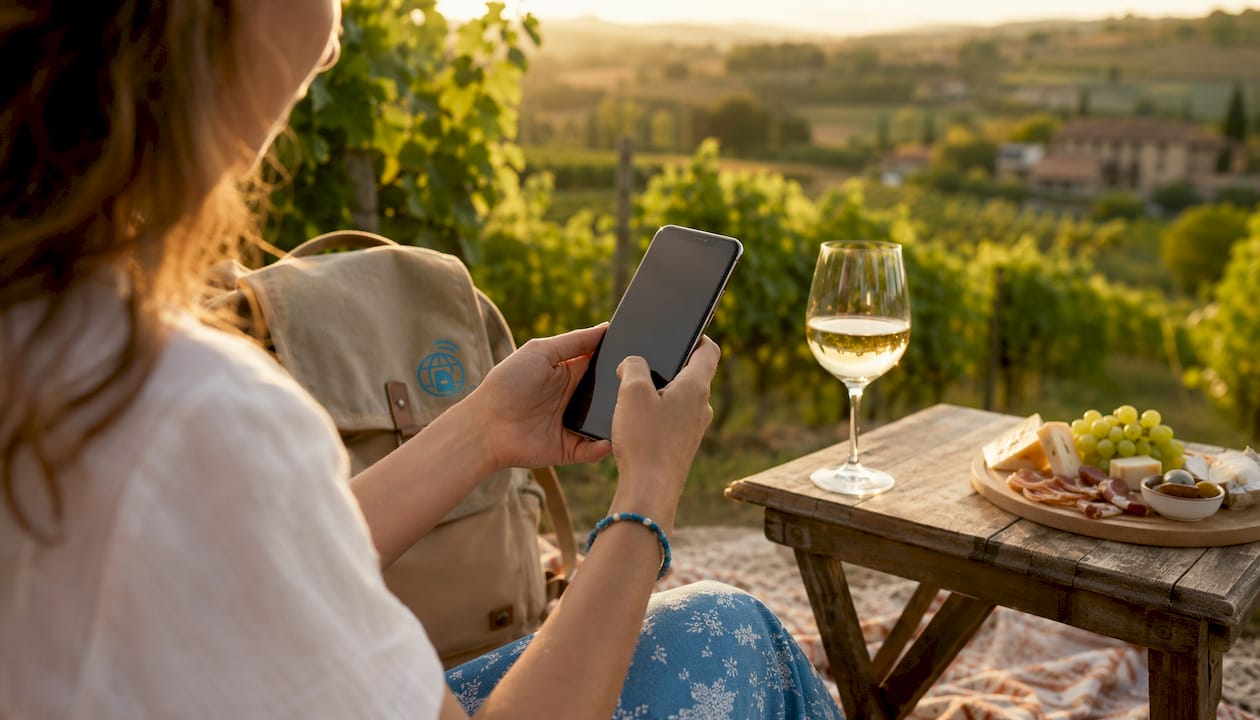
Staying connected in Rome is not a convenience. It is a functional necessity. You need maps to navigate cobblestone side streets, QR codes to access digital tickets, and a reliable connection to reach emergency services or contact your accommodation. An eSIM handles all of this without the friction of finding a SIM vendor at the airport.
Esimglobe offers Italy eSIM plans with multi-region support, multiple currency payment options, and a straightforward activation process. The platform is built for travelers who want to set up connectivity before departure and not think about it again. If you are traveling with a Google Pixel 9, the device supports eSIM natively, and the Google Pixel 9 eSIM setup process takes under five minutes through the device settings once your plan is purchased.
Key benefits of using an eSIM in Rome:
- No physical SIM swap at the airport
- Local Italy data rates instead of carrier roaming charges
- Instant activation before departure
- Access to maps, digital tickets, and communication apps from arrival
- Emergency connectivity without relying on hotel Wi-Fi
- Compatible with Google Pixel 9 eSIM setup and most modern unlocked devices
- Payment in USD, EUR, or GBP through Esimglobe
How safe is Rome for tourists?
Rome is a safe city for tourists by most international standards. Violent crime targeting visitors is rare. The primary risk is petty theft, specifically pickpocketing, and it is concentrated in predictable locations.
Pickpocket groups operate in coordinated teams, using distraction techniques like fake jostling, dropped items, or someone holding a map or menu in your face. The Metro, particularly the Termini station hub and the A line toward the Vatican, is the highest-risk environment. Crowded tourist areas like the Colosseum and Trevi Fountain are also active zones.
The most effective defense is carrying your bag across the front of your body, not on your back or shoulder. Keep your phone in a front pocket. Avoid displaying expensive cameras or jewelry in crowded areas. If someone bumps into you or creates a distraction, check your belongings immediately.
Scams targeting tourists include fake petitions (someone asks you to sign, then demands money), friendship bracelets tied onto your wrist without consent, and unofficial “guides” who attach themselves to you near monuments. The response to all of these is the same: keep walking and do not engage.
What does a trip to Rome typically cost?
Rome sits in the mid-range for European city travel. Budget travelers can manage on roughly €80–100 per day covering a hostel bed, meals at local spots, and public transit. A comfortable mid-range trip runs €150–220 per day per person, including a three-star hotel, sit-down meals, and attraction tickets. Luxury travel in Rome has no ceiling.
Typical costs to plan around:
| Category | Approximate Cost |
|---|---|
| Hostel dorm bed | €25–45 per night |
| Mid-range hotel | €100 per night |
| Espresso at the bar | €1–2 |
| Sit-down lunch (trattoria) | €15–€20 per person |
| Colosseum + Forum ticket | €18–€20 |
| Vatican Museums ticket | €20–€25 |
| Metro single ride | €1–2 |
| Gelato (gelateria) | €2–4 |
Attraction tickets add up quickly. Budget €60–80 per person for the major sites if you plan to visit the Colosseum, Vatican Museums, Borghese Gallery, and Pantheon. The Pantheon charges a small entry fee. St. Peter’s Basilica remains free.
Dining costs drop significantly if you eat lunch as your main meal, which is also how Romans eat. A full lunch at a trattoria costs less than the same meal at dinner. Standing at a bar for coffee and a cornetto in the morning costs under €3.
Useful Italian phrases every visitor to Rome should know
English is spoken at most hotels, major attractions, and tourist-facing restaurants. Outside those zones, basic Italian goes a long way. Romans respond well to visitors who make the effort, even imperfectly.
Practical phrases for daily use:
| Italian | Pronunciation | Meaning |
|---|---|---|
| Buongiorno | bwon-JOR-no | Good morning / Good day |
| Buonasera | bwona-SEH-ra | Good evening |
| Grazie | GRAT-see-eh | Thank you |
| Prego | PREH-go | You’re welcome / Please |
| Scusi | SKOO-zee | Excuse me |
| Dov’è…? | doh-VEH | Where is…? |
| Il conto, per favore | eel KON-to, pehr fa-VOH-reh | The bill, please |
| Parla inglese? | PAR-la een-GLEH-zeh | Do you speak English? |
| Non capisco | non ka-PEE-sko | I don’t understand |
| Quanto costa? | KWAN-to KOS-ta | How much does it cost? |
Always greet with “buongiorno” (before 1:00 PM) or “buonasera” (after) when entering a shop, restaurant, or hotel. Skipping the greeting reads as rude in Italian culture. Saying “grazie” and “prego” costs nothing and opens doors.
Key Takeaways
Rome rewards visitors who plan ahead, arrive with the right footwear, and book major attraction tickets well before departure.
| Point | Details |
|---|---|
| Book tickets early | Vatican Museums and Borghese Gallery sell out weeks ahead during peak season. |
| Best time to visit | April–May and September–October offer the best weather and manageable crowds. |
| Stay connected with eSIM | Esimglobe Italy eSIM plans activate before departure, covering maps, tickets, and communication. |
| Safety focus | Pickpockets operate in coordinated teams; carry bags across the front and stay alert at Metro stations. |
| Budget baseline | Mid-range travel costs roughly €150–220 per day per person, including hotel, meals, and tickets. |
FAQ
How many days in Rome is enough?
Three days covers the major sites at a reasonable pace. Four or five days allows for day trips and a slower, more local experience.
What is the best month to visit Rome?
April and October are the strongest individual months. Both offer mild temperatures, manageable crowds, and full access to outdoor sites.
What do I wish I had known before going to Rome?
Comfortable shoes matter more than almost anything else. The cobblestone streets are uneven, and most visitors walk 8–10 km per day across the historic center.
Is $10,000 enough for a trip to Italy?
For travelers spending over a week in Italy including Rome, a comfortable mid-range budget covers flights, hotels, meals, and attractions. Solo travelers can make it stretch further.
Does the Google Pixel 9 support eSIM for Italy travel?
Yes. The Google Pixel 9 supports eSIM natively. You can purchase an Italy eSIM plan through Esimglobe and activate it in under five minutes through the device’s network settings before you depart.