




















TL;DR:
- A digital nomad works remotely while traveling, with over 35 million globally in 2024. They often hold professions like software development and content creation and need careful legal and financial planning. Success depends on preparation, reliable connectivity, community building, and understanding tax and visa regulations.
A digital nomad is a professional who works remotely using digital technology while traveling or living in different locations, without a fixed home base or traditional office. The global digital nomad population reached over 35 million by 2024, tripling since 2020, with an average age of 36 and average income of $122,000. That growth reflects a fundamental shift in how people think about work and location. The digital nomad lifestyle spans dozens of professions, from software developers to marketing managers to accountants, and over 67 countries now offer dedicated digital nomad visas to support this population legally. If you are curious about what this lifestyle actually involves, this guide covers everything from job types and income strategies to visas, taxes, and practical tools.
What is a digital nomad and what kinds of jobs do they do?
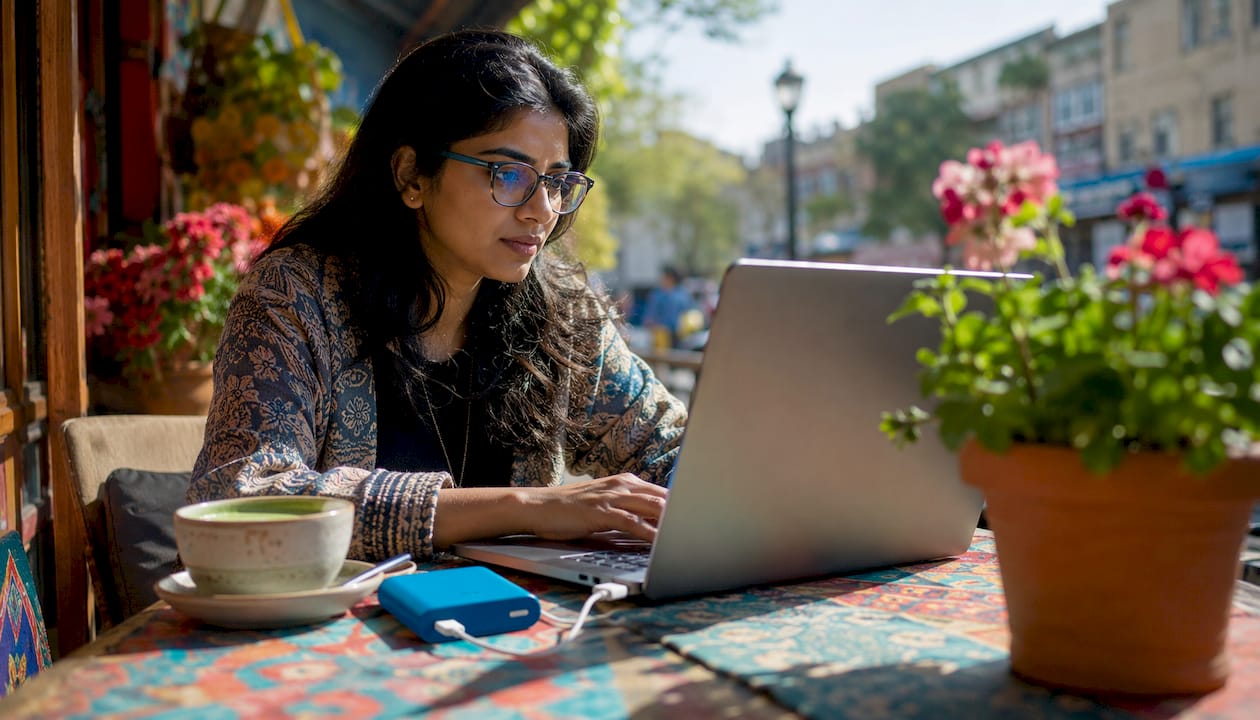
A digital nomad is anyone who earns income through internet-connected work while regularly changing their physical location. The term covers three distinct work arrangements: full-time remote employees, freelancers, and independent entrepreneurs. 42% of digital nomads hold full-time remote jobs, while the rest operate as freelancers or run their own businesses. That split matters because each path has different income stability, benefits, and tax implications.
Common digital nomad jobs
The most common remote-friendly careers include:
- Software development and engineering — High demand, strong pay, and fully location-independent work make this the single most represented profession.
- Content writing and copywriting — Writers produce articles, marketing copy, technical documentation, and scripts for clients worldwide.
- Graphic design and video editing — Visual creatives deliver files digitally, making geography irrelevant to the work.
- Digital marketing — SEO specialists, social media managers, and paid advertising professionals manage campaigns from anywhere.
- Online teaching and coaching — Language tutors, business coaches, and course creators serve students via platforms like Zoom or Teachable.
- Web and app development — Front-end, back-end, and full-stack developers are consistently among the highest-earning nomads.
- Accounting, legal, and consulting work — Digital nomads come from many professions beyond typical freelancers, including accountants and lawyers, reflecting broad adoption of remote work.
How beginners can enter this lifestyle
You do not need to quit your job to test the lifestyle. Beginners should negotiate a 3–6 month remote work trial with their current employer before freelancing. This approach tests income stability and daily routine without the financial risk of starting over. If your employer says no, building a freelance client base on platforms like Upwork or Toptal while still employed is the lower-risk path.
Pro Tip: Before going fully nomadic, spend one month working remotely from a different city in your home country. You will identify gaps in your setup, from time zone conflicts to internet dependency, before they become expensive problems abroad.
What are the benefits and challenges of the digital nomad lifestyle?
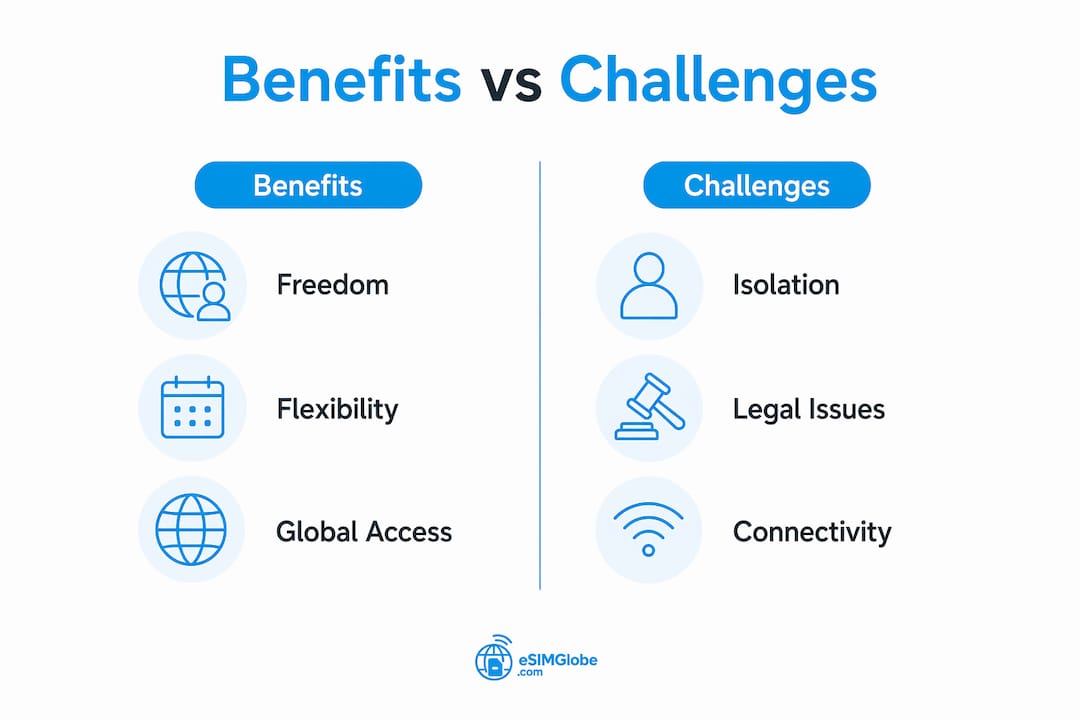
The digital nomad lifestyle offers genuine freedom, but it also creates real friction that most promotional content ignores. Understanding both sides helps you make an informed decision rather than an impulsive one.
The real benefits
80% of digital nomads report high satisfaction with lifestyle freedom. The core appeal is control over your time, location, and environment. You choose where to live based on cost, climate, culture, or community rather than proximity to an office. Many nomads reduce their cost of living significantly by basing themselves in countries like Portugal, Thailand, or Colombia, where $2,000 per month covers comfortable housing, food, and transport.
The benefits of being a digital nomad extend beyond geography. Nomads consistently report higher autonomy over their daily schedule, reduced commute stress, and the ability to structure work around peak productivity hours. Exposure to different cultures, languages, and professional networks also builds adaptability that is difficult to develop in a single-city career.
The challenges you need to plan for
- Loneliness — Emotional loneliness is cited as the biggest challenge by nomads, ranking above technical or logistical problems. Constant location changes break social continuity.
- Internet reliability — Unreliable connections in certain regions can derail client calls, deadlines, and productivity. Always have a backup data source.
- Time zone conflicts — Working across multiple time zones with clients or employers requires strict calendar management and clear communication expectations.
- Visa and legal complexity — Working on a tourist visa is illegal in most countries. Navigating legal residence takes research and, often, professional legal advice.
- Health care gaps — Standard tourist travel insurance rarely covers long-term multi-country stays. Nomads need dedicated international health coverage.
“The challenges nomads face, slow internet, loneliness, unfamiliar food, are common human experiences. Success depends on building routines and community, not on expecting travel to solve personal issues.”
Pro Tip: Join a co-working space within your first week in any new city. The social contact and reliable internet solve two of the biggest nomad challenges at once.
How do visas, taxes, and legal rules work for digital nomads?
Administrative preparation separates nomads who thrive from those who burn out. 90% of newcomers to the nomad lifestyle return home within 90 days due to poor planning around visas, taxes, and health care. That statistic is not a warning to avoid the lifestyle. It is a clear signal that preparation is the deciding factor.
Digital nomad visas explained
Over 67 countries now offer dedicated nomad visas, granting legal residence for 6 months to several years. Countries including Portugal, Spain, Germany, Costa Rica, and Indonesia have active programs. Each visa has different income requirements, application fees, and renewal conditions. Portugal’s Digital Nomad Visa, for example, requires proof of monthly income above a set threshold and valid health insurance.
Tax rules most nomads get wrong
| Tax Topic | What Most Nomads Assume | What Is Actually True |
|---|---|---|
| Digital nomad visa = tax break | The visa removes tax obligations | 79% of nomad visas offer no tax relief |
| U.S. citizens abroad | No U.S. tax filing required | U.S. citizens must file regardless of location |
| Foreign Earned Income Exclusion | Automatic for all Americans abroad | Requires physical presence test; excludes up to $132,900 in 2026 |
| Tax residency | Determined by passport | Determined by days spent in a country and local rules |
Many nomads mistakenly believe a digital nomad visa equals tax exemption. In most cases, that is false. Tax residency rules depend on how many days you spend in a country, your home country’s treaties, and your income source. A tax professional who specializes in expat or nomad taxation is worth the cost before you move.
Health insurance and legal compliance
Tourist travel insurance usually lacks coverage for multi-country long-term stays. International health insurance tailored for nomads is the correct product. Providers that specialize in this category offer coverage across multiple countries, emergency evacuation, and mental health support. For travel insurance that covers extended remote work trips, multi-country travel coverage is worth reviewing before departure.
Pro Tip: Keep a spreadsheet tracking the exact number of days you spend in each country. This record is your primary defense in any tax residency dispute and takes five minutes per week to maintain.
What practical tools and habits keep digital nomads productive?
Productivity on the road requires deliberate structure. Without a fixed office, the environment changes constantly, and your systems need to compensate for that instability.
Connectivity: eSIM vs. local SIM cards
Reliable internet is the single most critical infrastructure for any remote worker. The two main options are local SIM cards purchased in each country and eSIM solutions that work across multiple countries without a physical card swap.
| Feature | Local SIM card | Esimglobe eSIM |
|---|---|---|
| Setup time | 30–90 minutes at a local store | Instant, activated before arrival |
| Coverage flexibility | Single country only | Multi-country plans available |
| Physical swap required | Yes, every new country | No, managed entirely from your phone |
| Roaming charges | High if used outside home country | Included in plan, no surprise fees |
| Plan management | In-person or local app | Online, in multiple currencies and languages |
Esimglobe’s eSIM solutions outperform local SIM cards for reliability, cost, and flexibility across nomad use cases worldwide. For nomads moving between countries monthly, the time saved alone justifies the switch. Esimglobe supports multiple regions and currencies, making it a practical choice for nomads who do not want to hunt for a local carrier in every new city.
Productivity habits that actually work
Successful nomads establish a fixed work zone and scheduled social activities to manage the psychological impact of constant travel. A fixed work zone does not mean the same desk forever. It means designating a specific spot in your accommodation or a co-working space as your work environment, and not working from bed or the beach.
Key habits that support sustainable remote work:
- Set a consistent start and end time for work, regardless of time zone.
- Use project management tools like Notion, Asana, or Trello to track tasks across locations.
- Schedule video calls during overlapping business hours with clients and avoid last-minute rescheduling.
- Keep an emergency fund covering 3–6 months of living expenses before starting out.
- Build a digital nomad community connection in each city through co-working spaces, Meetup events, or nomad-specific forums.
Slow travel, staying several weeks per location rather than moving every few days, leads to better integration and stronger mental well-being. Rapid location changes amplify loneliness and disrupt work rhythms. Staying in one place for at least four weeks gives you time to find a good co-working space, build a social routine, and actually experience the city rather than just passing through it.
Key Takeaways
A digital nomad is a location-independent professional who sustains income through remote work, and long-term success requires preparation across legal, financial, and social dimensions.
| Point | Details |
|---|---|
| Definition and scale | A digital nomad works remotely while traveling; the global population exceeded 35 million by 2024. |
| Job variety | Nomad jobs span software development, writing, marketing, design, and even accounting or legal work. |
| Visa and tax reality | 79% of digital nomad visas offer no tax relief; research your specific home and host country rules. |
| Connectivity solution | Esimglobe eSIM plans eliminate the need for local SIM swaps and cover multiple countries in one plan. |
| Preparation is decisive | 90% of newcomers return home within 90 days; an emergency fund and legal planning prevent early failure. |
Why most people get the digital nomad lifestyle wrong before they start
The biggest misconception I see is that the digital nomad lifestyle is primarily about travel. It is not. It is about building a portable career that happens to allow travel. People who approach it as an extended vacation almost always struggle within the first three months. The ones who treat it as a serious professional and logistical project tend to stay.
The psychological side catches most people off guard. You can be sitting in a beautiful city, doing work you enjoy, and still feel profoundly isolated. That feeling is not a sign the lifestyle is wrong for you. It is a sign you have not yet built the social infrastructure that a fixed home provides automatically. The fix is intentional community building, not changing locations again.
I also think the administrative side gets underestimated because it is boring to write about. Tax residency, visa compliance, and international health insurance are not exciting topics. But they are the exact issues that force people home. Spending two days researching your tax obligations before you leave is a better investment than spending two weeks dealing with a compliance problem abroad.
Slow travel is the single most underrated strategy in this space. Staying four to six weeks in one place costs less, builds more meaningful connections, and produces better work than moving every week. The nomads who last years, not months, almost universally practice it.
— daniele
Stay connected anywhere with Esimglobe
Reliable mobile data is the foundation of any remote work setup. Without it, client calls drop, deadlines slip, and the freedom of location independence disappears fast.
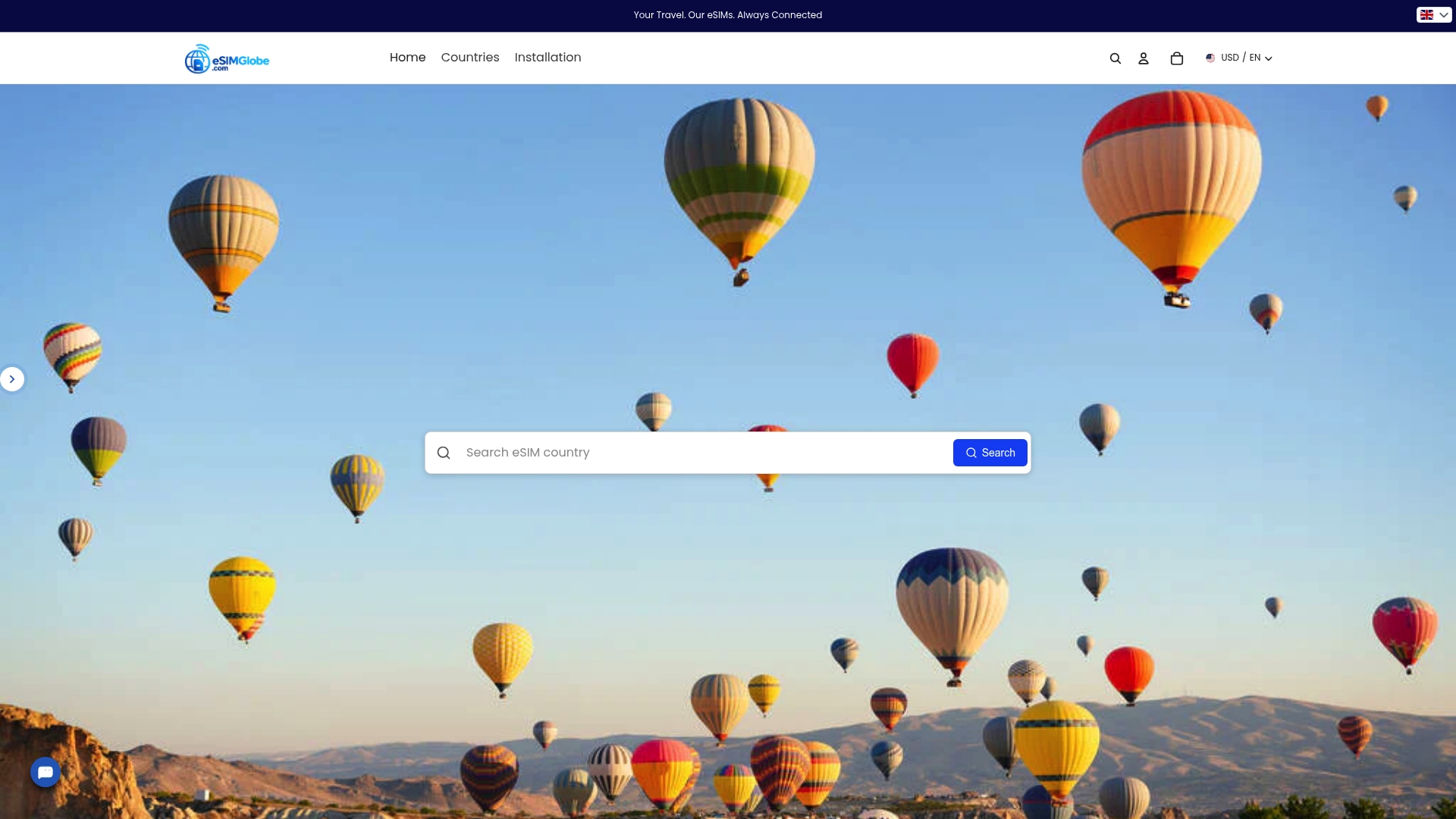
Esimglobe provides eSIM plans for digital nomads covering countries across Asia, Europe, the Americas, and beyond. Plans activate instantly before you land, require no physical SIM swap, and are managed entirely online in your preferred currency. For nomads who move between countries regularly, Esimglobe eliminates the time and cost of sourcing a new local SIM in every destination. Browse available plans and regions at Esimglobe and set up your connection before your next departure.
FAQ
What is a digital nomad in simple terms?
A digital nomad is a person who works remotely using the internet and travels or lives in different locations instead of commuting to a fixed office.
What do digital nomads do for work?
Digital nomads work in fields like software development, content writing, graphic design, digital marketing, online teaching, and consulting. Both full-time remote employees and freelancers qualify as digital nomads.
How do I become a digital nomad with no experience?
Start by negotiating a remote work arrangement with your current employer for 3–6 months, or build freelance skills in writing, design, or marketing before leaving. Build savings covering at least 3–6 months of expenses before relocating.
Do digital nomads pay taxes?
Yes. Digital nomads are still subject to tax obligations in their home country and potentially in their host country. 79% of digital nomad visas offer no tax relief, so professional tax advice is necessary before moving abroad.
What is the best connectivity solution for digital nomads?
An eSIM from a provider like Esimglobe is the most practical option for nomads crossing multiple borders. It activates instantly, requires no physical SIM swap, and covers multiple countries under a single plan.
Recommended
- Best eSIM for Digital Nomads in 2026 | Global Travel Data – Esimglobe
- Best eSIM Setup for Remote Work Abroad (Full Digital Nomad Guide 2026) – Esimglobe
- Best Cities for Digital Nomads in Asia and How to Stay Connected in 20 – Esimglobe
- Examples of Digital Travel Solutions for Nomads in 2026 – Esimglobe