






















TL;DR:
- Digital travel solutions in 2026 include AI itinerary planners, eSIM connectivity, and offline apps that simplify trip management. Travelers should focus on five to seven core tools to avoid overload, prioritize offline access, and use eSIMs for seamless international connectivity. Effective apps automate tasks, work offline, and cater to multiple travel phases for a smoother journey.
Digital travel solutions are technologies and apps designed to optimize how travelers plan, book, manage, and experience trips globally. The best examples of digital travel solutions in 2026 fall into seven core categories: AI itinerary planning, eSIM connectivity, flight tracking, navigation, expense splitting, currency management, and offline access tools. Experts recommend focusing on a maximum of 5–7 core apps to avoid information overload. That number matters because every extra app adds friction, not value. This guide covers the tools that actually move the needle for international travelers and digital nomads.
1. What are the best examples of digital travel solutions?
The strongest digital travel tools share three traits: they automate repetitive tasks, work without a reliable signal, and cover multiple trip phases in one place. The categories below represent the clearest examples of what modern travel technology looks like when it works. Each one solves a specific, recurring problem that travelers face on the road.
2. AI itinerary planners that automate trip organization
AI itinerary planners are the single biggest upgrade available to international travelers right now. They eliminate the manual work of copying flight numbers, hotel addresses, and car rental details into a single document. Instead, you forward a confirmation email and the app builds your itinerary automatically.
The core features that separate good AI planners from average ones include:
- Automatic extraction from booking confirmation emails, so you never type a flight number manually
- Smart recommendations for restaurants, transit, and activities based on your location and schedule
- Multi-booking consolidation that pulls flights, hotels, and transfers into one timeline
- Real-time alerts that update your itinerary when a flight changes or a booking is modified
- Offline access so your full trip plan is readable without a data connection
AI Trip Tracker lets travelers forward confirmation emails or paste booking text for automatic itinerary generation without any manual data entry. That approach also protects your privacy by avoiding full inbox access. The app reads only what you send it.
Pro Tip: Choose AI itinerary apps that use secure email forwarding rather than granting full inbox access. You get the same automation with far less exposure of personal data.

Conversational AI tools are pushing this further. Omio’s ChatGPT integration connects travelers to live transportation inventory across 3,000+ providers in real time, replacing manual search entirely. That covers 47 countries with natural-language booking. You type “train from Paris to Amsterdam next Tuesday morning” and get live options with prices.
3. eSIM connectivity for international travelers
eSIM technology is the most practical connectivity upgrade for anyone crossing borders regularly. An eSIM is an embedded digital SIM built into your phone. It replaces the need to buy a physical SIM card at every destination.
The practical advantages over traditional SIM cards are significant:
- Instant activation upon landing, with no airport kiosk required
- Multiple carrier profiles stored on one device, switchable without swapping hardware
- Cost savings by avoiding carrier roaming rates, which can run several dollars per megabyte
- No physical handling of tiny SIM cards that are easy to lose or damage
- Broad device compatibility across most flagship smartphones released after 2019
eSIM technology enables instant digital activation of international data plans with no physical SIM required. For digital nomads working across multiple countries in a single month, that flexibility is not optional. It is the baseline.
Esimglobe provides eSIM profiles for travelers across multiple regions, with plans purchasable in USD, EUR, and GBP. Travelers select their destination country, choose a data plan, and activate before or immediately after landing. There is no waiting for a delivery or hunting for a local carrier store.
Pro Tip: Staying connected abroad without roaming charges starts with activating your eSIM before departure. Most plans allow pre-activation so your data is live the moment your plane lands.
The best eSIM options for digital nomads cover regional bundles that work across multiple countries under one plan. That matters when your itinerary spans Southeast Asia or Europe in a single trip.
4. Real-time flight tracking apps that keep plans on track
Flight tracking apps solve a specific, high-stakes problem: flights change, and you need to know before you’re standing at the wrong gate. The best apps in this category do more than show departure times. They explain why a delay is happening and what your options are.
Key features worth prioritizing:
- Real-time delay alerts with the specific reason (crew, aircraft, weather, or air traffic control)
- Gate change notifications pushed to your phone before the airport screens update
- Connecting flight risk warnings that flag tight connections when your inbound flight is delayed
- Integrated ground transport suggestions for post-arrival rides or transit options
- Offline itinerary access so your booking details are readable without a signal
Progressive Web Apps provide full functionality and offline trip data access, which is critical for remote travel. That architecture means the app works like a native app but runs in your browser, with no app store required. Hotels and short-term rental operators are adopting the same PWA model for guest itinerary access regardless of connectivity.
Pro Tip: Forward your airline confirmation emails to your itinerary app the moment you book. Hands-free updates start from day one, not the morning of your flight.
5. Navigation apps and offline maps for local travel
Navigation apps divide into two clear use cases: city transit and open-road driving. The best tools for each are different, and using the wrong one wastes time.
| Use case | Best feature to prioritize | Why it matters |
|---|---|---|
| Urban public transit | Real-time departures and platform data | Subway delays are not shown in generic map apps |
| Multi-city driving | Offline map downloads | Rural areas often have no data signal |
| Walking in dense cities | Pedestrian routing with stairs and elevators | Standard routing ignores accessibility and shortcuts |
| Multi-leg trip planning | Combined transit and walking routes | Reduces the need to switch between apps mid-trip |
Citymapper provides better real-time transit data than generic map apps for major cities, covering over 100 metropolitan areas. It shows real-time departures, the best subway cars to board for fast exits, and compares transit modes side by side. That level of detail is not available in standard navigation tools.
Offline-ready navigation apps are the key to confident travel in 2026, especially in areas with limited cellular coverage. Download maps before you leave your hotel. A downloaded map of a country costs less than 500MB and works indefinitely without a signal.
6. Expense splitting and currency management tools
Group travel creates a specific financial problem: someone always ends up covering more than their share, and the math gets complicated fast. Expense splitting apps solve this by tracking every payment and calculating who owes whom in real time.
The most useful features for travelers include:
- Multi-currency support so expenses in different countries are tracked accurately
- Real-time exchange rates that update automatically rather than using outdated fixed rates
- Itemized receipt splitting for restaurant bills where people ordered different amounts
- Settlement summaries that minimize the number of transactions needed to balance the group
- Export options for expense reports, useful for business travelers claiming reimbursements
Splitwise simplifies group expenses with transparent cost sharing, while Wise provides real-time currency exchange rate management for travelers. These two tools cover the full financial picture for group trips. Splitwise handles the social math; Wise handles the currency math.
For solo digital nomads, a multi-currency wallet removes the guesswork from budgeting across countries. You load money at the real exchange rate and spend in local currency without conversion fees eating into your budget. That difference adds up significantly over a month of travel across multiple countries.
AI-powered booking platforms are also starting to integrate expense tracking directly into itinerary tools. Automated booking management in short-term rental hospitality already uses similar logic to consolidate costs across multiple stays. The same principle applies to traveler finance apps that pull all bookings into one budget view.
Key takeaways
The most effective digital travel toolkit combines AI automation, eSIM connectivity, and offline-ready apps across no more than 5–7 core tools.
| Point | Details |
|---|---|
| Limit your app stack | Focus on 5–7 core tools to avoid overload and keep your workflow clean. |
| Prioritize offline access | Download maps and itineraries before departure so you work without a signal. |
| Use eSIM for connectivity | Activate a regional eSIM plan before landing to avoid roaming costs entirely. |
| Automate itinerary building | Forward booking emails to an AI planner to eliminate manual data entry. |
| Separate transit and driving apps | Use city-specific transit apps for urban areas and offline maps for rural driving. |
What I’ve learned after years of testing travel tech
The most common mistake I see travelers make is treating their phone like a Swiss Army knife and downloading every app that gets mentioned in a “best of” list. The result is a home screen full of apps that duplicate each other, drain your battery, and create decision fatigue at exactly the wrong moment, like when you’re standing in a foreign train station with a delayed connection.
The tools that actually changed how I travel are not the flashiest ones. AI itinerary parsers that read my confirmation emails saved me more time than any booking aggregator. An eSIM that activated before I landed saved me more money than any airline miles program. Offline maps saved me more stress than any real-time traffic app.
The insight that most travel tech articles miss is this: the value of a travel app is not what it does when everything works. It is what it does when your signal drops, your flight changes at 11 PM, or you land in a country where your carrier has no agreement. Offline capability and instant activation are not bonus features. They are the core requirement.
Next-gen travel platforms are moving toward brand-specific experience suites with continuous context memory across trip phases. That is the direction the industry is heading. But for now, the practical wins come from mastering the seven categories covered here, not from chasing the next AI feature announcement.
— daniele
Esimglobe’s eSIM plans for international travelers
Staying connected abroad without paying roaming rates is a solved problem for travelers who use eSIM technology.
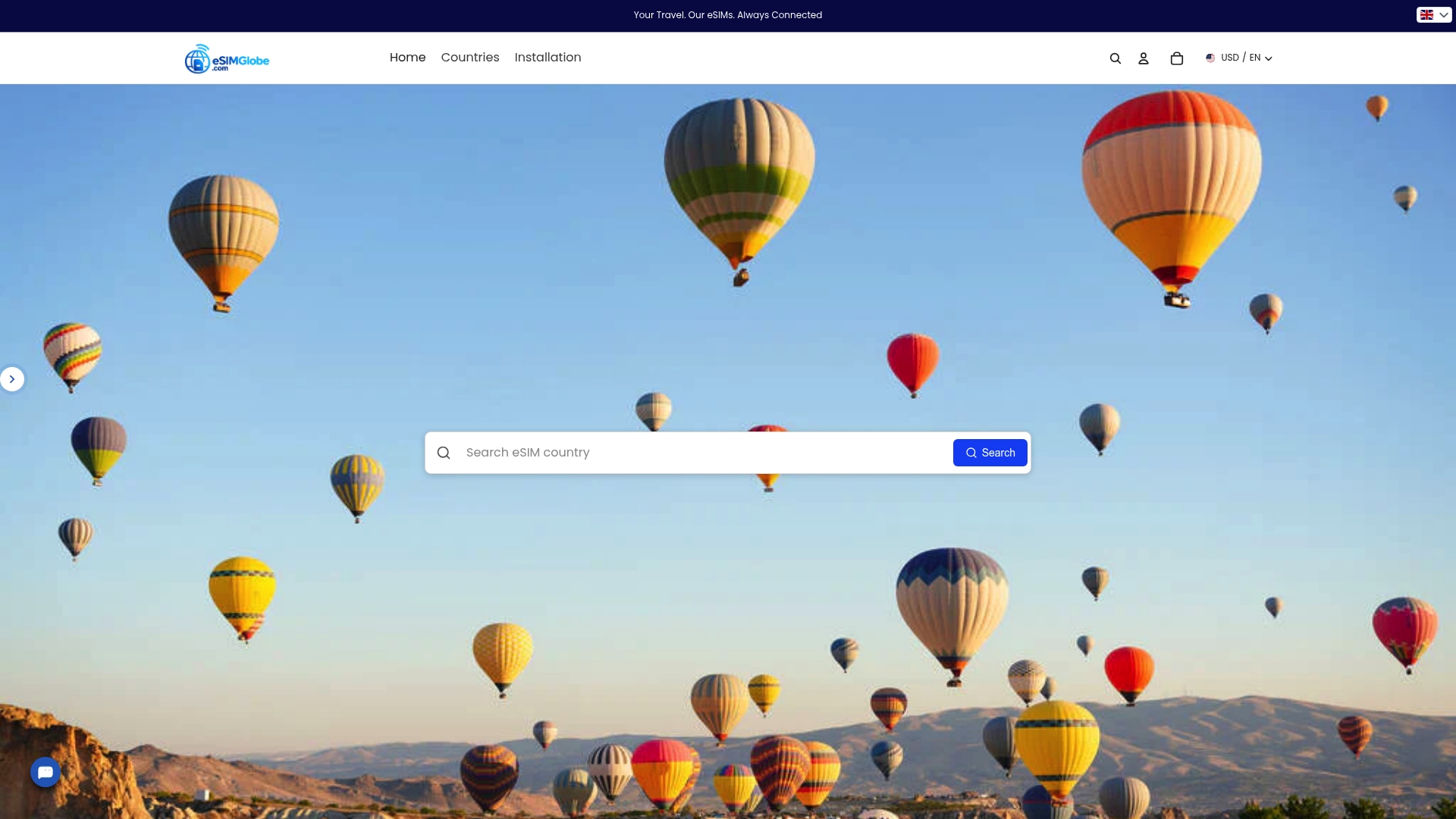
Esimglobe offers digital eSIM profiles for destinations across multiple regions, with plans available in USD, EUR, and GBP. Travelers select their destination, choose a data plan, and activate instantly on compatible devices. No physical SIM card, no airport kiosk, no carrier contract. Esimglobe supports international travelers, digital nomads, and business travelers who need reliable data across borders. Check available eSIM plans for your destination and activate before your next departure.
FAQ
What are digital travel solutions?
Digital travel solutions are apps and technologies that automate trip planning, manage bookings, provide connectivity, and support navigation for international travelers. The core categories include AI itinerary planners, eSIM connectivity, flight tracking, navigation apps, and expense management tools.
How does an eSIM differ from a physical SIM card?
An eSIM is embedded in your device and activated digitally, with no physical card required. It allows instant activation of international data plans and supports multiple carrier profiles on one device.
Which travel apps work without an internet connection?
Progressive Web Apps and offline-capable navigation tools store trip data and maps locally on your device. Offline-ready apps are the key to reliable travel in areas with limited cellular coverage.
How do AI itinerary planners extract booking information?
AI itinerary planners like AI Trip Tracker read forwarded confirmation emails or pasted booking text to build itineraries automatically without requiring manual data entry or full inbox access.
What is the best way to manage expenses across multiple currencies?
Expense splitting apps like Splitwise track group costs across currencies, while multi-currency wallets like Wise apply real-time exchange rates to eliminate conversion fee surprises during international trips.