





















You can travel to Andorra visa-free for tourist stays up to 90 days if you hold a U.S. passport, but there’s a catch most guides skip: Andorra has no airport and no train station, so you’ll always enter through France or Spain and need to satisfy Schengen entry rules along the way.
Three things matter before you book anything:
- Your passport needs at least three months of validity beyond your planned departure date.
- Because you’re transiting Schengen territory, standard Schengen entry conditions apply even though Andorra itself isn’t a Schengen member.
- Buy travel insurance that covers medical evacuation, and enroll in the State Department’s Smart Traveler Enrollment Program (STEP) before you leave.
Get those three squared away and the rest of the planning, transportation, timing, packing, money, connectivity, are just logistics.
Key Takeaways
A successful Andorra trip depends on treating Schengen transit rules, passport validity, evacuation-grade travel insurance, and pre-departure connectivity as non-optional planning steps, not afterthoughts.
| Point | Details |
|---|---|
| Visa-free entry, Schengen transit | U.S. passport holders get 90 days visa-free, but must satisfy Schengen rules crossing France or Spain to arrive. |
| Passport validity | Carry at least three months of validity beyond your departure date to avoid boarding denials. |
| Insurance must cover evacuation | Confirm your policy includes mountain rescue and winter-sports coverage before you rely on it. |
| Winter driving equipment is mandatory | Snow tires or chains are required November 1 through May 15, with fines for noncompliance. |
| Set up connectivity before departure | Activate an eSIM ahead of time so maps, bookings, and emergency contacts work the moment you land. |
Table of Contents
- Entry and Visa Requirements to Travel to Andorra
- How Do You Get to Andorra From a Major Airport?
- When Should You Visit Andorra, and How Long Should You Stay?
- Is Andorra Safe, and What Health Precautions Should You Take?
- What Are Andorra’s Winter Driving Rules?
- What Currency Does Andorra Use, and What Should You Know About Shopping?
- Your Pre-Departure Checklist for Andorra
- Why Mobile Connectivity Matters for Your Andorra Trip
- What the Checklist Approach Gets Right, and Where It Falls Short
- Sources
- FAQ
Entry and Visa Requirements to Travel to Andorra
U.S. citizens don’t need a visa for short tourist visits to Andorra. The 90-day rule mirrors the broader Schengen framework, and most travelers never think twice about it because their trip lasts under a week. The complication isn’t Andorra’s own border. It’s the fact that Andorra sits landlocked between France and Spain with no international airport or rail link of its own, so every visitor physically crosses Schengen territory to get in and out.
That transit detail matters more than it sounds. If you’re a U.S. passport holder on a standard tourist trip, you’re covered by the same 90-day visa-free allowance that applies across the Schengen area, and Andorra doesn’t add separate paperwork on top of it. But if you’re traveling on a passport that requires a Schengen visa, you’ll need one that’s valid for multiple entries, not just a single entry. Here’s why: you enter Schengen territory (Spain or France) to reach Andorra, exit Schengen when you cross into Andorra, then re-enter Schengen territory again when you leave. A single-entry visa gets used up on your first crossing, leaving you stuck when you try to head home.
Passport validity trips up more travelers than expired visas do. Andorran and Schengen border agents expect at least three months of remaining validity past your intended departure date, and some airlines will deny boarding at your origin airport if your passport doesn’t meet that threshold. Check the issue date too. Passports renewed with leftover validity from an old book can occasionally cause automated system flags at border kiosks.
A few other entry-related details worth knowing before you pack:
- Cash declarations apply if you’re carrying roughly €10,000 or more into or out of Andorra. Amounts above that threshold need to be declared to customs.
- Longer stays or any move toward residency require separate paperwork through Andorran immigration authorities, distinct from the tourist entry process.
- Rules shift periodically, so confirm current requirements directly with the U.S. State Department’s travel advisory page and VisitAndorra’s official site shortly before departure.
Pro Tip: If there’s any chance you’ll need a Schengen visa for your nationality, request a multiple-entry version specifically, and mention that your itinerary includes Andorra so the consulate understands why you’ll cross the border twice.
How Do You Get to Andorra From a Major Airport?
Andorra has no airport of its own, so your trip starts somewhere else. The three nearest options are Barcelona-El Prat, Toulouse-Blagnac in France, and the smaller regional airport at Girona. Barcelona is the most common gateway for U.S. travelers thanks to its flight volume, with a transfer to Andorra la Vella typically running three to three and a half hours by road. Toulouse cuts that drive down closer to two and a half hours if your flights route through France instead.
Getting from the airport to the border takes a few practical forms:
- Direct bus transfer. Operators including ALSA and Hife run scheduled coach services from Barcelona and Girona directly into Andorra la Vella, and these are usually the simplest option if you’re not renting a car.
- Train plus bus combination. From Toulouse or Barcelona, you can take a train partway and connect to a local bus service, such as Andbus, for the final mountain leg. This works well if you’re already planning to explore southern France.
- Rental car. Driving gives you flexibility for stops along the way, but confirm your rental agreement explicitly permits cross-border travel into Andorra, since not all companies include it by default.
Mountain roads leading into Andorra involve winding passes, so budget extra time if you’re driving in winter conditions. Once you’re inside the country, interurban buses connect the main towns efficiently and cheaply, and taxis are available in Andorra la Vella and the larger resort towns, though they’re less plentiful in smaller villages and often need to be booked ahead rather than hailed on the street.
Pro Tip: Reserve airport transfer buses in advance during ski season. December through March fills up fast, and walk-up seats on the popular Barcelona routes can be scarce on weekends.
When Should You Visit Andorra, and How Long Should You Stay?
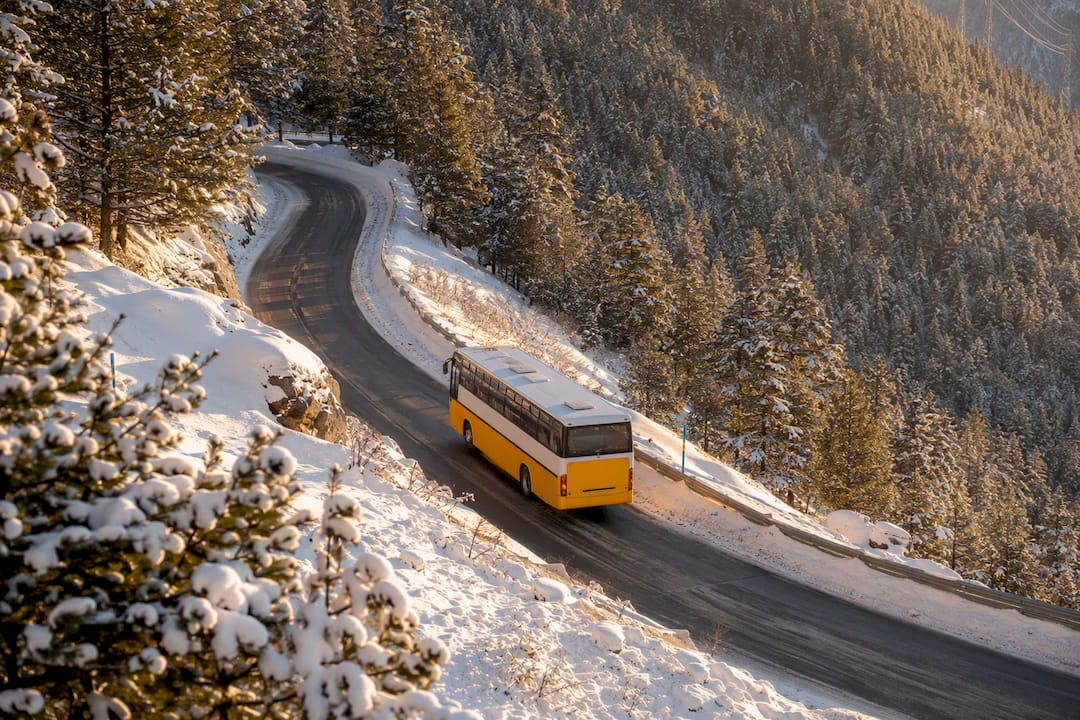
Andorra runs on two distinct seasons, and picking the wrong one for your interests is the most common planning mistake. Winter, roughly December through March, belongs to skiers and snowboarders heading for the Grandvalira and Vallnord resorts. Summer, May through September, is when hikers and mountain bikers take over the same terrain once the snow clears. Shoulder months in spring and late fall are quieter and cheaper, but some lifts, trails, and guided activities scale back operations.
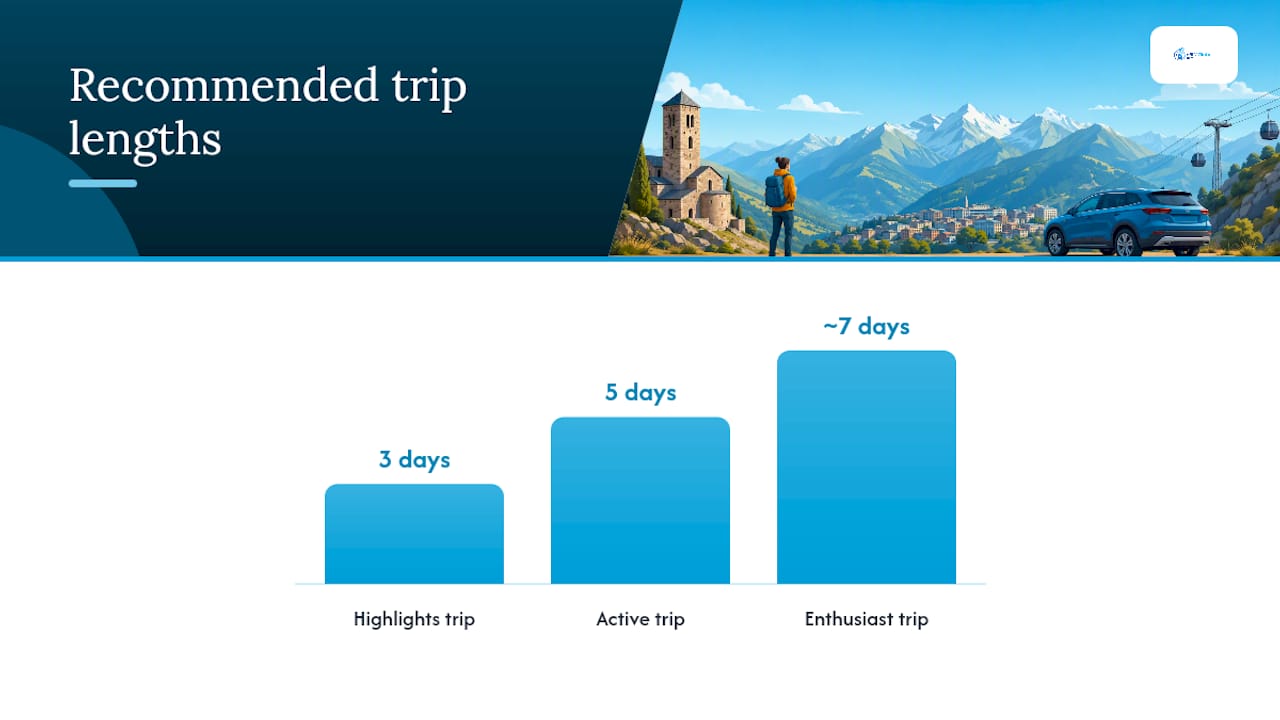
Three to five days covers Andorra’s highlights comfortably for most travelers, while dedicated outdoor enthusiasts often stretch that to a full week to fit in multiple resorts or trail systems.
A 3-day highlights itinerary:
- Day one: arrive, settle into Andorra la Vella, explore the old town and Caldea spa complex.
- Day two: day trip to a mountain village like Ordino or Canillo, with time for a scenic gondola ride or short hike.
- Day three: shopping in the duty-free zones, plus a final walk through Escaldes-Engordany before departure.
A 5-day active itinerary:
- Days one and two: settle in, then ski or hike depending on season.
- Day three: guided activity such as via ferrata, snowshoeing, or a longer alpine trail.
- Day four: explore a second valley or resort area for variety.
- Day five: relax at Caldea, shop, and prepare for departure.
If you’re booking ski rentals or guided hikes, reserve at least a few weeks out during peak season. Altitude affects stamina faster than most travelers expect, so pace your first day lightly rather than tackling the hardest trail immediately.
Is Andorra Safe, and What Health Precautions Should You Take?
The U.S. State Department generally regards Andorra as a low-risk destination, with no elevated advisory level tied to crime or civil unrest. That doesn’t mean skipping the basics. STEP enrollment costs nothing and puts you on the radar of the nearest U.S. consular office if anything goes wrong during your trip.
CDC travel-health guidance for Andorra focuses less on infectious disease and more on the physical realities of mountain travel. Many peaks and alpine lakes sit above 2,000 to 2,500 meters, altitude that can bring on headaches, fatigue, or shortness of breath even in otherwise healthy travelers. Hydrate more than you think you need to, use sun protection even on cloudy days since UV exposure climbs with elevation, and pace strenuous activity on your first day or two.
Travel insurance deserves real scrutiny here, not a rubber stamp. A standard policy purchased as an afterthought may not cover mountain rescue or high-altitude medical evacuation, and those are exactly the scenarios where you’d need it most. Before buying, confirm your policy explicitly covers:
- Emergency medical treatment and hospital transfer
- Helicopter or ground evacuation from mountain terrain
- Winter sports activities specifically, since skiing and snowboarding are sometimes excluded from base plans
If something does happen, U.S. citizens in the region can reach consular services through the U.S. Embassy in Spain’s Barcelona-area consular office, which handles emergency assistance for nearby Andorra. Save that contact information locally on your phone rather than assuming you’ll have signal to look it up later. General personal-safety advice still applies: avoid large public demonstrations, and if you’re heading off-marked trails or backcountry terrain, go with a licensed guide rather than solo. Anyone planning serious off-piste skiing should look into structured avalanche training before heading into ungroomed terrain.
What Are Andorra’s Winter Driving Rules?
If you’re driving into Andorra between November 1 and May 15, mandatory winter equipment rules apply, and enforcement is active. Vehicles need either winter tires (marked M+S or with the three-peak mountain snowflake symbol) or snow chains carried onboard, and roadside checks on mountain routes are routine during this window. Getting caught without compliant equipment can bring a fine, plus the inconvenience of being turned back or delayed at a checkpoint.
If you’re renting a car for the trip, confirm with the rental company whether winter tires are already fitted or whether you need to arrange chains separately. Chains are widely available for purchase or rental in towns near the border and within Andorra itself, so you’re not stuck if you arrive unprepared, but sourcing them at the last minute costs more and eats into your first day.
Pack for genuine mountain variability, not just the season on the calendar:
- Layered clothing, since temperatures swing sharply between valley floor and mountain summit
- Sun protection (sunglasses, sunscreen) regardless of season, given the elevation
- A refillable water bottle and snacks for day trips into less-developed areas
- A basic emergency kit if you’re driving remote mountain roads, including a flashlight and a charged phone
Pro Tip: Check your rental car’s tires before leaving the lot, not after you’re already on a mountain pass. Ask the agent directly whether the vehicle meets Andorra’s winter equipment standard for your travel dates.
What Currency Does Andorra Use, and What Should You Know About Shopping?
Andorra uses the euro, despite not being part of the European Union or the Eurozone in a formal sense. Cards are widely accepted in hotels, restaurants, and larger shops, and ATMs are easy to find in Andorra la Vella and the resort towns, so carrying large amounts of cash isn’t necessary for typical trip expenses.
Duty-free shopping is part of Andorra’s identity, particularly for electronics, perfume, and tobacco, but temper your expectations. Prices stay fairly consistent throughout the year, so the “bargain” framing in tourism marketing is often overstated compared to genuine seasonal discounting. Shopping streets tend to be quieter in summer and considerably busier during ski season, when resort crowds spill into town.
- Currency: euro (€), cards and ATMs widely available.
- Cash declaration threshold: amounts of roughly €10,000 or more entering or leaving Andorra must be formally declared.
- Keep receipts for higher-value purchases, especially electronics, in case you need to declare items when re-entering your home country.
Your Pre-Departure Checklist for Andorra
Run through this list in the two to three weeks before you leave:
- Confirm passport validity of at least three months beyond your return date.
- Verify whether your nationality requires a multiple-entry Schengen visa for transit.
- Book and print (or save digitally) accommodation confirmations and transport transfers.
- Purchase travel insurance covering medical care, evacuation, and any planned mountain sports.
- Enroll in STEP and save emergency contact numbers, including the nearest consular office.
- Set up mobile connectivity, ideally an eSIM, before you land so navigation and bookings work immediately.
- Pack layered clothing, sun protection, and any medications you’ll need at altitude.
- Reserve ski equipment, snow chains, or guided activities in advance if traveling in peak season.
A few of these deserve extra attention beyond the checklist format:
- Double-check your device is unlocked and eSIM-compatible if you’re planning to buy digital connectivity ahead of time.
- Confirm your insurance policy number and emergency hotline are saved offline, not just in an email you might not be able to access.
- If you’re bringing prescription medication, carry it in original packaging with a copy of the prescription in case of border questions.
Why Mobile Connectivity Matters for Your Andorra Trip
Cell coverage in Andorra is generally solid in towns and along main roads, but border-crossing travel means your phone will hop between French, Spanish, and Andorran networks depending on exactly where you are. Without a plan for that, you risk unexpected roaming charges or dead spots right when you need Google Maps for a mountain pass or a confirmation code for your hotel booking.
An eSIM solves this cleanly since it activates before you land and doesn’t require finding a local shop or swapping a physical card. Esimglobe offers regional data plans that cover Andorra along with nearby hubs like Barcelona, with instant email delivery, support for multiple currencies, and high-speed 4G/5G data depending on local network availability.
- Short trips of a few days fit well with a short-stay Andorra eSIM plan built around a fixed data allowance.
- Longer or more data-heavy visits, especially if you’re streaming maps or uploading photos constantly, suit an unlimited day pass better.
- If you’re landing in Barcelona first, a Barcelona eSIM keeps you connected during the transfer before you even reach the border.
Pro Tip: Install your eSIM profile while you still have Wi-Fi, ideally before you leave home, so it’s already active the moment you land and you’re not troubleshooting network settings on a mountain road.
What the Checklist Approach Gets Right, and Where It Falls Short
Most Andorra guides treat entry rules and packing tips as separate conversations. They shouldn’t be. The Schengen transit requirement is the single fact that reshapes everything else, your visa strategy, your route planning, your buffer time at borders, and treating it as a footnote is where a lot of advice goes wrong.
What’s overrated: obsessing over duty-free bargains. The savings are real but modest, and travelers who build their itinerary around shopping windows often shortchange the hiking or skiing that actually justifies the trip.
What’s underrated: connectivity planning. A dead phone at a mountain trailhead or a border checkpoint isn’t a minor inconvenience, it’s the difference between a smooth transfer and a stressful one. Setting up an eSIM before departure belongs on the same priority tier as buying insurance, not as an afterthought you handle at the airport.
If you take one thing from this: sequence your prep. Confirm entry and insurance first, then transport, then everything else follows easily.
— daniele
FAQ
Is It Safe to Travel to Andorra Right Now?
Yes. The U.S. State Department generally categorizes Andorra as low-risk, with no elevated advisory tied to crime or civil unrest, though standard precautions and travel insurance with evacuation coverage still apply.
Can U.S. Citizens Go to Andorra?
Yes, U.S. passport holders can visit Andorra visa-free for tourist stays up to 90 days, though the trip requires transiting through France or Spain and meeting Schengen entry conditions along the way.
Is It Worthwhile to Visit Andorra?
For travelers interested in skiing, hiking, or duty-free shopping in a compact alpine setting, yes. It rewards visitors who plan around its winter or summer strengths rather than expecting a broad city-break experience.
How Many Days in Andorra Is Enough?
Three to five days covers the country’s main highlights comfortably, while active travelers focused on skiing or hiking multiple areas often extend to a full week.