














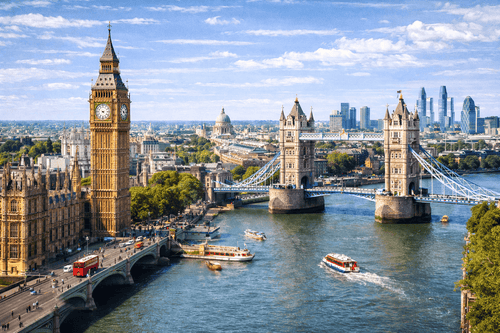






England is packed with surprising, shareable fan facts, from Stonehenge, raised roughly 5,000 years ago, to the mute swans the King technically owns, to Greenwich, the village that set the world’s clocks. We put together a short, kid-friendly list covering history, culture, landmarks, and the quirky local customs that make England fun to study or visit.
TL;DR:
- Hadrian’s Wall began construction in AD 122, stretched about 73 miles across northern England, and marked the Roman Empire’s northwest frontier.
- The Football Association formed in 1863, and England played the first official international match against Scotland in 1872; cricket and tennis rules were formalized locally.
- Stonehenge’s bluestones traveled about 150 miles from Wales, and archaeologists still puzzle over how prehistoric builders moved them to the site.
- A cathedral does not automatically make an English town a city; city status is a legal title granted by letters patent.
- Buy an eSIM before departure: the UK plan suits England only trips, while unlimited coverage across multiple countries fits itineraries with extra stops.
Table of Contents
- 1. Twelve Fun Facts About England You Can Share
- 2. Staying Connected While You Explore England
- 3. Famous English Inventions and Discoveries
- 4. Notable English Music and Bands
- 5. Famous English Personalities Beyond the Authors
- 6. Why These England Facts Stick With Fans and Students
- 7. A Simple Way to Stay Connected on Your England Trip
- FAQ
- Sources
1. Twelve Fun Facts About England You Can Share
1. The King and the swans. King Charles holds an old legal claim to unmarked mute swans swimming in open waters across England. This tradition dates back centuries and still gets celebrated every summer during the annual swan count on the River Thames.
2. Stonehenge is older than the pyramids of Giza. Construction happened in stages, and the famous stone circle dates to about 2500 BC, with building work starting approximately 5,000 years ago. Some of the bluestones traveled roughly 150 miles from the Preseli Hills in Wales, a transport feat that still puzzles archaeologists today.
3. Hadrian’s Wall marked the edge of an empire. Built starting in AD 122 under Emperor Hadrian, the wall stretches about 73 miles across northern England and once served as the Roman Empire’s northwest frontier.
4. Greenwich decides what time it is everywhere. The Prime Meridian runs straight through Greenwich, and Greenwich Mean Time is the reference point the whole world’s clocks are set against.
5. Shakespeare and Dickens still draw crowds. Stratford-upon-Avon and London’s literary trail attract readers chasing the footsteps of England’s most famous writers. Modern fandoms carry that tradition forward too: Harry Potter filming locations across England, from Alnwick Castle to Lacock Abbey, now pull in fans from around the world.
6. Many modern sports trace their rules back to England. The Football Association formed in 1863, and England played the world’s first official international football match against Scotland in 1872. Cricket and tennis also saw their rules formalized on English soil during the 1800s.
7. The Industrial Revolution started here. Factories, steam power, and mass production reshaped English towns in the 1700s and 1800s, and that shift rippled outward to change how the entire world made goods and moved people.
8. London’s museums are free and world class. The British Museum houses treasures from across human history, and the Tower of London guards the Crown Jewels behind walls nearly a thousand years old.
9. Fish and chips is a national comfort food. Regional pies, from Cornish pasties to pork pies, round out a food culture built on hearty, portable meals. Some historic dishes, like jellied eels, surprise visitors who expect only the classics.
10. British TV and film travel well. BBC dramas and the Harry Potter franchise have turned English settings into global tourist destinations, and fans often plan entire trips around scenes they recognize from the screen.
11. Some festivals are delightfully odd. Cheese rolling down a steep hill in Gloucestershire and gurning competitions, where contestants pull the most extreme face, are two examples of quirky local traditions that keep drawing crowds every year.

12. The numbers and names are a little unusual too. England’s population sits at over 57 million people, London was once called ‘Londinium’ by the Romans, and some towns carry street names so strange that mapmakers double-check them. Not every town with a cathedral counts as a city either, since city status is a legal title granted by letters patent, not a reward for having a cathedral.
2. Staying Connected While You Explore England
Mobile data makes a trip to England easier in small, practical ways: pulling up a map in a narrow Cotswolds lane, showing a digital train ticket at the barrier, translating a museum plaque, or finding emergency information fast. Visitors researching a London trip often look for an eSIM option before they land, since setup takes a few minutes rather than a trip to a phone shop.
We list country-specific plans such as eSIM United Kingdom for travelers who want data ready before departure, alongside guidance in our London eSIM guide for picking the right plan.
Pro Tip: Turn on mobile data before you reach the airport so transit apps and museum ticket QR codes load the moment you land.
3. Famous English Inventions and Discoveries
England has produced a long list of inventions that changed daily life well beyond its borders. The World Wide Web, created by Tim Berners-Lee, began as a project in England before it reshaped how the planet communicates. The steam engine, refined by English engineers during the Industrial Revolution, powered factories, trains, and ships across the 1800s, showcasing why it’s rewarding to explore non-touristy areas to uncover authentic local histories.

Vaccination itself traces back to English physician Edward Jenner, who tested the first smallpox vaccine in 1796. The jet engine came from English engineer Frank Whittle, whose design laid the groundwork for modern air travel.
Even everyday comforts have English roots: the modern flush toilet, chocolate bars as we know them today, and the postage stamp all trace back to English inventors and businesses. Cricket bats and the rules of association football round out a list that spans science, industry, and sport, and shows how much of modern life carries a quiet English fingerprint.
4. Notable English Music and Bands
English music has shaped global pop culture for decades. The Beatles, from Liverpool, remain one of the most recognized bands in history, and their rise in the 1960s helped define an entire era of music worldwide. London’s music scene pushed that influence further: Queen, Pink Floyd, and The Rolling Stones all built their sound in English clubs and studios before reaching international stages.
Punk rock took shape in London during the 1970s, with bands like the Sex Pistols turning raw energy into a lasting cultural movement. More recent decades brought Adele, Ed Sheeran, and Coldplay, artists who carried English songwriting traditions into streaming charts around the world.
England’s music festivals add another layer to this legacy. Glastonbury, held in Somerset, draws performers and fans from across the globe every year it runs, cementing England’s place as a steady source of new sound and old influence alike.
5. Famous English Personalities Beyond the Authors
England’s scientists and explorers often get less attention than its writers, but their discoveries changed how we understand the world. Isaac Newton developed theories of gravity and motion that still form the basis of classical physics. Charles Darwin, born in Shrewsbury, built the theory of evolution by natural selection after years of fieldwork and observation.
Explorers carried the English name across oceans and continents. Captain James Cook charted parts of the Pacific that had never appeared on European maps, and Sir Francis Drake became the first Englishman to sail around the globe.
Scientific breakthroughs continued into the modern era with Alexander Fleming, who discovered penicillin in 1928 and changed how doctors treat infection worldwide. Each of these figures built a reputation far beyond England’s borders, proof that the country’s influence runs well past its famous novels and plays.
6. Why These England Facts Stick With Fans and Students
What makes these facts fun is how concrete they are: a swan count on the Thames, a wall built by Roman soldiers, a line on the ground in Greenwich that splits the planet’s time zones. Students remember details, not abstractions, and England hands out details by the handful. That mix of old stone and modern fandom is what keeps people curious long after the trivia quiz ends.
— Daniel
7. A Simple Way to Stay Connected on Your England Trip
Getting mobile data sorted before a trip to England takes a few minutes with an eSIM, no shop visit or physical card swap required. Instant delivery options allow a plan to be active before the plane lands, with multi-country options for travelers adding stops beyond England and 24/7 support available.
- eSIM United Kingdom: a UK-focused plan for a standalone England trip, with prices available on the pricing page.
- eSIM Global (120+ areas) Unlimited: unlimited data across multiple countries for longer or multi-stop itineraries, with prices available on the pricing page.
- Browse all plans: compare every country and regional option in one place.
Pro Tip: Buy your eSIM a day or two before departure so the QR code and activation steps are ready the moment you arrive.
FAQ
What are 10 surprising facts about England?
Highlights include the King’s claim over unmarked mute swans, Stonehenge predating the pyramids, Hadrian’s Wall stretching 73 miles, and Greenwich setting world time through the Prime Meridian. Cheese rolling, gurning competitions, and cricket’s English origins round out a list built for quick sharing.
What is England best known for?
England is best known for its monarchy, historic landmarks like Stonehenge and the Tower of London, literary giants such as Shakespeare and Dickens, and cultural exports like the Beatles and BBC dramas. Football, invented under rules set by the Football Association in 1863, also shapes much of its global reputation.
What are 5 facts about the UK worth knowing?
England’s population sits at over 57 million people, London was once called ‘Londinium’, and Greenwich hosts the Prime Meridian line. City status in England is a legal title, not a reward for having a cathedral, and the country gave the world the steam engine and the World Wide Web.
What are 5 cool random facts about England?
Stonehenge’s bluestones traveled roughly 150 miles from Wales, the King technically owns unmarked mute swans, and gurning competitions reward the most extreme face pulled on stage. Penicillin, discovered by Alexander Fleming in 1928, came from English research, and Glastonbury Festival in Somerset draws performers from across the globe each year it runs.
How do I stay connected with mobile data while visiting England?
An eSIM activated before arrival keeps maps, tickets, and translation apps working without hunting for a local SIM shop. We offer a UK-specific plan starting at $2.90, or broader unlimited coverage for travelers adding more countries to the trip.
Sources
- Stonehenge history and stories | English Heritage
- Fun facts about England you might not know - BBC Bitesize
- VisitEngland
- England national football team — Wikipedia