






















Buy your Brazil eSIM online before you fly and activate it the moment you land. A prepaid eSIM connects you to major Brazilian carriers instantly, skips the roaming fees your home carrier would charge, and takes about five minutes to set up. Use the checklist below to match a plan to your trip length and data habits, then activate before departure so you land already connected.
TL;DR:
- Most travelers can rely on a data-only eSIM purchased before departure, as it typically offers sufficient allowances for the trip duration and usage habits.
- A local number is necessary only if phone calls or SMS verification codes are essential, which is uncommon for tourists relying primarily on messaging apps.
- Plans with large allowances or flexible renewal options are better suited for extended stays, while short trips benefit from carefully matching validity to the trip length.
- Comparing price-per-GB and understanding fair-use policies is critical to avoid overpaying on unlimited plans that throttle speeds quickly.
- Installing the eSIM profile at home on Wi-Fi and activating it immediately upon landing helps prevent activation issues and ensures consistent connectivity.
Table of Contents
- Who Needs to Pre-Order a Brazil eSIM (and Who Can Wait)?
- Decision Checklist: How to Pick the Right Brazil eSIM
- What Network Coverage Actually Looks Like in Brazil
- Data-Only, Data+Voice, or Unlimited: Which Plan Type Fits?
- Checking Your Phone and Activating Your eSIM Before You Land
- Should You Buy Before You Go or Wait Until You Arrive?
- Working Out the Real Cost: Price-Per-GB and Effective Daily Rate
- What EsimGlobe Offers Travelers Heading to Brazil
- What Brazilian Telecom Rules Mean for Your eSIM
- What I’ve Learned Testing eSIMs Across Multiple Brazil Trips
- Get Connected in Brazil Before You Land
- Useful Sources for Coverage Maps and Setup Help
- FAQ
Who Needs to Pre-Order a Brazil eSIM (and Who Can Wait)?
Not every traveler needs the same plan, and not every traveler needs to buy before departure at all. The right call depends on how long you’re staying, whether you need a local number, and how much you actually plan to use your phone once you land.
Short-stay tourists, typically in Brazil for one to two weeks, get the most value from a data-only eSIM bought in advance. You’re mapping routes in Rio, translating menus in São Paulo, and posting from Copacabana. A data-only plan covers all of it without the cost of voice minutes you won’t use.
Digital nomads and extended stays face a different math problem. A single seven-day plan won’t cut it for a six-week stint in Florianópolis, so look for providers that let you stack additional data allowances or renew a plan without buying a whole new profile. Business travelers sit somewhere in between: connectivity matters, but so does reachability, which is where a local number starts to matter.
Here’s how to think about the local-number question specifically:
-
- You need voice/SMS support if you’re using two-factor authentication tied to a Brazilian bank, ride-share app, or business contact who expects a local callback number.
- You don’t need it if you’re relying on WhatsApp, iMessage, or other data-based apps for calls and texts, which covers the vast majority of tourists.
- You should consider waiting to buy only if your device’s eSIM compatibility is uncertain and you want to confirm carrier unlock status first, or if your trip dates are still shifting and you’d rather not start the validity clock early.
That last point matters more than it sounds. Most eSIM validity periods start on activation, not purchase, so you can buy weeks ahead and activate exactly when you land without losing a single day of data.
Decision Checklist: How to Pick the Right Brazil eSIM
Picking a plan isn’t complicated once you break it into five questions, but skipping any one of them is how travelers end up either paying for data they never touch or running dry on day four of a ten-day trip.
- Estimate your daily data use. Google Maps navigation, WhatsApp calls, and casual Instagram browsing use a moderate amount of data per day for most travelers. Adding streaming video or video calls increases daily data usage significantly. Multiply your daily estimate by trip length, then add roughly 20% buffer for the days you inevitably use more than planned.
- Match validity to your actual itinerary. A 7-day plan for a 10-day trip means you’re either buying a second plan mid-trip or going dark for the last three days. Providers list validity clearly on product pages, so check that number against your return flight before you check out.
- Compare price-per-GB, not the sticker price. A $15 plan with a smaller data allowance and a $25 plan with a larger allowance differ in price per gigabyte; calculating this ratio helps compare actual value.
- Read the fair-use policy on anything labeled “unlimited.” Unlimited plans often include a fair-use policy that throttles your speed after a daily or total data threshold. If the fine print caps you at 1GB of full-speed data per day before throttling, that “unlimited” plan behaves a lot like a capped one for anyone streaming or navigating heavily.
- Decide if you need a local number before you buy. Data-only plans cover navigation, messaging apps, and browsing. If you need to receive a Brazilian SMS verification code or take calls on a local number, look specifically for a data+voice plan since not every eSIM provider offers one.
Once you’ve run through those five questions, cross-reference your choice against network coverage for where you’re actually headed. A plan that runs on Vivo’s network is a very different experience in rural Bahia than one running on TIM.
Pro Tip: Buy your eSIM at least 48 hours before departure and install the profile (without activating the plan) while you still have reliable Wi-Fi. That way, if anything goes wrong with the QR scan or installation, you have time to contact support instead of troubleshooting from an airport arrivals hall.
For a deeper breakdown of how allowances and validity windows compare across offers, this guide to comparing eSIM plans for international travel walks through the math in more detail.
What Network Coverage Actually Looks Like in Brazil
Brazil’s mobile infrastructure runs on three major operators, and nearly every tourist eSIM piggybacks on one of them: Vivo, TIM, or Claro. These carriers built out 4G/LTE coverage aggressively over the past decade, and it shows in the cities. Rio de Janeiro, São Paulo, Brasília, and other major metro areas have dense, reliable 4G with growing 5G availability in commercial and tourist districts.
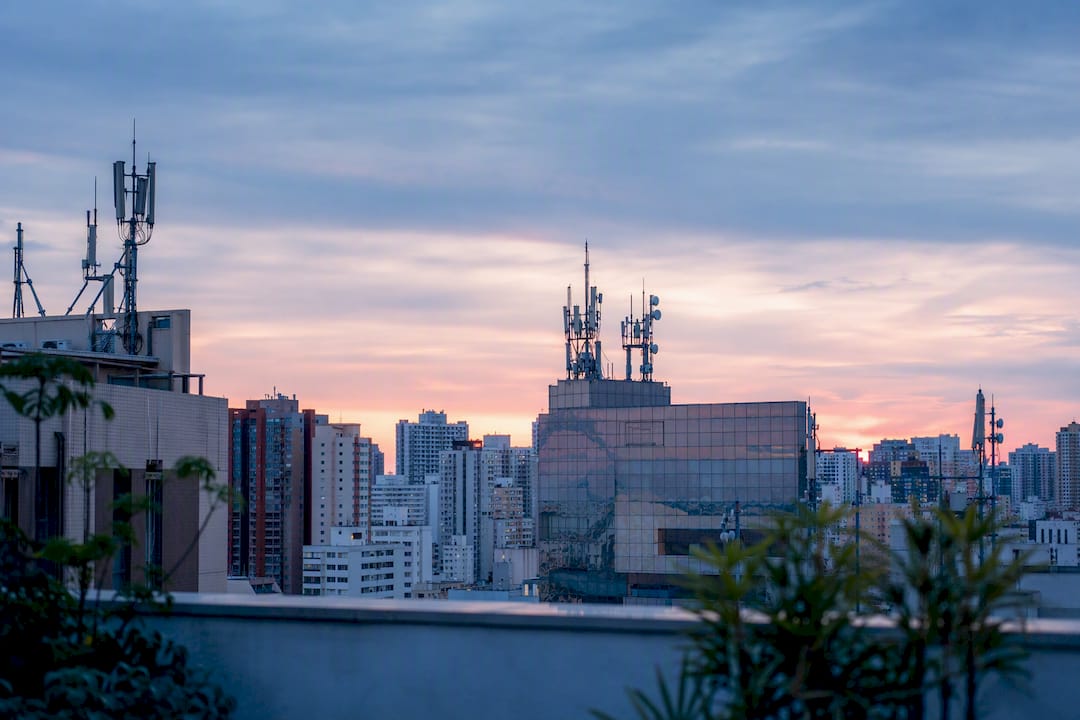
Coverage callout: 5G in Brazil remains concentrated in major urban centers rather than nationwide. If your trip includes remote stretches of the Amazon, the Pantanal, or rural interior towns, expect to fall back to 4G or even 3G speeds, and plan your offline maps accordingly.
Outside those metro corridors, expect the network to thin out. Coverage along coastal highways and in secondary cities is generally solid on 4G, but drop into the interior, deep into national parks, or along less-traveled stretches of highway and you’ll see more dead zones and slower fallback speeds. This isn’t unique to eSIMs. It’s simply the state of Brazilian rural infrastructure, and any SIM, physical or digital, on any of the three networks will hit the same gaps.
Before buying, it’s worth doing two quick checks:
- Look at the provider’s coverage map for Brazil specifically, not just a generic “South America” map, since network partnerships can vary by country even within the same eSIM brand.
- Ask (or check the FAQ) which of the three carriers powers the plan you’re considering, since Vivo generally has the strongest rural footprint while TIM and Claro tend to edge out in certain urban corridors.
If your itinerary is city-heavy, coverage differences between the three networks won’t matter much. If you’re headed into the Amazon basin or the Pantanal wetlands, it’s worth a few extra minutes of research before you commit to a plan.
Data-Only, Data+Voice, or Unlimited: Which Plan Type Fits?
Every Brazil eSIM on the market falls into one of three buckets, and picking the wrong one is the single most common regret travelers report after the fact.
Data-only plans are the default choice for most tourists, and for good reason. You keep your home number active on your physical SIM for calls and texts from family or your bank, while the eSIM handles all your data needs on Brazilian networks. A traveler spending ten days between Rio and São Paulo, relying on Maps, WhatsApp, and Instagram, is the textbook use case here.
Data+voice plans add a local Brazilian number capable of calls and SMS. These matter less often than people assume, but they matter a lot when they do. If you’re renting a car and the agency needs to reach you locally, or you’re setting up a Brazilian bank app that texts a verification code, a data-only plan simply won’t work. Business travelers meeting local contacts who expect a callback number fall into this category too.
Unlimited plans sound like the obvious best choice, but the fair-use policy attached to nearly all of them changes the calculation. A plan advertised as unlimited data often throttles speeds substantially after crossing a daily threshold, commonly in the low gigabyte range per day. For light users, that cap never gets touched and the plan genuinely feels unlimited. For anyone streaming video, making video calls, or hotspotting a laptop, that throttle hits fast and turns “unlimited” into “unlimited, but slow.”
A few quick scenarios to place yourself:
- Backpacking for two weeks, mostly maps and messaging: data-only, modest allowance.
- Business trip requiring a local callback number: data+voice.
- Month-long stay with heavy streaming and video calls: unlimited, but read the FUP threshold carefully first.
- Multi-country South America trip with Brazil as one stop: data-only, sized to just the Brazil leg.
If you’re still weighing an eSIM against a physical SIM card bought locally, this comparison of eSIM versus local SIM options breaks down the practical tradeoffs travelers run into.
Checking Your Phone and Activating Your eSIM Before You Land
Not every phone supports eSIM technology, and not every eSIM-capable phone is unlocked for it. Both things need to be true before you buy.
Most iPhones from the XS generation onward support eSIM, as do most flagship Android devices from Google, Samsung, and others released in the last several years. The catch is carrier locking: a phone bought on a US carrier contract may have eSIM hardware but remain locked against installing a second profile until you request an unlock. Check your device settings (typically under Settings > Cellular > Add eSIM, or the carrier’s own unlock request page) before you buy anything.
Once you’ve confirmed compatibility, activation follows a consistent sequence:
- Purchase the plan online and provide an email address for delivery. Most providers require nothing more than that; formal ID registration usually isn’t part of the tourist eSIM process.
- Receive your QR code or activation link by email, typically within minutes of checkout.
- Install the profile by scanning the QR code in your phone’s cellular settings, ideally while still on home Wi-Fi.
- Enable the cellular plan once you land in Brazil, and set it as your data line while keeping your home SIM as the primary line for calls and texts.
- Confirm data is flowing by opening a map or browser before you leave the arrivals area, so you catch any activation issue while you still have airport Wi-Fi as a backup.
If the QR scan fails, the most common culprits are a weak Wi-Fi signal during installation or attempting to install two eSIM profiles when your phone only supports one active alongside a physical SIM. Restarting the phone after installation, before you attempt to enable the line, resolves a surprising share of activation errors.
Pro Tip: Install the eSIM profile at home, but don’t enable the data line until you land. This way you’re not burning validity days sitting in a security line, and you’ve already ruled out any installation issues before you’re relying on airport Wi-Fi to troubleshoot.
For the full activation walkthrough with screenshots and troubleshooting steps, see this step-by-step guide to installing and activating an eSIM before traveling abroad.
Should You Buy Before You Go or Wait Until You Arrive?
Pre-ordering online beats waiting until you land, and the reason comes down to retail availability as much as convenience. Tourist-specific SIM cards are often limited or simply unavailable for purchase at major Brazilian airports, which means travelers who plan to “just grab one on arrival” frequently discover there’s nothing to grab.
Buying ahead solves this cleanly:
- You place your order from home, on reliable Wi-Fi, with time to fix any payment or delivery issue before you’re jet-lagged and navigating an unfamiliar arrivals hall.
- Delivery is instant by email in nearly all cases, requiring only an address and, occasionally, a phone number for order confirmation. Formal ID isn’t typically part of the process.
- You control exactly when the validity clock starts, since most plans activate on first use rather than at the moment of purchase.
Waiting until you’re in-country introduces variables you don’t control: airport kiosk stock, language barriers at a retail counter, or a limited selection that doesn’t match your data needs. If you’re connecting through a smaller regional airport rather than São Paulo’s Guarulhos or Rio’s Galeão, tourist SIM availability drops further still. None of that risk exists when the plan is already sitting in your inbox before you board.
Working Out the Real Cost: Price-Per-GB and Effective Daily Rate
Comparing eSIM offers by headline price alone is how travelers end up overpaying. The number that actually matters is price divided by data allowance, expressed as price-per-GB.
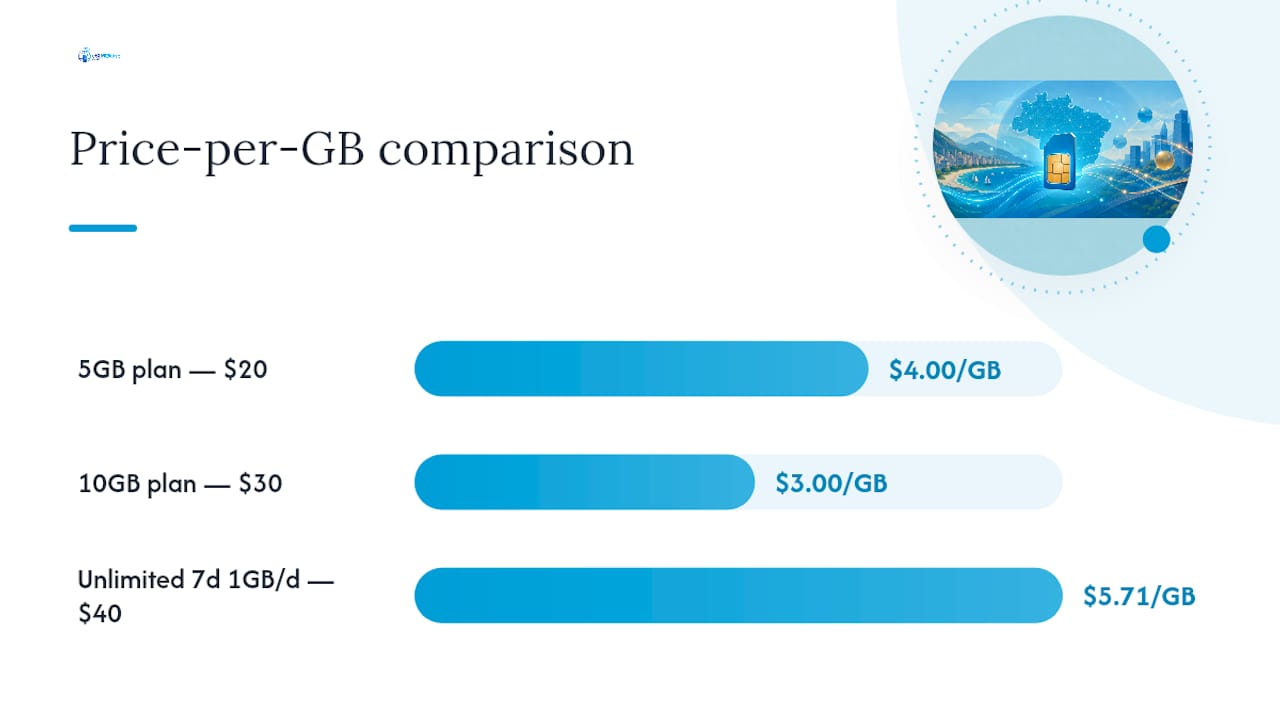
The math: Take the plan’s total price and divide it by the gigabytes included. A $20 plan with 5GB comes out to $4.00/GB. A $30 plan with 10GB comes out to $3.00/GB, the better value even though it costs more upfront.
That simple division changes how “unlimited” plans should be evaluated too. If an unlimited plan costs $40 for seven days but throttles you after 1GB/day of full speed, you’re effectively paying for roughly 7GB of usable full-speed data across the week, putting the real price-per-GB closer to $5.70. For a light user who never approaches that daily cap, the unlimited label delivers genuine value. For a heavy streamer, a large fixed-allowance plan at a lower price-per-GB is often the smarter buy.
Validity length factors into the real cost too. A 15-day plan you only use for 7 days effectively cost you double the per-day rate you calculated, since you paid for validity you never used. Always size the validity window to your actual trip length, not to whatever bundle looks like the best deal on paper.
Quick reference for running the math yourself:
- Price ÷ GB = price-per-GB (lower is better value for data-heavy trips)
- Price ÷ validity days = effective daily cost (useful for comparing short versus long plans)
- For unlimited plans: Price ÷ (FUP threshold × validity days) = realistic price-per-GB once throttling is accounted for
What EsimGlobe Offers Travelers Heading to Brazil
Esimglobe sells prepaid, data-only eSIM plans built specifically for Brazil, alongside plans covering more than 170 other countries for travelers whose itineraries don’t stop at one border. Every plan is delivered instantly by email after checkout, with no physical shipping delay and no in-store pickup required.
For travelers planning a shorter stay, the Brazil 100MB 7Days plan is built for exactly that window: a short trip where you need reliable connectivity without paying for data you’ll never use. Esimglobe’s checkout supports multiple currencies, so travelers booking from outside the US see pricing in their own currency rather than doing mental exchange-rate math at checkout.
Beyond the product pages, Esimglobe publishes a dedicated Brazil travel connectivity guide covering activation steps and network expectations in more depth than a typical product listing allows. That guide includes:
- Stepwise activation instructions matched to common phone models
- Guidance on which Brazilian network partners power each plan tier
- Validity and data allowance details for every listed plan
Support is available for activation issues once you’ve purchased, which matters more than it sounds. An eSIM that fails to activate on arrival, with no way to reach a real person, is worse than no eSIM at all.
What Brazilian Telecom Rules Mean for Your eSIM
Brazil’s telecom sector is regulated by Anatel, the national telecommunications agency, which oversees spectrum licensing and network operation for Vivo, TIM, Claro, and other carriers operating in the country. For tourists, this regulatory structure operates almost entirely behind the scenes: eSIM providers partnering with these networks handle compliance on the operator side, so you’re not filling out paperwork or registering with a government agency to use a prepaid data plan.
Where regulation does occasionally surface for travelers is around identity verification for local SIM purchases at retail counters, which is part of why physical prepaid SIMs can be harder for tourists to buy on the spot than eSIMs ordered online in advance. eSIM providers serving international travelers generally require only an email address for delivery, sidestepping the in-person ID checks that slow down retail SIM purchases.
None of this should be read as legal advice for anything beyond routine tourist data use. If your trip involves an extended stay, business registration, or anything beyond standard tourism, checking current Anatel guidance or consulting a telecom professional familiar with Brazilian regulations is worth the extra step. For the standard case of a traveler buying a prepaid data plan for a vacation or business trip, the process is designed to be frictionless by intent.
What I’ve Learned Testing eSIMs Across Multiple Brazil Trips
The single biggest mistake travelers make with Brazil eSIMs isn’t picking the wrong plan. It’s not testing the plan before they leave home.
Installing the profile is only half the job. Activate the data line for a few minutes while still on home Wi-Fi if your provider allows it, confirm the profile shows up correctly in your phone’s cellular settings, and only then consider yourself ready to travel. I’ve seen more connectivity headaches caused by a botched installation than by any actual coverage gap in Brazil itself.
Second, never let your eSIM become your only line. Keep your physical home SIM in the phone, even if it’s not your active data line, so you have a fallback for calls, banking apps tied to your home number, and emergency access if the eSIM profile has issues.
Third, if you’re extending your trip past your original plan’s validity, buy the add-on or renewal before your current plan actually expires. Providers make this easy, but travelers routinely wait until they’re already disconnected, which turns a two-minute task into a frustrating search for Wi-Fi.
I once watched a fellow traveler in Salvador spend forty minutes hunting for a café with Wi-Fi just to renew a data plan that had quietly expired the night before. A five-minute check before bed would have prevented all of it.
— daniele
Get Connected in Brazil Before You Land
Esimglobe is the direct route to Brazil connectivity without the airport scramble or roaming bill shock this guide just walked through. Every plan is prepaid, data-only, and delivered by email the moment you check out, with checkout available in your own currency so there’s no exchange-rate guessing at payment.
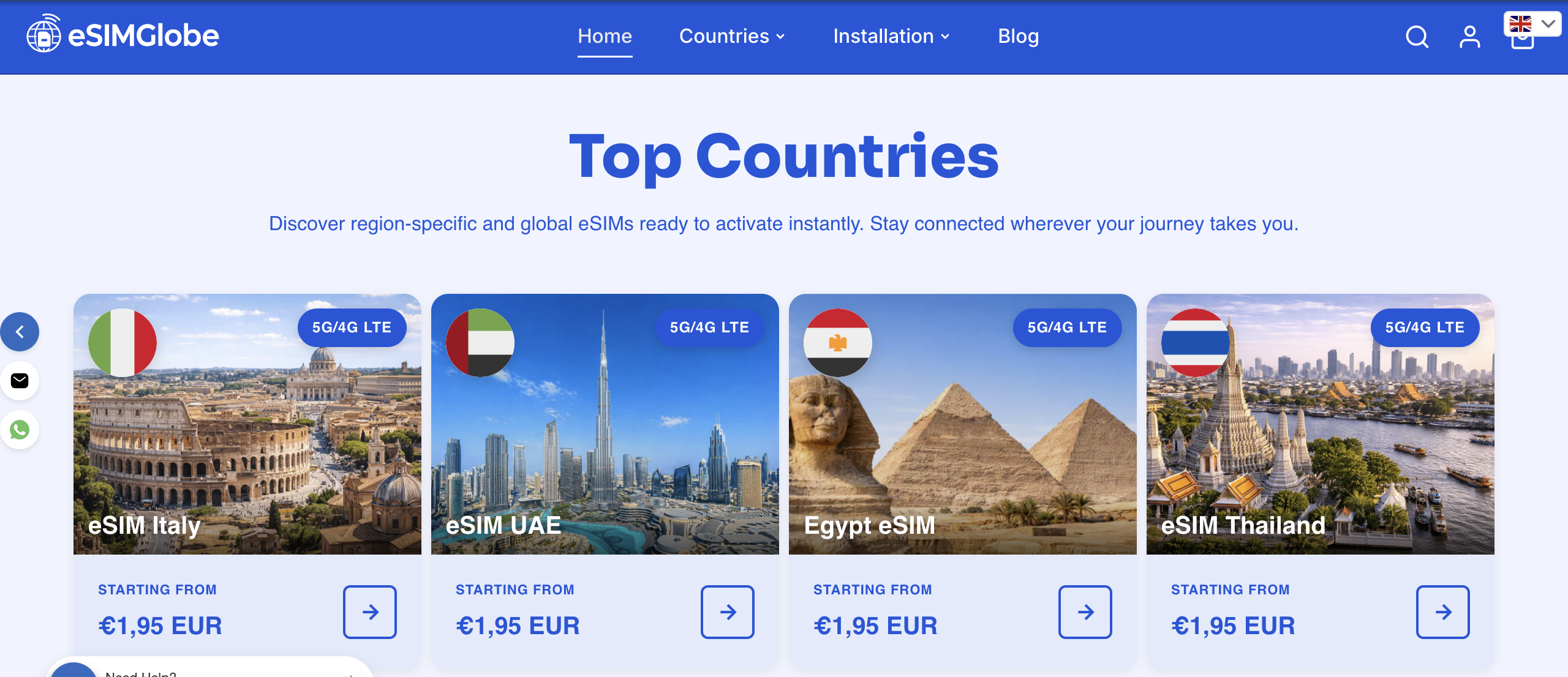
Getting connected takes three steps: pick your Brazil plan and data allowance based on your trip length, complete checkout and receive your QR code by email within minutes, then install the profile on Wi-Fi before you fly and activate it the moment you land. Support is available if activation hits a snag, so you’re never troubleshooting alone from an unfamiliar arrivals hall.
Head to Esimglobe to browse current Brazil plans and get your eSIM into your inbox before your flight boards.
Useful Sources for Coverage Maps and Setup Help
For deeper reading beyond this guide, a few pages are worth bookmarking before your trip:
- Esimglobe’s Brazil travel connectivity guide for activation steps and network partner details.
- The Brazil 100MB 7Days product page for exact pricing and validity on a short-stay plan.
- A guide to comparing eSIM plans internationally if you’re weighing Brazil against other destinations on a multi-country itinerary.
- Notes on convenience in business travel for how reliable mobile data supports smoother trip logistics overall.
FAQ
Which eSIM Is Best for Traveling to Brazil?
The best choice depends on your trip length and data needs, but a data-only plan sized to your exact itinerary, running on Vivo, TIM, or Claro, covers the vast majority of tourist use cases. Esimglobe’s Brazil plans are built specifically around short-stay and data-only needs.
What Is the $2,000 Rule in Brazil?
This refers to Brazil’s customs allowance for travelers bringing goods into the country, not to eSIMs or mobile data, so it has no bearing on eSIM purchases or activation.
Should I Get an eSIM for Brazil?
Yes, for most travelers an eSIM is the more convenient option since physical tourist SIMs are often hard to find at Brazilian airports, while eSIMs deliver instantly by email and activate the moment you land.
Do I Turn Off Roaming When Using an eSIM on My iPhone?
Keep data roaming off for your home SIM line to avoid roaming charges, but make sure it’s enabled specifically for your eSIM line so it can connect to Brazilian networks.