






















For most travelers, EsimGlobe’s Belarus eSIM is the strongest overall pick, thanks to its dual-network setup and same-day availability before you land. If you only need a couple of days of connectivity, a short-stay plan from a provider like Yesim covers the basics. If price per gigabyte matters more than anything else, GoMoWorld’s starter tiers are worth a look. The rest comes down to how long you’re staying and where you’re headed once you leave Minsk.
TL;DR:
- Dual-network eSIMs like EsimGlobe provide more reliable coverage outside Minsk, especially in rural or border areas where one network may drop out.
- Short-stay plans from providers like Yesim or GoMoWorld are cost-effective for trips under a week, but single-carrier plans risk losing signal once outside primary cities.
- Plans with larger data allowances, such as eTravelSim or AlpineSIM, are better suited for travelers with long stays or remote work needs, but most plans are configured for specific trip lengths.
- Activation testing before departure is crucial, as support quality varies, and identifying a plan that confirms coverage on actual routes avoids costly surprises.
- Most Belarus eSIMs are data-only and do not include voice or SMS services, so travelers requiring calls need to pair the eSIM with a physical SIM or additional service.
Table of Contents
- What Is the Best eSIM for Belarus Right Now?
- How the Nine Belarus eSIM Providers Actually Compare
- How to Choose an eSIM for Belarus
- Buying and Activating Your eSIM Before You Fly
- Why EsimGlobe Is the Reliable Choice for Belarus
- Matching Plan Length to Your Trip
- What Kind of Customer Support Can You Expect?
- Roaming Rules and Data Limits to Know Before You Travel
- How These Providers Handle Your Data and Privacy
- What Actually Matters When You’re Choosing an eSIM for Belarus
- Get Your Belarus eSIM Before You Land
- Sources for Pricing and Network Claims
- FAQ
What Is the Best eSIM for Belarus Right Now?
Nine providers show up consistently when travelers search for a Belarus eSIM: EsimGlobe, GoMoWorld, eTravelSim, GlobaleSIM, eSIMX, Yesim, AlpineSIM, Wiiline, and eSIM4Travel. They differ less on headline price and more on network access, plan length, and what happens when you drive outside Minsk.
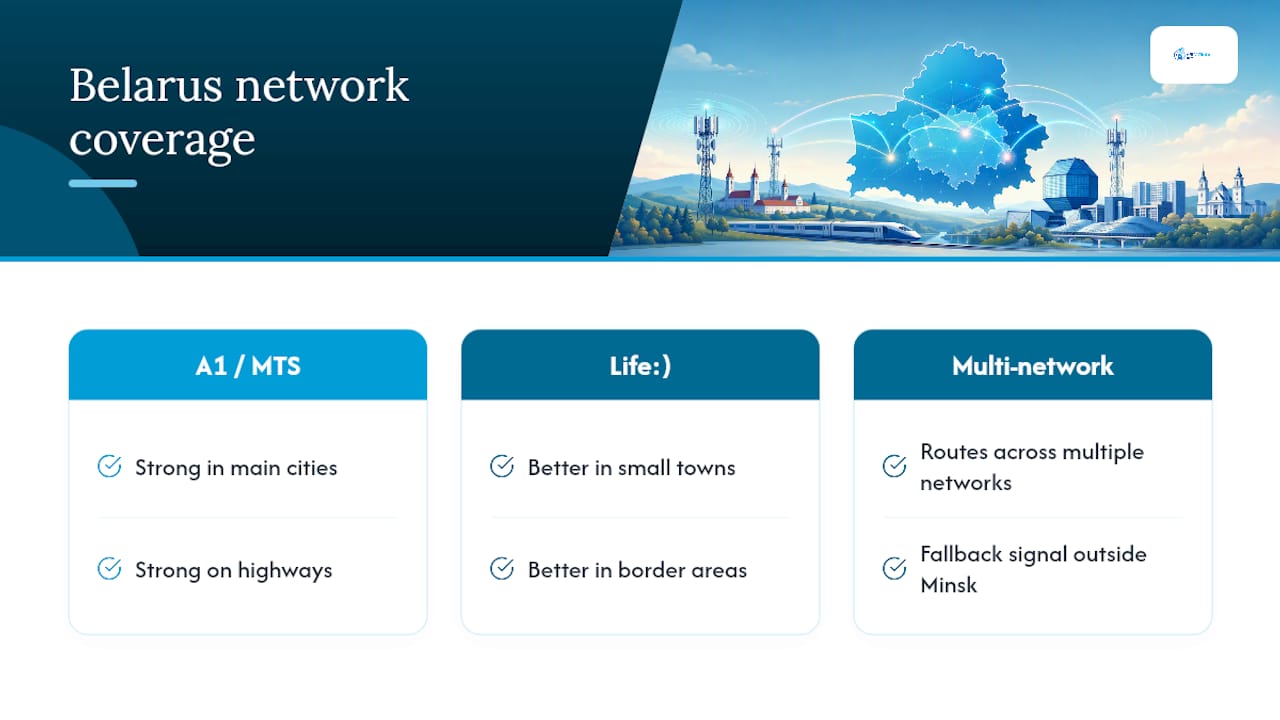
Belarus runs on three mobile networks: A1, MTS, and Life:). A1 and MTS cover the country’s main cities and highway corridors well, while Life:) tends to hold up better in smaller towns and border areas where the other two get patchy. Providers that route traffic across more than one of these networks give you a fallback signal instead of a dead zone, which matters more the moment you leave the capital.
A few quick takeaways: EsimGlobe is the one option built specifically around avoiding dead zones between cities. GoMoWorld wins on raw entry price if you’re only online for a couple of days. eTravelSim and AlpineSIM make sense if you’re burning through data fast. Most of these plans allow hotspot and tethering, but always check the individual plan page. Prices listed by most Belarus eSIM sellers already include tax, so the number you see at checkout is usually the number you pay.
How the Nine Belarus eSIM Providers Actually Compare
EsimGlobe
EsimGlobe’s Belarus product page lists a 1GB/7-day starter plan alongside larger tiers for longer stays, all delivered instantly by email so you can install before you fly. The plan runs across a dual-network setup covering A1 and MTS, which matters because a single-carrier eSIM can leave you without signal the moment you drive outside a city’s coverage radius. Most plans allow hotspot use, and EsimGlobe backs every purchase with 24/7 support. For a traveler who wants one plan that works reliably from Minsk to the highway to a smaller town, this is the safer bet.
GoMoWorld
GoMoWorld runs low-cost starter plans aimed squarely at short trips. If you’re in Belarus for a weekend or a quick business stop and don’t need much beyond maps and messaging, its pricing per gigabyte tends to beat most of the field. The tradeoff is that GoMoWorld’s Belarus plans typically run on a single carrier, so coverage outside major cities can be less consistent.
- One-liner: Cheapest way to get a few gigabytes for a short trip.
- Sample plan: Small starter tier, 3 to 7 day validity.
- Networks: Single carrier.
- Best for: Travelers on a tight budget staying under a week.
eTravelSim
eTravelSim leans into bigger data packages, with 20 to 30GB tiers built for travelers stringing together multiple cities or countries on one trip. That volume is overkill for a short Minsk visit but useful if Belarus is one stop on a longer regional itinerary.
- One-liner: Built for travelers who need a lot of data over multiple stops.
- Sample plan: 20 to 30GB packages, 15 to 30 day validity.
- Networks: Single carrier.
- Best for: Multi-city trips where Belarus is one leg among several.
GlobaleSIM
GlobaleSIM’s catalog spreads across a wide range of validity windows, from short trips to month-long stays, which makes it a reasonable option if you’re not yet sure how long you’ll be in the country. The breadth is the selling point rather than any single standout plan.
- One-liner: Good if you want options rather than one fixed plan length.
- Sample plan: Mid-tier data, 7 to 15 day validity.
- Networks: Single carrier.
- Best for: Travelers who haven’t locked in their exact trip length yet.
eSIMX
eSIMX sits in the middle of the pricing pack, with plans built around the 7 to 30 day window most business and leisure travelers actually need. Nothing about it is flashy, but the pricing is consistent enough that you’re unlikely to feel overcharged for what you get.
- One-liner: Predictable, no-surprises pricing for standard trip lengths.
- Sample plan: 5 to 10GB, 7 to 30 day validity.
- Networks: Single carrier.
- Best for: Visitors staying one to four weeks who want simple math on cost per day.
Yesim
Yesim offers some of the more flexible short-validity plans in the field, with activation flows designed to be quick. If your Belarus stop is only a few days, Yesim’s lineup gives you options without forcing you into a longer plan than you need.
- One-liner: Flexible lengths for travelers who don’t want to overbuy.
- Sample plan: 1 to 5GB, validity from 1 to 15 days.
- Networks: Single carrier.
- Best for: Short, defined trips where you know exactly how many days you need.
AlpineSIM
AlpineSIM stands out for heavier data users, with plans that push into unlimited-style tiers. Streaming, video calls, or working remotely for a stretch of the trip is where this pays off. Most travelers won’t need this much data. A typical week-long trip, covering maps, messaging, and occasional streaming, usually falls somewhere between 3 and 10GB, which makes AlpineSIM’s bigger tiers a niche pick rather than a default choice.
- One-liner: For travelers who genuinely burn through data fast.
- Sample plan: 10GB+ or unlimited-style tiers, 7 to 30 day validity.
- Networks: Single carrier.
- Best for: Remote workers or heavy streamers.
Wiiline
Wiiline focuses on local carrier connectivity for short trips centered on major cities. If your entire itinerary is Minsk and maybe one nearby city, Wiiline’s local access can work fine. It’s less suited to travelers planning to drive across the country or visit smaller towns, since its plans are built around city-level use rather than rural fallback.
- One-liner: Solid for a city-only itinerary, less so for road trips.
- Sample plan: 1 to 5GB, 3 to 10 day validity.
- Networks: Local carrier access.
- Best for: Short trips that stay within major city limits.
eSIM4Travel
eSIM4Travel mixes single-country Belarus plans with regional bundles and runs promotional pricing more often than most competitors. If you’re flexible on timing and willing to watch for a deal, this is worth checking before you commit elsewhere.
- One-liner: Best watched for a promo before you book anything else.
- Sample plan: Varies by promotion, 7 to 30 day validity.
- Networks: Single or regional carrier mix.
- Best for: Deal hunters and travelers who also need regional coverage beyond Belarus.
How to Choose an eSIM for Belarus
Picking the right plan comes down to five practical questions, not brand names.
- Which networks does the plan actually route through? Ask specifically whether it touches A1, MTS, or Life:). A single-carrier plan is fine for a Minsk-only trip; a multi-network plan is the safer call if you’re driving between cities.
- Does the validity window match your trip, not just your budget? A 7-day plan for a 10-day trip forces a mid-trip top-up, which is more expensive than buying the right length up front.
- Is the price flat or per gigabyte? Compare cost per GB across similar validity windows, not just the sticker price.
- Is hotspot or tethering included? Some plans throttle or block tethering entirely, which matters if you’re sharing data with a travel companion.
- What’s the refund and activation policy? Look for a plan that lets you activate and test before your departure date, so a dead SIM doesn’t surprise you at the airport.
Before buying, run through this quick checklist with any vendor’s support chat or FAQ page: Does the plan cover Life:) as well as A1/MTS? Is tethering explicitly allowed? What happens if the eSIM fails to activate, do you get a refund or a replacement? Is there a data cap that throttles speed after a threshold, or is it a hard cutoff?
Three red flags to avoid: a plan with no stated network list at all, a “unlimited” plan with unusually low pricing and no throttling disclosure, and a provider with no visible refund policy anywhere on the purchase page.
Pro Tip: Buy and activate a small plan a few days before you fly. It’s a cheap way to confirm your phone accepts the eSIM and the APN settings work correctly, before you’re relying on it at the airport.
Buying and Activating Your eSIM Before You Fly
Before buying anything, confirm your device supports eSIM at all. Most iPhones from the XS generation onward, most Pixel phones from the 3 onward, and recent Samsung Galaxy S and Note models all support it, but check your specific model and confirm your phone is carrier-unlocked.
The purchase and activation flow is largely the same across providers:
- Buy the plan online and receive a QR code or activation code by email.
- Install the eSIM profile through your phone’s cellular settings before you leave home.
- Turn on data roaming for the new eSIM profile once installed.
- Run a quick data test on home Wi-Fi to confirm the profile is active and working.
- Leave your physical SIM’s roaming off so you don’t get hit with accidental charges once you land.
If the eSIM doesn’t connect, check for a manual network selection option in your phone’s settings. Sometimes automatic network selection picks the wrong local carrier. If you’re stuck at the QR/OTP step, confirm the code hasn’t already been redeemed. Most providers, including EsimGlobe, only allow one activation per code.
Why EsimGlobe Is the Reliable Choice for Belarus
EsimGlobe’s Belarus 1GB 7-day eSIM is built around one core idea: a single dead carrier shouldn’t mean a dead trip. Its dual-network approach spreads your connection across A1 and MTS, so if one network drops out near a border town or a rural stretch, the other picks up the slack.
Dual-network access is the practical difference between a plan that works in Minsk and one that keeps working once you’re on the highway to Brest or Grodno.
Beyond the Belarus product itself, the platform offers a few structural advantages worth noting:
- A country selector covering 170+ destinations, so the same purchase flow works for your next trip too.
- Multiple currency and language options at checkout.
- 24/7 customer support for activation issues.
- Telecom-grade security on every plan.
The Belarus product page and dual-network explainer lay out exactly which networks the plan uses and why that matters for travelers heading beyond the capital.
Matching Plan Length to Your Trip
A weekend trip to Minsk and a month working remotely from Belarus need completely different plans, and buying the wrong length is the most common way travelers overpay.
For a 1 to 7 day trip, a small starter plan (1 to 3GB) covers navigation, messaging, and light browsing. This is where Yesim’s short-validity options or EsimGlobe’s 1GB/7-day plan both make sense. There’s little reason to buy more data than a short trip will actually use.
For 7 to 30 days, most travelers land in the 3 to 10GB range for a typical week, scaled up proportionally for longer stays. eSIMX and GlobaleSIM both build plans specifically around this window, and it’s the range where the price-per-GB math starts mattering more than raw plan cost.
For long-stay or digital nomad trips, past a month, eTravelSim’s larger 20 to 30GB packages or AlpineSIM’s higher-volume tiers make more sense, especially if you’re also handling video calls or remote work. Buying a large one-time plan is usually cheaper than repeatedly topping up a small one.
One practical note borrowed from business travel patterns: travelers who prioritize convenience over cost tend to consistently underestimate how much data video calls and navigation apps use on the road. If work calls are part of your itinerary, size up a tier from what you think you’ll need.
What Kind of Customer Support Can You Expect?
Support quality varies more across these providers than most comparison charts admit. EsimGlobe offers 24/7 support, which matters most in the first hour after you activate a plan, when installation problems are most likely to surface. Several of the other providers in this list offer support primarily through email ticketing or chatbots, with slower response windows and less availability outside standard business hours.
Language support is worth checking before you buy, not after something breaks. If your first language isn’t English, confirm the provider’s support channel actually offers it. Smaller providers in this space sometimes support only English or one or two major languages, which can turn a minor activation hiccup into a frustrating wait if you’re not fluent in whatever language their support team defaults to.
A support channel’s speed matters more than its channel type. A live chat that takes six hours to respond isn’t meaningfully better than an email ticket. Before buying, look for a stated response time or hours of availability on the provider’s support page rather than assuming “24/7” language applies uniformly.
Roaming Rules and Data Limits to Know Before You Travel
An eSIM for Belarus is data-only in almost every case across this list, meaning you get internet access but not a local phone number for calls or SMS. If you need a Belarusian number for calls, you’ll likely need a physical SIM in addition to your eSIM, or a service that specifically states voice and SMS support.
Most plans are sold as a fixed data allowance with a hard cutoff. Once you hit your GB limit, the connection typically stops rather than throttling down to a slower speed, though a handful of providers advertise throttled “unlimited” tiers that slow speeds after a threshold instead of cutting off entirely. Read the fine print on any plan labeled unlimited. It usually means capped-then-throttled, not truly limitless.
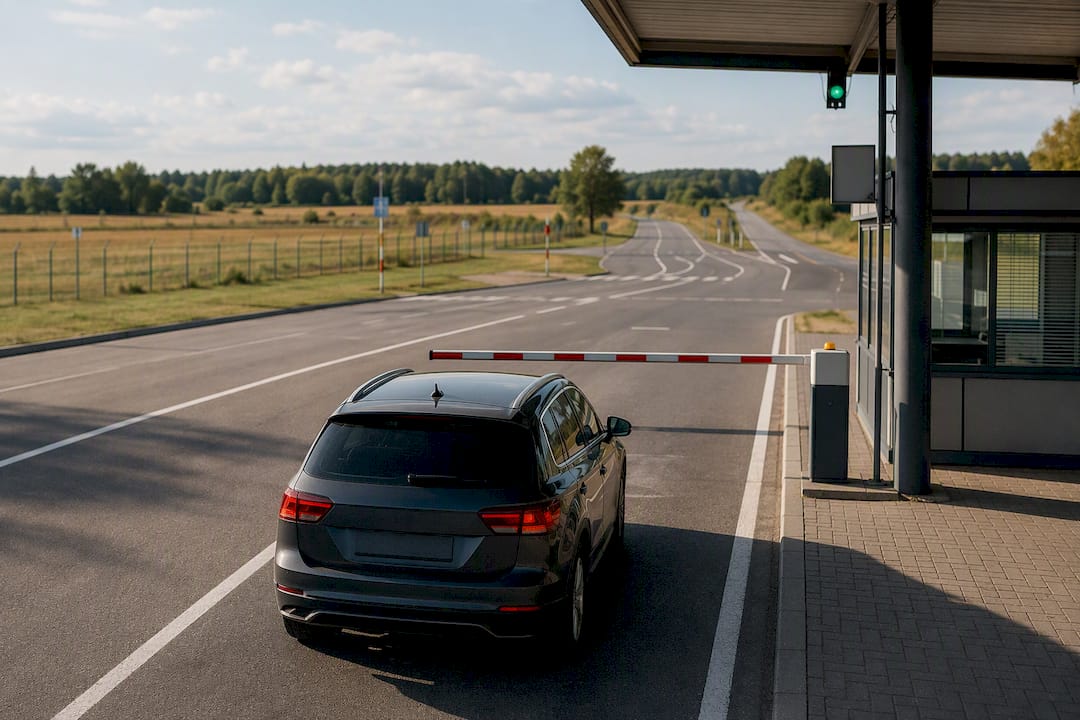
Roaming permissions matter if your trip includes a border crossing. A plan sold specifically for Belarus generally won’t carry data once you cross into a neighboring country, even briefly. If your itinerary includes a side trip, check whether the plan includes any regional roaming allowance or whether you’ll need a separate regional eSIM for that leg.
How These Providers Handle Your Data and Privacy
eSIM providers process your payment details, device information, and usage data to activate and maintain your connection, so their privacy practices are worth a glance before you buy, not after.
EsimGlobe states telecom-grade security across its platform and process, covering payment handling and account data. As with any provider in this category, the practical privacy questions worth asking are the same regardless of brand: does the provider state how long it retains your usage data, does it share data with third parties beyond what’s needed to deliver the service, and does checkout run over a secure, encrypted connection.
Because most of these plans are data-only and don’t require a local phone number, the privacy footprint tends to be smaller than a full mobile contract. Still, it’s worth checking each provider’s stated policy directly on their site before checkout rather than assuming all providers in this space handle data the same way.
What Actually Matters When You’re Choosing an eSIM for Belarus
The conventional advice on this topic obsesses over price per gigabyte, and that’s the wrong first filter. Data is cheap enough across this entire category that shaving a dollar or two off a plan rarely changes your trip. What changes your trip is whether your connection survives the drive from Minsk to a smaller town, and that comes down to network access, not price.
Most comparison guides treat all nine providers as interchangeable data pipes and rank them by cost alone. That’s a mistake for anyone leaving the capital. A single-carrier plan on A1 works fine in Minsk and falls apart the moment you’re somewhere MTS or Life:) has better local coverage. Dual-network access isn’t a marketing flourish. It’s the difference between a plan that quietly keeps working and one that leaves you checking your phone’s signal bars on the side of a highway.
If you take one thing from this comparison, test your plan before you fly. Activation problems are far more common than network problems, and a few dollars spent on a small starter plan a week before departure will save you a frustrating arrival.
— daniele
Get Your Belarus eSIM Before You Land
Skip the airport SIM kiosk line entirely. EsimGlobe delivers your Belarus eSIM by email the moment you check out, so you can install it before your flight and land already connected across a dual-network setup covering A1 and MTS.
Before you buy, run through this quick list: confirm your device is eSIM-compatible and carrier-unlocked, have an email account handy to receive your activation code, plan to turn off your physical SIM’s roaming once you land, and test the connection on Wi-Fi before you leave home. EsimGlobe backs every plan with 24/7 support if anything doesn’t activate cleanly.
Head to the Belarus eSIM product page to pick a data tier that matches your trip length, from a quick 1GB/7-day starter to a larger package for a longer stay, and get your activation code sent straight to your inbox.
Sources for Pricing and Network Claims
- Monito’s Belarus eSIM index compares 142 plans and provides daily cost benchmarks used for the pricing context in this comparison
- AndreonDigital’s network analysis maps A1, MTS, and Life:) coverage and explains why dual-network access matters for rural and multi-city travel
- esims.io’s Belarus listing catalogs hundreds of plans across providers, supporting the price and plan-breadth ranges cited above
FAQ
Is there a better eSIM than Airalo for Belarus?
EsimGlobe’s Belarus plan offers dual-network access across A1 and MTS, which gives more reliable coverage outside major cities than a typical single-carrier plan.
Which eSIM works best in Russia?
Network requirements differ by country, and a plan built for Belarus’s A1/MTS/Life:) setup won’t automatically carry the same coverage logic into Russia, so check a Russia-specific plan’s network list separately.
What is the best eSIM for all countries?
No single eSIM plan works everywhere. Most providers, including EsimGlobe, sell country-specific and regional plans, so the “best” option depends on covering the specific destinations on your itinerary.
Which is the most reliable eSIM for Europe?
Reliability in Europe usually comes down to the same factor as Belarus: multi-network access versus single-carrier routing. A regional or country-specific eSIM with documented multi-network coverage tends to hold up better across borders and rural stretches.
Do Belarus eSIMs include a phone number for calls or texts?
Most Belarus eSIM plans, including the ones compared here, are data-only and don’t include a phone number for calls or SMS. Travelers needing voice service typically pair the eSIM with a physical SIM or a separate voice plan.