






















An Oman eSIM activating before you land and running on local mobile networks can help travelers skip the airport SIM counter entirely. It works best for trips under a month; if you’re staying longer than 30 days or chasing the lowest possible price per gigabyte, a local Omantel or Ooredoo SIM usually wins. Either way, check the Oman eSIM product page before you fly.
TL;DR:
- For trips shorter than a week, an eSIM offers convenience and often costs only a few dollars more than local SIMs, making it the best choice.
- Trips lasting 11 days or longer become more cost-effective with local SIMs or regional plans because fixed-data eSIM packages can become expensive over extended periods.
- Activation of an eSIM is instant and simple via email QR code, but user support quality and refund policies vary across providers, making these factors crucial.
- Oman’s mobile networks provide extensive coverage, with Omantel leading in reach outside cities and Ooredoo excelling in urban speed and reliability.
- Prices for Oman eSIMs range roughly from $4.50 for 1GB to over $39 for unlimited 30-day plans, but verifying current rates before purchase is essential.
Table of Contents
- Best eSIM for Oman: Matching eSIMGlobe Plans to Your Trip
- How Do You Choose the Right eSIM for Oman?
- What Network Coverage Can You Expect in Oman?
- What Does an Oman eSIM Actually Cost?
- How Do You Activate an eSIM Before Landing in Oman?
- Why Trust EsimGlobe for Oman Connectivity
- Short Trip or Long Stay: Which Costs Less?
- What’s the Full Cost of an Oman eSIM, Fees Included?
- How Long Does an Oman eSIM Last, and When Should You Buy It?
- Will Your Phone Actually Work With an Oman eSIM?
- What Support Can You Expect If Something Goes Wrong?
- Ready to Buy Your Oman eSIM
- When Convenience Beats Cost, and When It Doesn’t
- Sources Behind This Guide
- FAQ
Best eSIM for Oman: Matching eSIMGlobe Plans to Your Trip
Oman doesn’t demand one universal SIM, a concept explored for remote spots on Dakhla. It demands the right plan for the trip you’re actually taking, and eSIMGlobe’s catalog splits cleanly along those lines.
For a standard visit, whether it’s a week in Muscat or a ten-day loop through Nizwa and the Wahiba Sands, the dedicated Oman eSIM is the direct answer to “best eSIM for Oman.” It’s a data-only profile built for exactly this trip length, and because it’s delivered digitally, there’s no queue, no passport photocopy, no kiosk line at Muscat International.
If your itinerary spills into neighboring Gulf states (a common pattern for travelers combining Oman with the UAE or Qatar), the eSIM GCC plan covers that multi-country movement without forcing you to buy a second profile at each border. And for travelers whose Oman leg is one stop on a longer international run, the eSIM Global (130+ areas) option acts as a fallback that keeps working after you leave the Arabian Peninsula.
What makes any of this practical rather than theoretical comes down to a few functional details:
- Delivery is instant, sent by email, so you can buy and install a plan from a hotel room in a different country the night before you fly.
- Activation runs on a QR code, no store visit and no carrier staff required.
- Checkout supports multiple currencies, which matters if you’re comparing prices while still budgeting in your home currency.
- Support runs 24/7, useful if you land at 2 a.m. and something doesn’t connect on the first try.
None of that changes the type of traveler each plan suits. Short-stay visitors want the Oman-specific plan. Heavy data users streaming or hotspotting for a laptop should look at the unlimited-plan collection rather than stretching a fixed-data package thin. Multi-country Gulf travelers want the GCC option.
Pro Tip: If you’re landing late at night and need maps and messaging apps working the second you clear immigration, install the eSIM at your last stable Wi-Fi source before boarding. Activating it fresh on unreliable airport Wi-Fi is the single most common reason travelers arrive offline.
How Do You Choose the Right eSIM for Oman?
The decision comes down to three variables: how long you’re staying, how much data you’ll actually use, and how much friction you’re willing to tolerate on arrival.
- Trips of 1 to 3 days. A small fixed-data eSIM plan almost always beats a local SIM here. You won’t use enough data to make a per-gigabyte discount matter, and the time saved skipping a kiosk line is worth more than the few dollars you might save.
- Trips of 4 to 10 days. This is where eSIM convenience and local SIM pricing sit closest together. A mid-size data package is usually enough for maps, messaging, and moderate social media use without paying for data you won’t touch.
- Trips of 11 to 30+ days. Longer stays shift the math toward local SIMs or eSIMGlobe’s regional and unlimited options, since fixed-data eSIM plans get expensive fast when stretched across weeks.
Unlimited plans earn their price when you’re tethering a laptop, running navigation constantly across long desert drives, or traveling with someone who shares your hotspot. If you’re just checking messages and pulling up a map twice a day, a fixed allotment is usually enough.
Before buying any eSIM for Oman, confirm three things: that it lists an Omani carrier partnership rather than a generic regional label, that the validity window actually matches your trip dates, and that a fair-use policy or throttling threshold isn’t buried in fine print. Also check whether top-ups are available if you underestimate your usage, and whether the provider offers a refund if the network genuinely fails to connect.
Ask yourself three questions before checkout: How many days am I actually online? Do I need one device covered or several? And am I paying for convenience, or am I paying for data I won’t use?

What Network Coverage Can You Expect in Oman?
Oman’s mobile infrastructure is stronger than most travelers assume. That’s not a patchy rollout limited to Muscat. It’s close to blanket coverage across a country the size of Oman.
Opensignal’s January 2026 mobile network report on Oman found the country’s three operators each lead in different areas rather than one carrier dominating everything:
- Omantel tends to win on overall coverage reach, particularly outside major cities.
- Ooredoo tends to post the strongest download speeds and reliability scores in urban areas.
- Vodafone performs well on upload speed and video streaming experience.
Coverage snapshot: Oman has achieved near-universal 4G coverage and extensive 5G availability nationwide as of early 2026, following the full phase-out of its 3G network.
Because travel eSIMs ride on these same local networks rather than some separate infrastructure, your connection quality in Muscat, Salalah, or along the coastal highways mirrors what Omani residents get on a standard local SIM. Nizwa and the main highway corridors carry solid signal. Jebel Shams and the deeper stretches of the Wahiba Sands are a different story: mountainous terrain and remote desert routes still carry weaker or absent signal in pockets, 5G availability included.
Download offline maps before you head into the interior. A great connectivity statistic in Muscat doesn’t help you if you’re navigating a dirt track outside cell range an hour later.

What Does an Oman eSIM Actually Cost?
Reported eSIM pricing for Oman covers a spectrum from affordable small data packages to premium unlimited 30-day plans on some providers. Local tourist SIMs from Ooredoo and Omantel, sold at airport kiosks and retail branches, often undercut that on a straight per-gigabyte basis, particularly on their 15-day and 30-day bundles aimed at long-stay visitors.
The rule of thumb travel guides consistently land on: for short trips, eSIM convenience is usually worth the $2 to $5 premium over a local SIM. You’re not standing in a queue, you’re not handing over a passport for registration, and you’re online the moment you land. For trips stretching a month or more, that convenience premium compounds across weeks and a local SIM typically pencils out cheaper per gigabyte.
- A 3-day trip using 2GB total makes the price difference between eSIM and local SIM almost irrelevant, maybe a couple of dollars.
- A 10-day trip using 8 to 10GB starts to show a real gap, though the eSIM’s time savings still often justify it.
- A 30-day trip using 20GB or more is where a local tourist SIM’s bulk pricing usually pulls ahead on pure cost.
Price range check: Reported Oman eSIM pricing runs roughly $4.50 for 1GB up to $39-plus for a 30-day unlimited plan, depending on provider and data cap.
Prices shift with demand and provider updates, so treat any number here as a planning estimate rather than a quote. Verify the current figure on the Oman eSIM product page before you buy, since listed rates change more often than travel guides get updated.
How Do You Activate an eSIM Before Landing in Oman?
Getting online the moment you land takes about ten minutes of setup before you ever board your flight.
- Confirm your phone supports eSIM. Most flagship phones from the last several years do, but check your specific model before buying anything.
- Buy the plan and receive your QR code by email, typically within moments of checkout.
- Connect to stable home Wi-Fi, not airport Wi-Fi, and add the eSIM through your phone’s cellular settings by scanning the code.
- Set the new eSIM as your data line while keeping your regular number for calls and texts if you’re using dual SIM.
- Reboot your phone, then confirm the connection shows data activity while still on Wi-Fi.
If data doesn’t connect the moment you land, try manually selecting the network in your cellular settings rather than waiting for automatic selection, and toggle airplane mode off and back on. If that doesn’t resolve it, 24/7 support channels exist for exactly this scenario.
Pro Tip: Install and test your eSIM at home, days before departure, not the night before. That gives you time to contact support if something’s wrong, instead of troubleshooting from an airport lounge.
Travelers who go the local SIM route instead should expect passport-based registration at the kiosk, a process most airport counters in Oman handle in a few minutes but that still adds a line to stand in.
Why Trust EsimGlobe for Oman Connectivity
Some providers run prepaid, data-only eSIM plans across many countries, delivered instantly by email with no physical SIM to mail or misplace. Checkout may support multiple currencies, and some offer support 24/7, which matters when troubleshooting from a time zone that doesn’t match the provider’s business hours.
That structure holds up specifically for Oman travel because the country’s networks are stable and well-covered enough that an eSIM riding on Omantel, Ooredoo, or Vodafone infrastructure performs close to what a local resident experiences, not a degraded traveler-only version of it.
You can verify current plan details, pricing, and coverage claims directly on the Oman eSIM product page and the site’s broader Oman travel guide, both of which list specifics rather than marketing generalities:
- Plan validity windows stated per product, not buried in fine print.
- Data caps and unlimited options separated clearly by traveler need.
- Support access available around the clock, not limited to business hours in one time zone.
Short Trip or Long Stay: Which Costs Less?
Trip length is the single biggest factor in whether an eSIM or a local SIM makes better financial sense in Oman.
For anything under two weeks, the math tilts firmly toward convenience. You’re not using enough data for a local SIM’s better per-gigabyte rate to outweigh the time cost of finding a kiosk, registering with your passport, and waiting for activation. A short-stay eSIM buyer is usually optimizing for being online in the first ten minutes after landing, not for shaving a dollar off a data package.
Past the two-week mark, the equation shifts. Omani tourist SIM bundles built for longer stays, particularly Ooredoo’s and Omantel’s 15-day and 30-day packages, are priced with the long-haul traveler in mind. They bundle larger data allowances at a lower blended rate than most fixed-term eSIM plans, because local operators are competing on Oman-specific pricing rather than a global average.
There’s a middle case worth naming directly: travelers on a 10 to 14 day trip who are also visiting a second Gulf country. In that scenario, a regional plan often beats buying two separate local SIMs, since you avoid a second registration process at a second border and pay for connectivity as one continuous block instead of two disconnected purchases.
The practical test isn’t “which is cheaper in theory.” It’s whether you can put a number on your expected data use per day and multiply it out for your actual trip length. Most travelers overestimate how much data they’ll burn on a moderate sightseeing trip and end up overpaying for capacity they never touch.
What’s the Full Cost of an Oman eSIM, Fees Included?
The advertised price on an eSIM listing is usually the whole story, which is part of what makes eSIMs simpler to budget than they first appear.
A data-only eSIM plan has no activation fee, no SIM card deposit, and no registration charge, since there’s no physical card to issue and no in-person paperwork to process. What you pay at checkout is what you get: a fixed data allowance for a fixed validity window, in the currency you select.
Where costs can creep up is usage beyond your plan’s allowance. If you burn through your data cap early, refer to the plan’s top-up options rather than assuming automatic overage charges. Some regional and unlimited packages also carry a fair-use threshold, a point past which speeds may throttle even though the plan is technically “unlimited.” That detail is worth reading on the product page before you buy, especially if you’re planning to hotspot a laptop for work.
Local Omani SIMs carry a slightly different cost structure. The card itself sometimes has a small nominal charge on top of the data bundle, and some kiosks add a short registration step that costs time rather than money. Neither is a large sum, but it’s a variable an eSIM buyer simply doesn’t encounter.
The one line item every buyer should check regardless of provider is the refund policy tied to network failure. A provider standing behind its connectivity claim with a genuine refund path is a meaningfully different offer than one that simply sells you the plan and moves on.
How Long Does an Oman eSIM Last, and When Should You Buy It?
Validity windows vary by plan, so match the number of days listed against your actual trip length rather than assuming a standard 30-day default applies everywhere. A plan built for a 7-day visit won’t stretch cleanly across a 20-day one, and buying a longer window than you need just means paying for days you won’t use.
Buy your eSIM in the days before departure, not weeks in advance. Because activation is instant and digital, there’s no shipping lag to plan around the way there is with a physical SIM. Most travelers buy 24 to 72 hours before their flight, giving themselves enough runway to install the profile on stable home Wi-Fi and confirm it works before they’re relying on it at an airport.
One detail that trips people up: some eSIM validity periods start counting down from the moment of installation, not from your actual arrival date. Read the specific plan’s terms so you don’t accidentally burn several days of validity while still packing at home. If you’re not certain your travel dates are locked, it’s usually smarter to wait a day or two closer to departure than to activate too early and watch the clock start before you’ve left the house.
Will Your Phone Actually Work With an Oman eSIM?
Compatibility comes down to your specific device, not your carrier or your home country. Most iPhones from the XS generation onward support eSIM, as do most recent Samsung Galaxy, Google Pixel, and several other Android flagship models. Budget and older Android devices are the more common gap, since eSIM support has rolled out unevenly across manufacturers and price tiers.
Two checks matter before you buy. First, confirm your specific model and its software version support eSIM. This is listed in your phone’s settings under cellular or mobile data options, usually as an option to “add eSIM” or “add cellular plan.” Second, confirm your phone is carrier-unlocked. A device still locked to a home carrier can block a second eSIM profile from activating even on hardware that technically supports the feature.
Dual SIM handling is worth understanding too. Most modern phones let you run your home number on one line for calls and texts while the Oman eSIM handles data, which is exactly how most travelers want it set up, keeping their regular number reachable without paying roaming rates on it.
If your device doesn’t support eSIM at all, that’s the clear signal to buy a local Omantel or Ooredoo SIM at the airport instead. There’s no workaround for hardware that lacks the feature, and no amount of plan comparison changes that constraint.
What Support Can You Expect If Something Goes Wrong?
Support quality separates a good eSIM provider from a frustrating one, particularly for travelers troubleshooting from a time zone that doesn’t align with a provider’s home office hours.
Some eSIM providers offer support around the clock, which matters specifically for Oman travel given the time difference most international visitors are working across. Landing at 3 a.m. local time and needing help with activation isn’t a scenario where “we’ll respond during business hours” is an acceptable answer, and it’s part of why a 24/7 support model is worth weighing when you’re comparing providers.
Refund policies are the other piece worth checking before you buy, not after something goes wrong. A provider that stands behind its network claim with a genuine refund path if the connection simply fails is offering something meaningfully different from one that treats the sale as final regardless of outcome. Read the specific refund terms on the product page rather than assuming they match what you’ve seen from other providers or other countries.
Local Omani SIM providers, sold through carrier-branded kiosks, generally offer in-person support at their retail locations, which works well if you’re near a branch but adds a physical dependency an eSIM buyer doesn’t have. If your issue happens on a highway outside Nizwa rather than at a Muscat storefront, digital support with no location dependency is the more resilient option.
Ready to Buy Your Oman eSIM
eSIMGlobe skips the part of Oman travel prep that actually wastes time: standing at an airport SIM counter with your passport out while your ride waits. Every plan is delivered by email, activated through a QR code, and checked out in the currency you’re already thinking in.
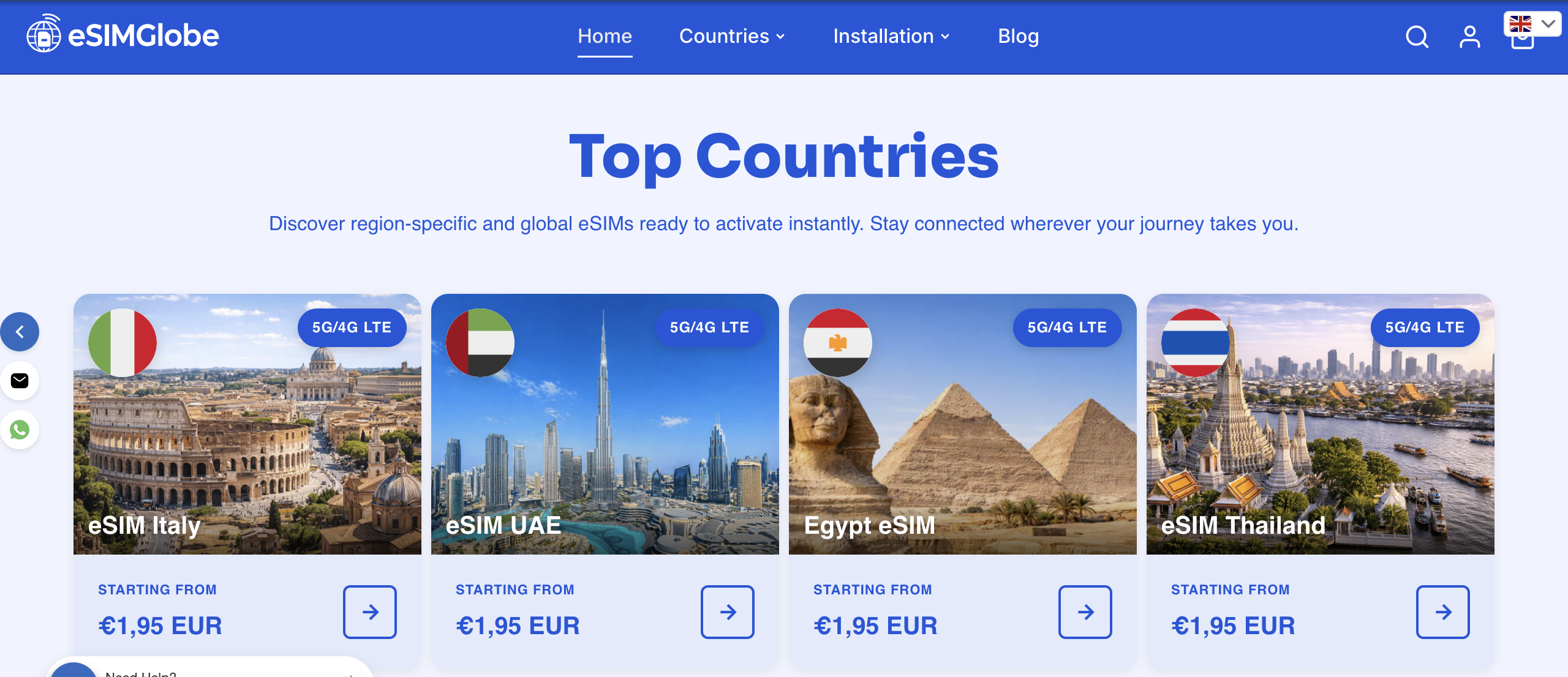
For a standard Oman trip, the Oman eSIM product page is the direct starting point. Buying and activating takes three moves: select your data package and pay, receive the QR code by email, and scan it into your phone’s cellular settings while still on home Wi-Fi. If your itinerary extends into neighboring Gulf countries, the eSIM GCC plan covers that broader footprint without a second purchase at each border, and travelers continuing on to other regions afterward can fall back on the eSIM Global (130+ areas) option to keep the same connection running past Oman.
Whichever plan you pick, check the listed validity window against your actual trip dates before you activate, and keep in mind that support runs 24/7 if anything doesn’t connect the moment you land. Buy it a day or two before departure, install it at home, and you’ll clear Muscat immigration already online.
When Convenience Beats Cost, and When It Doesn’t
Most travelers overthink this decision. If your Oman trip runs under two weeks, buy the eSIM before you leave and stop deliberating. The time you save skipping a kiosk line and the certainty of being online the moment you land are worth more than the few dollars a local SIM might save you on a short trip.
Where it gets genuinely worth a pause is the long-stay case, a month or more in Oman, or a multi-country Gulf itinerary where you’re weighing a regional plan against buying local SIMs at each border. That’s the scenario where I’d actually run the numbers on data usage per day rather than defaulting to whichever option feels easier.
For late arrivals or a multi-stop Gulf trip, buy the eSIM that covers your entire route as one plan rather than juggling separate local purchases at each stop; the registration friction alone at a second or third border rarely pays for itself in savings.
For the large majority of visitors, though, the practical answer holds: eSIMGlobe’s Oman eSIM is the pick, and the local SIM debate only really matters once your trip crosses into long-stay territory.
— Daniel
Sources Behind This Guide
Network coverage figures come from Opensignal’s January 2026 mobile network experience report on Oman, which benchmarks Omantel, Ooredoo, and Vodafone on coverage, speed, and reliability. Tourist SIM pricing examples reference a 2026 Oman SIM card and eSIM guide covering local operator bundles and typical traveler costs.
FAQ
Which SIM Card Is Best for Oman?
For most visitors, an eSIM tied to Oman’s local networks is the simplest choice because it activates before you land. Long-stay travelers past 30 days often get better value from a local Omantel or Ooredoo tourist SIM bundle, since those packages are priced for extended data use.
Is Airalo Good in Oman?
Global eSIM marketplaces vary in coverage quality by country, and performance depends on which local network they connect to. Rather than relying on a broad multi-country marketplace, checking that a provider clearly names its Omani network partner (Omantel, Ooredoo, or Vodafone) gives you a more reliable signal of what to expect.
Is Airalo Blocked in Oman?
There’s no indication that eSIM services are blocked in Oman.
Which Network Is Best in Oman?
It depends on what you value most.